Lapis Lazuli Third Eye Meditation: A 21-Day Mindfulness Protocol for Focus, Intuition & Inner Clarity
TABLE OF CONTENTS
- Why Modern Minds Need Third Eye Meditation for Focus & Intuition
- Lapis Lazuli and the Third Eye: Ancient Symbolism & Contemporary Science
- Preparation: Safety Guidelines, Posture & Breathwork Protocols
- Step-by-Step Lapis Lazuli Third Eye Meditation Guide
- The 21-Day Focus & Mindfulness Protocol
- The Minimalist 21-Day Practice Tracker
- Selecting the Right Lapis Lazuli for Meditation
- Cleansing & Caring for Your Meditation Stone
- Bringing Practice into the Workplace: Sensory Anchors for Focus
- Frequently Asked Questions (FAQ)
- Concluding Your Practice: Sustainable Focus Over 21 Days
It is 2:15 PM on a Thursday. You have four unread urgent messages, twelve browser tabs competing for working memory, and a dull, pulsing tension gathering right behind your eyes. You are trying to formulate a strategic decision without second-guessing yourself, but your mental bandwidth is depleted.
You are not lazy, and you do not lack discipline. Your central nervous system is simply redlining.
Modern work environments continuously fracture sustained attention. Notifications, endless feeds, and rapid context-switching keep the prefrontal cortex in perpetual cognitive overload. Neuroscience identifies this as continuous partial attention; in daily life, it feels like an impenetrable brain fog.
Mindfulness is not about sitting cross-legged in silence while waiting for magical enlightenment. It is a pragmatic neurological circuit breaker. You do not need to adopt an unfamiliar lifestyle; you simply need a dependable, physical anchor to pull erratic mental energy out of your head and back into sensory reality.
Lapis lazuli is that physical anchor.
For thousands of years, visionary leaders, scribes, and thinkers recognized this deep indigo gemstone as a natural grounding instrument. It is not an overnight cure-all. Instead, it operates as a dual somatic anchor: its saturated royal blue provides a tranquil visual boundary, while its dense, cool weight provides immediate tactile biofeedback.
This guide provides an actionable, 21-day mindfulness framework combining breathwork, modern sensory anchoring, and the time-tested focus traditions of Third Eye meditation.
Health Notice: This guide is written for mindfulness education and personal wellness purposes. Meditation and natural stones are supplemental grounding tools, not clinical treatments for psychiatric, neurological, or cardiovascular conditions. If you experience chronic anxiety disorders, PTSD triggers, respiratory conditions, or hypertension, consult your healthcare physician before beginning breath retention exercises.

Why Modern Minds Need Third Eye Meditation for Focus & Intuition
Cognitive Overload, Attention Fragmentation & Chronic Brain Fog
Neuroimaging studies reveal that shifting attention across high-speed digital tasks repeatedly burns through glucose reserves in the brain's executive control center. This produces decision fatigue, diminished empathy, and chronic hesitation. Reclaiming your baseline focus requires a deliberate sensory counterweight to stop the mental spin.
Mindfulness as Somatic Regulation, Not Rigid Dogma
As mindfulness pioneer Jon Kabat-Zinn demonstrated through Mindfulness-Based Stress Reduction (MBSR), true present-moment awareness requires zero dogmatic belief. It is a trainable perceptual skill. Spending just ten deliberate minutes anchoring your physical senses down-regulates the sympathetic fight-or-flight response, allowing the parasympathetic nervous system to restore baseline calm.
Lapis Lazuli as a Physical Sensory Anchor
Abstract intentions to "just focus" rarely work when the mind is frantic. Physical sensory anchors succeed because they interact directly with your nervous system:
Visual Anchor: Deep, short-wavelength royal blue signals tranquility and alert restfulness to the visual cortex.
Tactile Biofeedback: Natural lapis lazuli has high thermal conductivity; its instant cool touch draws awareness away from racing thoughts and directly to bodily sensation.
Conditioned Cue: Consistently holding the stone before high-focus work conditions the brain to enter an intentional mental container.

Lapis Lazuli and the Third Eye: Ancient Symbolism & Contemporary Science
The Third Eye Chakra (Ajna) and the Prefrontal Cortex
In classical Vedic philosophy, the Third Eye (Ajna) sits directly between the eyebrows, representing clear vision, inner discernment, and truth. In modern cognitive terms, this physical location corresponds closely to the prefrontal cortex—the neurobiological seat of planning, impulse control, working memory, and objective judgment.
Mineral Harmony: Lazurite, Pyrite and Calcite
The natural geological makeup of lapis lazuli mirrors a balanced, high-functioning mind:
Lazurite (Deep Royal Blue): Reflects quiet, contemplative intuition and perspective.
Pyrite (Metallic Gold Flecks): Represents grounded structure, analytical discernment, and sharp logic.
Calcite (White Veining): Evokes spaciousness, breath, and release from cognitive clutter.
The Boundary Between Science and Metaphysics
Environmental psychology demonstrates that cool ambient tones lower heart rate and reduce physiological arousal compared to warm, agitating hues. The practical benefits of stone meditation do not come from mystical waves; they stem from sensory down-regulation, diaphragmatic oxygenation, tactile presence, and intentional focus. The Third Eye is not a mechanical hatch that pops open; it is a profound somatic model for objective, uninterrupted self-awareness.

Preparation: Safety Guidelines, Posture & Breathwork Protocols
Contraindications & Safe Breathing Adjustments
Avoid forced breath retention if you experience:
Active panic episodes, severe anxiety, or PTSD responses.
Cardiovascular disease, high blood pressure, or respiratory issues.
Pregnancy or recent surgical procedures.
Tendency toward hyperventilation, lightheadedness, or vertigo.
If any of these apply to you, practice gentle, natural breathing without holding your breath.
Optimal Postures for Stability
The Supported Chair Posture: Sit tall with both feet flat on the floor, shoulders dropped away from the ears, and lower back resting against a firm chair back.
Supine (Lying Flat): Recline on a yoga mat with a bolster beneath your knees to keep your lower spine neutral and your abdominal wall completely relaxed.
Wall-Assisted Seated Posture: Sit on a firm cushion with your shoulder blades resting flat against an unadorned wall to prevent forward-slumping posture.
Breathing Patterns for Neural Reset
4-4-4 Box Breathing: Inhale for 4 seconds, hold gently for 4 seconds, exhale smoothly for 4 seconds. Designed to clear midday brain fog and restore executive focus.
4-4-6 Down-Regulating Breath: Inhale for 4 seconds, hold for 4 seconds, exhale for 6 seconds. The elongated exhale stimulates the vagus nerve, rapidly releasing stress.
Natural Observational Breath: Simply observe air entering and leaving the nostrils without altering tempo. The safest method for individuals managing sensory sensitivity.
Safety Rule: If you experience lightheadedness, chest tightness, or disorientation, discontinue the pattern immediately and return to relaxed, natural breath.
Step-by-Step Lapis Lazuli Third Eye Meditation Guide
Step 1: Select Your Physical Lapis Lazuli Anchor
Smooth Palm Stone: The gold standard. Flat, silky, and ergonomic, designed to rest securely across the brow or comfortably in the hand.
Polished Tower: Best positioned on your desk as a directional visual anchor during deep work blocks.
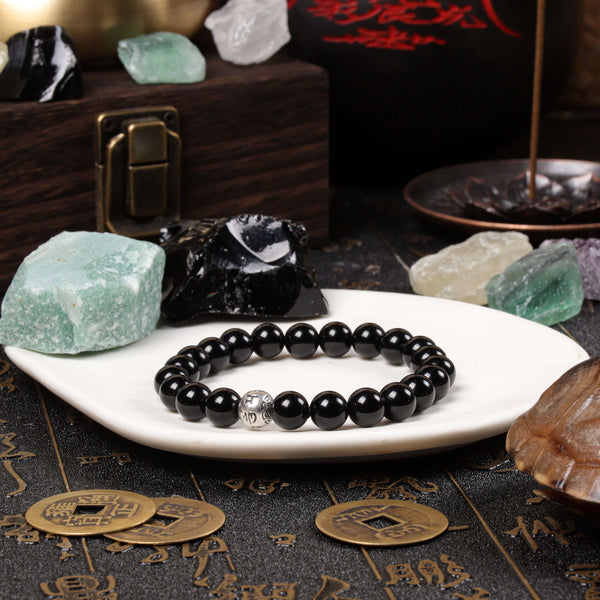
Beaded Bracelet: Practical for discreet tactile grounding throughout demanding meetings.
Ensure your stone is natural, untreated, and unenhanced. Avoid treated or resin imitations that feel uncomfortably light and leave synthetic dye residues on skin.
Step 2: Placement at the Brow or Palm
Lie flat on your mat or sit comfortably supported. Gently set your flat lapis lazuli palm stone across your brow bone, positioned directly between and slightly above the eyebrows. Do not press down; let natural gravitational weight hold it in place. If meditating upright, hold the stone in your left, receptive palm.
Step 3: Tactile Connection & 4-4-4 Breath Cadence
Feel the immediate drop in temperature as the cool stone contacts your skin. Notice how the muscles around your eyes and temples naturally soften in response.
Inhale through your nose for 4 seconds, visualizing a clear, deep indigo blue flowing from the stone into your forehead.
Hold for 4 seconds in spacious stillness, letting your jaw hang loose and unhinged.
Exhale slowly through your nose or mouth for 4 seconds, imagining mental fatigue, unanswered emails, and reactive anxiety dissolving away like fine gray mist.
Continue this rhythmic cycle for 5 to 10 minutes. When your attention invariably wanders to your to-do list, do not judge yourself. Simply notice the distraction, feel the cool weight on your forehead, and return to the count.
Step 4: Somatic Grounding Closure
Gently lift the stone from your forehead and cup it between both palms.
Take three normal, unpaced breaths.
Press the soles of your feet firmly into the floor, feeling the solid surface beneath you.
Rub your palms briskly together to generate friction warmth, place them gently over your closed eyelids, and drink a sip of room-temperature water.
Re-enter your day with measured, unhurried awareness.
Step 5: The Daily Practice Log
Keep a concise reflection journal beside your cushion to track progress:
Date, total duration, and breathing method used.
Physical forehead sensations (coolness, gentle pulsation, soft tingling, or neutrality).
Distraction count (how many times your mind wandered away).
Emotional state before versus after the session.
Decision clarity during the remainder of the workday.

The 21-Day Focus & Mindfulness Protocol
Behavioral research indicates that habit automation takes roughly 66 days to solidify (Lally et al., European Journal of Social Psychology). A structured 21-day sprint provides the initial neurological framework to turn momentary focus into an automatic daily habit.
Days 1–7 (Sensory & Breath Baseline): 5 to 10 minutes daily. Focus entirely on baseline mechanics: feeling the cool weight of the stone and staying with your breathing count without needing special experiences.
Days 8–14 (Visualization & Overcoming the Resistance Wall): 10 minutes daily. Track involuntary distractions; use the vivid indigo imagery to re-center attention when the mind resists sitting still.
Days 15–21 (Intuitive Integration & Strategic Review): 10 to 15 minutes daily. Apply your calm state to actual life decisions, comparing your first unforced gut intuition against analytical pros and cons.
Overcoming the "Day-4 Resistance Wall"
Between Day 4 and Day 6, the initial novelty wears off, and your brain will likely complain: "This is pointless, I have too much work to do, nothing is happening."
This mental resistance is normal. It is the exact moment your attention muscles begin building stamina. When the resistance voice appears, treat it as just another thought: acknowledge it, rest your focus on the cool stone for two more breaths, and finish the session.
Managing Common Difficulties
No Sensations Whatsoever: Completely fine. Mindfulness is about observing what is present right now, even if that presence is simple neutrality. Do not chase dramatic sensations.
Mild Frontal Pressure or Tension: Usually indicates forced breath retention or an unconscious furrowing of the brow. Drop the breath-holds, use natural breathing, and consciously relax your forehead.
Racing Mind: Shorten the session to 5 minutes. Close with physical movement, such as a short, deliberate walk around your space.

The Minimalist 21-Day Practice Tracker
Copy this clean template directly into your journal or workspace document to track your sessions:
Session Log Format:
Day [ 1 to 21 ] | Date: ________ | Duration: ____ Mins
Breath Pattern: [ ] 4-4-4 Box [ ] 4-4-6 Down-Regulating [ ] Natural Flow
Physical Sensation: [ ] Cool Touch [ ] Soft Pulsing [ ] Weight Only [ ] Neutral
Mind Wanderings: [ ] 0–3 times [ ] 4–8 times [ ] Constant Context-Switching
Shift in Focus: Pre-session tension (1–10): ____ | Post-session clarity (1–10): ____
Daily Decision Note: One clear thought or decision realized without second-guessing.
Selecting the Right Lapis Lazuli for Meditation
Form Factors: Palm Stones vs. Towers vs. Bracelets
Smooth Palm Stone: Ergonomic, flat, and soothing. The preferred shape for resting on the brow or holding during breathing work.
Polished Tower / Generator: Best suited as an aesthetic desk anchor, providing a visual boundary during deep writing or analytical work.
Beaded Bracelet: The ultimate functional option for wearable sensory anchoring during client meetings and demanding workdays.
Quick Authenticity Checks
Natural Characteristics: Features gradual transitions between deep indigo, genuine brass-gold pyrite flecks, and delicate calcite veining. Untreated rough stone will not bleed blue dye onto an alcohol-moistened cotton swab.
Counterfeit Warnings: Flat, perfectly uniform cobalt blue with zero natural matrixing, lightweight plastic feel, or color that rubs off with rubbing alcohol indicates synthetic resin or dyed howlite.
Dimensions, Ergonomics & Skin Safety
Forehead Placement: Choose a stone roughly 1.5 to 2 inches (3–5 cm) across, completely flat on one side with smooth, rounded contours.
Tactile Experience First: Select a meditation stone based on its comfort in your hand and coolness on your skin, rather than high-grade commercial gem rarity. A stone that feels soothing to touch is far more useful than a delicate museum specimen.

Cleansing & Caring for Your Meditation Stone
Why Water Soaking Must Be Avoided
Lapis lazuli is a porous metamorphic rock with a modest Mohs hardness of 5 to 5.5. Soaking your stone in water weakens the delicate calcite bonds holding the matrix together. Furthermore, moisture oxidizes iron pyrite inclusions, dulling bright golden flecks into a lifeless brown hue over time.
Hand Washing: Quick splashes will not hurt the stone, but dry it immediately with a soft, clean cloth.
Bathing & Swimming: Always remove jewelry and keep meditation stones away from showers, steam rooms, and chlorinated pools.
Recommended Cleansing Protocols
Acoustic Calibration: Expose the stone to the clean frequency of a 4096Hz crystal tuning fork or a resonant singing bowl for 30 seconds to disperse environmental static without scratching the polished surface.
Botanical Smoke Cleansing: Bathe the stone briefly in the aromatic smoke of natural sandalwood, cypress, or palo santo in a well-ventilated room.
Waxing Moonlight: Place your stone on an indoor windowsill during the waxing or full moon to refresh its appearance. Avoid long exposure to direct, baking sunlight.
Avoid entirely: Ultrasonic jewelry baths, salt beds, chemical cleaners, and abrasive detergents.

Bringing Practice into the Workplace: Sensory Anchors for Focus
The Bracelet as an Intentional Somatic Trigger
Wearing a smooth lapis lazuli bracelet turns daily friction into micro-moments of calm self-regulation. When your hand strikes the keyboard or your eyes catch the deep blue beads during a difficult email exchange, treat it as a ten-second somatic check-in: Drop your shoulders. Unclench your jaw. Take one slow, full breath.
Desk Placement for Midday Resets
Position a natural lapis lazuli pillar or palm stone on the left side of your workspace. During demanding screen sessions, pull your focus away from your monitor and rest your gaze on the deep indigo surface for thirty seconds. This simple act allows the ciliary muscles in your eyes to rest and interrupts cognitive fatigue.
Synergistic Stone Pairings
Lapis Lazuli + Clear Quartz: Enhances mental synthesis during complex data review, coding sprints, and strategic planning.
Lapis Lazuli + Tiger’s Eye: Unites quiet reflective intuition with grounded, decisive execution.
Lapis Lazuli + Moonstone: Softens high-pressure communication, fostering patient and cooperative exchanges in tense team environments.
Frequently Asked Questions (FAQ)
How soon will I notice results from lapis lazuli Third Eye meditation?
This varies by person. The 21-day timeline is designed to build a reliable habit, not fulfill an arbitrary deadline. Many individuals notice calmer breathing within three days, while structural shifts in focus and reaction times typically appear after two to three weeks of steady practice.
Is tingling at the forehead normal during meditation?
Yes. The brow and forehead feature a dense network of sensory nerves. The physical coolness, concentrated weight, and focused attention naturally create soft sensations of temperature change, light tingling, or subtle pulsing. If it ever feels uncomfortable, simply remove the stone.
What if I feel completely numb or detached during the exercise?
That is normal. Mindfulness is simply non-judgmental observation of whatever is present. If you feel no sensation, simply observe that lack of sensation. Consistency in sitting quietly is far more valuable than hunting for intense energetic feelings.
Can I practice this meditation protocol daily?
Yes. Practicing for five to ten focused minutes daily builds stronger neural pathways than an irregular, hour-long session once a week.
Can I wear my lapis lazuli bracelet while sleeping?
You can, but individuals sensitive to sensory input may find that wearing reflective, introspective stones to bed can cause vivid dreaming. If your sleep feels fragmented, place the piece on your nightstand rather than wearing it on your wrist.
Can I substitute lapis lazuli with another mineral?
Yes. Any natural, dense, cool-to-the-touch stone with a calming, short-wavelength hue can serve as an effective physical anchor. Lapis lazuli simply carries one of the richest, best-documented cultural lineages for focus and clear insight.
Concluding Your Practice: Sustainable Focus Over 21 Days
Genuine mental clarity does not come from aggressively forcing thoughts to stop. You cannot clear turbid water by stirring it harder; you clear it by leaving it undisturbed until the sediment settles naturally.
Lapis lazuli Third Eye meditation gives your overstimulated mind that chance to settle. It requires no elaborate ritual—just an unenhanced, deep blue stone, ten quiet minutes, and a reliable 21-day personal commitment.
Over the next three weeks, you may notice:
Less involuntary task-switching throughout the workday.
Clearer, more confident decisions without second-guessing.
A calmer, more measured reaction to unexpected workplace stress.
A natural balance between gut intuition and logical strategy.
This is not magic. It is the practical return on deliberate attention.
The stone does not do the inner work for you; it simply holds a steady sensory boundary so you can do the work for yourself: breathe deeply, return to the present, see situations as they are, and speak with unwavering clarity.
Tonight, take ten uninterrupted minutes. Set your stone, begin your 4-4-4 breathing cycle, and close with a grounded physical touch. Tomorrow, do it again.
Explore the HVibeTune Natural Lapis Lazuli Series to find an ethically sourced, untreated palm stone or everyday bracelet, bringing a dependable indigo anchor to your desk and wrist.