
The Complete Bagua Diagram Guide: Origins, 8 Trigrams Meaning, and Modern Feng Shui Applications
TABLE OF CONTENTS
- 3-Minute Quick Guide: Understanding the Bagua Chart at a Glance
- Historical Evolution: How the Bagua Diagram Developed Over Centuries
- What Is the Bagua Diagram? Structure, Binary Logic, and Layouts
- The Philosophical Core: Yin-Yang, Cosmic Change, and Universal Harmony
- The 8 Bagua Trigrams: Comprehensive Correspondences and Five Elements
- Why Study the Bagua Map Today? Modern Value and Practical Benefits
- How to Use the Bagua Diagram: Practical Learning and Spatial Layouts
- Everyday Applications: Architecture, Wellness, and Mindful Living
- Common Misconceptions and Rational Boundaries
- Core Takeaways
- Frequently Asked Questions About the Bagua Diagram
- Core Terminology Glossary
Quick Definition: The Bagua diagram is an ancient eight-sided energy map rooted in the I Ching (The Book of Changes). Composed of eight directional trigrams arranged around a central Yin-Yang symbol, it serves as a foundational blueprint in classical Feng Shui, holistic wellness, and mindfulness to align human environments with natural energy flows.
You have likely encountered the Bagua diagram on traditional compasses, martial arts emblems, or home layout blueprints. While its geometric lines can seem mysterious at first glance, the Bagua is actually an elegant cognitive framework developed over centuries to help people understand environmental cycles, spatial harmony, and inner balance.
This guide clarifies three essential questions:
What do these eight foundational symbols represent?
Why are they organized into specific directional layouts?
How can you apply this ancient wisdom to create balance in modern life?

3-Minute Quick Guide: Understanding the Bagua Chart at a Glance
For a fast reference, here is the essential breakdown of the Bagua chart:
The Core Anatomy: The complete Bagua diagram consists of 8 Trigrams (three-line binary symbols) revolving around the central Taiji (the dynamic Yin-Yang circle).
The 8 Trigrams: Qian (☰), Dui (☱), Li (☲), Zhen (☳), Xun (☴), Kan (☵), Gen (☶), and Kun (☷).
Visual Memory Aid:
Qian (☰): Three solid lines representing Creative Heaven.
Kun (☷): Three split lines representing Receptive Earth.
Zhen (☳): Solid at the base, open above; an upright bowl of Thunder.
Gen (☶): Solid at the top, split below; an inverted bowl of Mountain.
Li (☲): Solid on the outside, hollow in the center; the glow of Fire.
Kan (☵): Split on the outside, full in the center; deep Water.
Dui (☱): Solid below, broken at the top; the open surface of a Lake.
Xun (☴): Solid above, broken at the base; the subtle root of Wind.
Early Heaven Bagua: Heaven positioned at the South, Earth at the North. Focuses on universal symmetry and timeless balance.
Later Heaven Bagua: Fire positioned at the South, Water at the North. Focuses on seasonal cycles, direction, and spatial Feng Shui.

Historical Evolution: How the Bagua Diagram Developed Over Centuries
The Bagua diagram was not created by a single author overnight. It evolved across millennia as an ongoing synthesis of astronomy, seasonal observation, and holistic philosophy.
Ancient Roots: Fu Xi and the 64 Hexagrams of King Wen
Traditional history traces the Eight Trigrams to the legendary sage Fu Xi, who observed the constellations above and geographic contours below. To classify natural dynamics, he distilled the cosmos into eight primary archetypes: Heaven, Earth, Thunder, Wind, Water, Fire, Mountain, and Lake.
Centuries later, King Wen of Zhou paired these eight primary trigrams together during his confinement at Youli, generating the 64 Hexagrams. His son, the Duke of Zhou, authored the interpretive line texts, turning the I Ching into a sophisticated guide for strategic decision-making and ethical action.
Classical Philosophy: The Confucian Commentaries
During the Spring and Autumn and Han Dynasties, Confucian scholars expanded the text through the interpretive commentaries known as the Ten Wings.
Among these texts, the Treatise on the Trigrams systematically organized the trigrams into comprehensive correspondence networks:
Head: Qian
Abdomen: Kun
Feet: Zhen
Thighs: Xun
Ears: Kan
Eyes: Li
Hands: Gen
Mouth: Dui
These commentaries transformed an ancient divination system into a profound framework for personal conduct, government, and psychological insight.
Song Dynasty Cosmology: Establishing Early and Later Heaven
The formal distinction between the Early Heaven and Later Heaven arrangements was systematized by Northern Song Dynasty philosopher Shao Yong. In his cosmological treatise Cosmic Principles of World Order, Shao Yong defined the dual-wheel model and aligned the sequences with cardinal directions.
Prominent scholar Zhu Xi cemented this arrangement in his definitive edition Original Meaning of the I Ching, placing both diagrams at the very beginning of the classic text. Since the Southern Song Dynasty, these two standardized layouts have remained the global standard in classical metaphysics.
Archaeological Evidence: The Living Evolution of the Text
Modern archaeology confirms that the Bagua was a living, evolving tradition. The discovery of the Mawangdui Silk Texts revealed alternative hexagram orders that circulated widely in early imperial times. Rather than appearing instantly, the Bagua grew through centuries of refinement: from seasonal nature-watching to Han Dynasty cosmology and Song Dynasty sacred geometry.

What Is the Bagua Diagram? Structure, Binary Logic, and Layouts
The Anatomy of Trigrams and Binary Lines
At its core, every Bagua diagram is an eight-sided compass centered on the Taiji. Its visual language relies entirely on two fundamental lines:
Yang Line (⚊): A single unbroken line representing active, expansive, and luminous energy.
Yin Line (⚋): A divided line representing receptive, grounding, and quiet energy.
Stacking these two lines in groups of three generates exactly eight unique mathematical possibilities: the Eight Trigrams.
The Generative Progression: From Unity to Multiplicity
The creation of the Bagua follows a clear geometric progression:
The Origin (Taiji): The undivided, unified field of potential.
The Two Polarities (Yin and Yang): The emergence of active and receptive forces.
The Four Images: The four combinations of Lesser and Greater Yin and Yang.
The Eight Trigrams: The primary archetypes of matter and motion.
The 64 Hexagrams: Sixty-four paired combinations mapping every phase of life transition.
Early Heaven vs. Later Heaven: Core Comparison
In traditional Eastern cartography, South is placed at the top and North is placed at the bottom.
| Feature | Early Heaven Bagua | Later Heaven Bagua |
| Traditional Creator | Fu Xi | King Wen |
| Top Position (South) | Qian (Heaven ☰) | Li (Fire ☲) |
| Bottom Position (North) | Kun (Earth ☷) | Kan (Water ☵) |
| Left Position (East) | Li (Fire ☲) | Zhen (Thunder ☳) |
| Right Position (West) | Kan (Water ☵) | Dui (Lake ☱) |
| Core Concept | Symmetrical Polarity | Cyclical Rhythm & Seasons |
| Primary Focus | The Universal Blueprint | Practical Feng Shui & Medicine |
These two configurations work in tandem: Early Heaven represents the timeless foundation; Later Heaven governs active everyday manifestation.

The Philosophical Core: Yin-Yang, Cosmic Change, and Universal Harmony
Dynamic Balance and Interdependence
The foundation of the Bagua is dynamic harmony: light and shadow, activity and rest, expansion and contraction exist not as combatants, but as interdependent partners. When one quality peaks, it naturally generates the seeds of the other.
The Dynamic Principles of the I Ching
The Bagua operates according to three universal principles:
Simplicity: Complex natural occurrences are distilled into pure, elegant binary lines.
Continuous Transformation: Nothing remains permanently frozen; all states evolve along predictable energetic paths.
Underlying Constancy: While circumstances change constantly, the natural laws directing change remain reliable and steady.
Harmony Between Humanity and Nature
The Bagua embodies the foundational belief that human beings are micro-reflections of the broader universe. When we arrange our homes, daily routines, and mental patterns in alignment with natural seasons and directional energy, vitality and inner calm naturally follow.

The 8 Bagua Trigrams: Comprehensive Correspondences and Five Elements
Each trigram functions as a multidimensional archetype linking natural elements, family roles, physiological pathways, and cardinal directions.
Universal Correspondence Matrix
| Trigram | Natural Force | Five Elements | Later Heaven Direction | Family Archetype | Body Part | Animal Symbol | Core Energetic Quality |
| Qian (☰) | Heaven / Sky | Metal | Northwest | Father / Leader | Head, Mind | Horse | Creative power, strength, initiative |
| Kun (☷) | Earth / Soil | Earth | Southwest | Mother / Matriarch | Abdomen, Digestion | Cow / Ox | Receptivity, nurturing, grounded patience |
| Zhen (☳) | Thunder | Wood | East | Eldest Son | Feet, Legs | Dragon | Sudden awakening, upward initiative, growth |
| Xun (☴) | Wind / Wood | Wood | Southeast | Eldest Daughter | Thighs, Respiration | Rooster | Gentle penetration, flexibility, steady reach |
| Kan (☵) | Water / Abyss | Water | North | Middle Son | Ears, Kidneys | Pig | Emotional depth, adaptability, quiet perseverance |
| Li (☲) | Fire / Sun | Fire | South | Middle Daughter | Eyes, Heart | Pheasant | Discernment, clarity, radiant warmth |
| Gen (☶) | Mountain | Earth | Northeast | Youngest Son | Hands, Spine | Dog | Stillness, contemplative boundaries, stability |
| Dui (☱) | Lake / Marsh | Metal | West | Youngest Daughter | Mouth, Speech | Sheep | Joy, open communication, shared celebration |
Seasonal Cycles in the Later Heaven Map
In the Later Heaven layout, energy flows clockwise through the natural progression of the year:
East (Zhen / Wood): Dawn, Spring, the awakening of life force.
South (Li / Fire): Midday, Summer, full illumination and visibility.
West (Dui / Metal): Twilight, Autumn, harvest, reflection, and gratitude.
North (Kan / Water): Midnight, Winter, deep rest, regeneration, and quiet reserves.

Why Study the Bagua Map Today? Modern Value and Practical Benefits
Systems Thinking and Holistic Perspective
The Bagua trains the mind to perceive life as an interconnected network. When facing challenges in health, relationships, or work, this framework prompts you to look at the surrounding environment: Which quality is depleted? What complementary energy can bring relief?
A Gateway to Eastern Traditions
The Eight Trigrams provide the common conceptual language for multiple classical disciplines:
In Traditional Chinese Medicine, diagnostic organs map onto trigram elements.
In Classical Feng Shui, home orientations leverage directional sectors.
In Martial Arts, foundational footwork follows trigram stepping patterns.
Mindful Grounding and Wearable Anchors
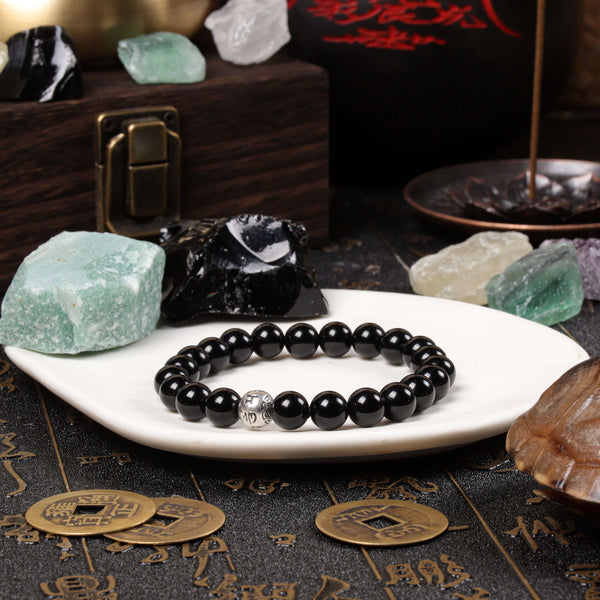
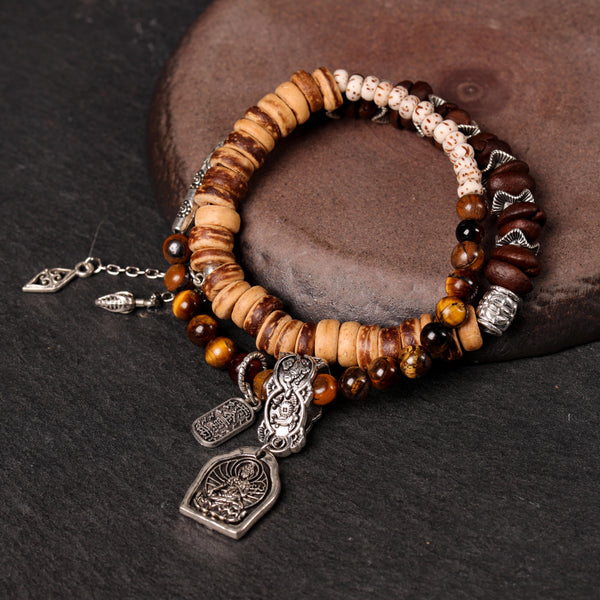
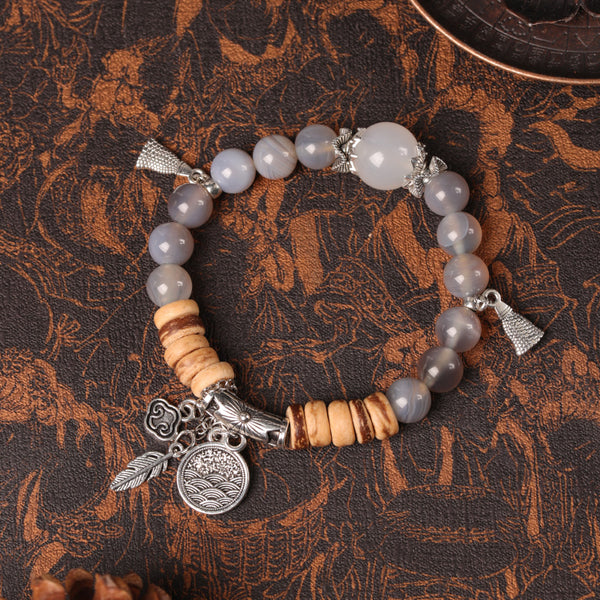
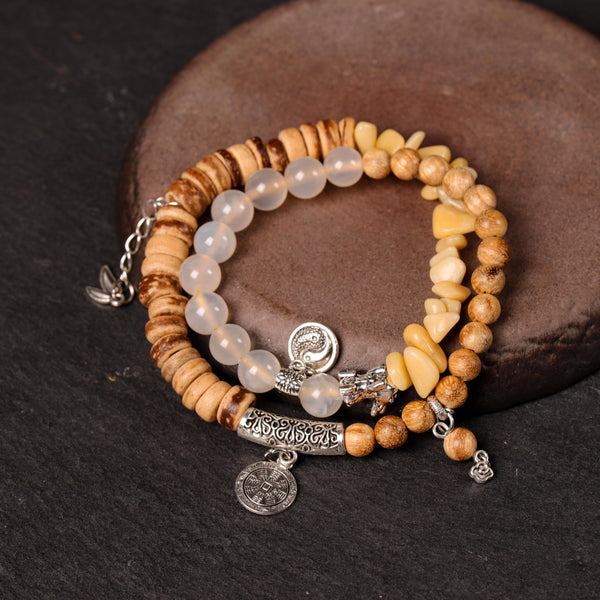
Engaging with the Bagua today is primarily about mindful presence. Wearing a Bagua-inspired bracelet or ring acts as a tangible tactile anchor. In moments of tension, touching natural stone or sculpted metal returns awareness to your breath, serving as a physical reminder to stay centered.

How to Use the Bagua Diagram: Practical Learning and Spatial Layouts
A 4-Step Learning Roadmap for Beginners
Step 1: Learn the 8 Symbols (1 Day)
Focus on memorizing the solid and broken lines of each trigram using the visual mnemonics.
Step 2: Differentiate the Two Maps (1 Day)
Remember the core rule: Early Heaven places Heaven South and Earth North; Later Heaven places Fire South and Water North.
Step 3: Internalize the Natural Archetypes (3 Days)
Connect each trigram to its elemental counterpart in nature: Heaven, Earth, Thunder, Wind, Water, Fire, Mountain, and Lake.
Step 4: Explore a Specific Practical Focus (Ongoing)
Deepen your interest through a chosen avenue, whether home spatial Feng Shui, wellness patterns, or personal philosophy.
Feng Shui Layout Principles for Living Spaces
In residential Feng Shui, the Later Heaven Bagua map is applied over a home's floor plan to evaluate environmental harmony:
Southeast (Xun / Wind & Wood): The sector of gentle growth and abundance. Thrives with natural sunlight, healthy indoor plants, and uncluttered ventilation.
Northwest (Qian / Heaven & Metal): The sector of leadership, career structure, and family strength. Benefits from clean lines, organized storage, and grounding metallic accents.
North (Kan / Water): The sector of personal journey, inner focus, and rest. Requires quiet order, dark or neutral tones, and clear pathways.

Everyday Applications: Architecture, Wellness, and Mindful Living
Sacred Urban Architecture: The City of Tekes
The spatial geometry of the Bagua has informed large-scale planning for generations. A prime architectural example is the historic circular city of Tekes. Designed around a central Taiji square, eight radial avenues extend outwards to match the Eight Trigrams, crossed by four concentric ring roads. The layout leverages natural mountain contours and river elevations, creating an organic drainage and transit network that functions seamlessly to this day.
Traditional Chinese Medicine: Balancing Organ Systems
In classical medicine, internal organ pairs reflect the Five Element energies of the trigrams:
Kan (Water): Kidneys and Bladder (vital reserves, foundational drive).
Li (Fire): Heart and Small Intestine (Shen, mental focus, circulation).
Zhen & Xun (Wood): Liver and Gallbladder (smooth flow of energy, emotional ease).
Kun & Gen (Earth): Spleen and Stomach (digestion, grounded presence).
Dui & Qian (Metal): Lungs and Large Intestine (respiration, healthy release).
Protocols like "harmonizing Fire and Water" seek to balance the active heart with the nourishing kidneys to relieve fatigue and restlessness.
Internal Martial Arts: Dynamic Movement in Baguazhang
Internal martial arts like Baguazhang translate the Bagua into fluid physical motion. Practitioners practice circular walking around an invisible center, flowing through eight primary postures while tracing directional shifts. Each step and palm turn physically trains the body to deflect, yield, and adapt to incoming momentum without rigid tension.
Mindful Jewelry: The Purpose of Bagua Bracelets
Mindful accessories featuring the Bagua are designed to support personal balance throughout the day:
Intentional Construction: Authentic designs frequently combine trigram engravings with harmonious stone pairings, providing an elegant cultural expression of protective balance.
Somatic Anchoring: When daily demands feel overwhelming, touching an engraved bead or bracelet surface provides an immediate tactile cue to pause, breathe, and reset emotional equilibrium.
Cultural Conversation: Modern designs unite minimalist aesthetics with traditional symbolism, making them thoughtful accessories that share ancient philosophies with others.

Common Misconceptions and Rational Boundaries
Philosophy vs. Superstition
The Bagua is an observational system designed to read natural patterns, not a supernatural tool for fortune-telling. Treating the Bagua as a superstitious shortcut strips away its genuine value as a tool for personal clarity and situational awareness.
Differentiating Early and Later Heaven Applications
Avoid swapping the two maps randomly:
Use the Early Heaven Bagua for cosmic meditation, personal alignment, and philosophical study.
Use the Later Heaven Bagua for spatial home arrangements, compass readings, and seasonal lifestyle planning.
Understanding Feng Shui Bagua Mirrors
Traditional exterior Feng Shui employs three distinct types of mirrors for environmental adjustment:
Convex Bagua Mirrors: Curved outwards like a dome; hung on exterior walls to deflect and disperse aggressive architectural lines (such as sharp roof angles or incoming street lines).
Concave Bagua Mirrors: Curved inwards like a shallow dish; used outside to gather, stabilize, and draw beneficial natural vitality toward an entrance.
Flat Bagua Mirrors: Standard neutral surfaces deployed to balance general environmental reflections without excessive amplification.
Realistic Expectations for Metaphysical Items
Wearable items cannot magically solve complex life problems on their own. They are spiritual tools, personal reminders, and aesthetic items meant to reinforce your internal dedication to balance, mindfulness, and healthy habits.

Core Takeaways
A Complete Symbolic Map: The Early Heaven diagram illustrates timeless, universal balance, while the Later Heaven diagram reflects seasonal cycles and practical environmental applications.
An Interconnected Archetype System: Each trigram links natural elements, physical wellness, family roles, and spatial directions into an intuitive whole.
A Timeless Practical Tool: Far from being outdated superstition, the Bagua remains a valuable framework for creating organized spaces, deepening mindful awareness, and staying grounded in modern life.
Frequently Asked Questions About the Bagua Diagram
What is the difference between Early Heaven and Later Heaven Bagua?
Early Heaven represents pure cosmic balance, organized symmetrically with Heaven facing Earth and Fire facing Water. Later Heaven reflects the physical world of change, seasons, and directions, placing Fire in the South and Water in the North. Early Heaven is the structural foundation; Later Heaven is the active application.
Which Bagua map is used for home Feng Shui?
Classical home Feng Shui relies on the Later Heaven Bagua. Its directional alignments (East for Wood, South for Fire, West for Metal, North for Water) match real-world sunlight exposure, seasonal movement, and room orientations.
How do the Five Elements connect to the Eight Trigrams?
In the Later Heaven arrangement:
Wood: Zhen (East) and Xun (Southeast)
Fire: Li (South)
Earth: Kun (Southwest) and Gen (Northeast)
Metal: Dui (West) and Qian (Northwest)
Water: Kan (North)
Can wearing a Bagua bracelet change personal energy?
Wearing a Bagua bracelet serves primarily as a somatic mindfulness anchor. Touching natural stones and engraved symbols during the day interrupts mental anxiety, refocusing attention on composure, balance, and intentional living.
What is the difference between a convex and concave Bagua mirror?
A convex mirror curves outward to disperse harsh exterior energy lines, while a concave mirror curves inward to collect and neutralize incoming energy. Both are exterior tools designed for specific architectural situations.
Core Terminology Glossary
Yao: The single binary line of a trigram; either an unbroken Yang line (⚊) or a split Yin line (⚋).
Trigram: A three-line geometric symbol representing a fundamental elemental force.
Hexagram: A six-line figure formed by combining two three-line trigrams, totaling 64 variations.
Early Heaven: The primordial, symmetrical arrangement of trigrams representing universal balance before physical manifestation.
Later Heaven: The dynamic, directional arrangement of trigrams mapping seasonal change, physical direction, and daily life.
Foundation and Function: The philosophical principle where the structural source provides the blueprint, while its active application governs daily living.



Leave a comment