
The Ultimate Office Feng Shui Guide: Desk Placement, Layout & Work Direction
TABLE OF CONTENTS
- What Is Office Feng Shui? Energy Alignment, Elements & the Bagua Map
- Why Office Energy Matters: Measurable Benefits for Leaders and Teams
- How to Feng Shui Your Office: A 3-Minute Assessment Checklist
- How to Arrange Office Furniture & Feng Shui Office Layout
- Conscious Sanctuaries & Intention Corners: Purposeful Focus in the Modern Office
- How to Feng Shui Your Office Desk: Placement, Direction & Layout
- Feng Shui Plants for Office, Crystals & Natural Decor
- What Color to Paint Office Feng Shui: Five Elements Palette
- Small Spaces: Feng Shui Cubicle & Home Office Desk Placement
- Low-Budget Workspace Upgrades: 10 Instant Adjustments
- 7-Day Office Feng Shui Implementation Plan
- Inspiring Workplace Transformations: Modern Commercial Case Studies
- Conclusion: Align Your Space to Empower Your Purpose
- Frequently Asked Questions (FAQ: Office Feng Shui & Desk Placement)
If you spend eight or more hours a day at your desk, your physical workspace influences your inner state far more than you might realize.
Modern environmental psychology confirms what classical Eastern lineage traditions have taught for centuries: ambient lighting, spatial flow, air circulation, sightlines, and clutter levels directly regulate your nervous system, mental stamina, and executive decision-making. Where ancient philosophy speaks of vital energetic circulation (Qi), contemporary design calls it spatial energy alignment.
Both share the exact same truth: your environment shapes your subconscious state, and your subconscious state shapes your reality.
This guide translates authentic, time-tested spatial principles into a grounded, practical framework for modern professionals. Whether you are an entrepreneur leading a growing team, an executive steering high-stakes decisions, or someone crafting an intentional work-from-home sanctuary, these actionable adjustments will align your physical environment with clarity, vitality, and sustainable success.

What Is Office Feng Shui? Energy Alignment, Elements & the Bagua Map
Environmental Psychology Meets Timeless Energy Alignment
True office Feng Shui is neither superstition nor aesthetic dogma. It is an applied science of human spatial dynamics.
When your back is exposed to an open doorway or a busy hallway, your primitive nervous system remains on subconscious high alert, resulting in elevated cortisol levels and subtle mental exhaustion. When your desk is strewn with tangled wires and unfiled documents, cognitive friction impairs executive function. Dim or flickering lighting accelerates fatigue and limits forward vision.
Classical Eastern spatial traditions diagnosed these patterns generations ago as lack of backing (Bei Men Wu Kao), stagnant energy (Zhi Qi), and excessive cold passivity (An Ze Sheng Yin). By consciously optimizing your physical perimeter, you eliminate silent micro-stressors, freeing your cognitive energy for deep work, creative breakthroughs, and composed leadership.
Understanding Workplace Energy: Uplifting Flow vs. Spatial Stressors
Every architectural enclosure carries an energetic signature shaped by layout, light, and motion:
Uplifting Flow (Sheng Qi): Dynamic, life-affirming energy characterized by abundant natural light, crisp air circulation, intuitive pathways, and organic vitality. When you step into a room and instantly feel revitalized, calm, and inspired to build, you are experiencing harmonious flow.
Spatial Stressors (Sha Qi): Obstructive friction caused by sharp building pillars pointing at your seat, blocked circulation arteries, shadowy recesses, physical disarray, and mechanical drone. When a room feels stifling, heavy, or fractious, spatial stressors are at play.
The 30-Second Energy Audit Checklist:
Natural Clarity: Is your work area illuminated by warm, glare-free light without gloomy corners?
Fluid Breath: Does fresh air circulate naturally without drafts or stagnant pockets?
Unbroken Sightlines: Are your direct lines of sight free from sharp structural pillars, exposed beams, or chaos?
Cultivating Yin-Yang Balance in Modern Workplaces
High-performance workspace design honors the interplay between dynamic motion (Yang) and restorative stillness (Yin):
Yang Energy: Illumination, vibrant exchange, open sightlines, and forward momentum. Ideal for communal reception lounges, sales hubs, and collaborative brainstorm zones.
Yin Energy: Quiet composure, privacy, grounded earth tones, and deep focus. Essential for executive sanctuaries, private meeting rooms, legal review, and financial accounting.
An exclusively Yang office creates chronic hyper-vigilance and team burnout; an overly Yin office invites procrastination and sluggish revenue. Balance occurs when each distinct function occupies its proper energetic environment.
The Five Elements (Wu Xing): Energetic Balancing in Workspace Design
The Five Elements represent energetic archetypes that can be activated through intentional materials, palettes, and forms:
Fire (Huo): High visibility, charisma, dynamic expansion. Represented by amber light fixtures, warm terracotta accents, and triangular motifs. Best for marketing hubs, media studios, and pitch rooms.
Water (Shui): Fluid networking, deep wisdom, wealth circulation. Represented by deep midnight navy, fluid curves, reflective surfaces, and water accents. Best for career focal points, primary entryways, and client consulting desks.
Earth (Tu): Grounded stability, team endurance, trust. Represented by warm ochre, natural stone, square silhouettes, and handcrafted ceramics. Best for executive offices, HR consultation rooms, and contract signing zones.
Metal (Jin): Uncompromising clarity, analytical discipline. Represented by polished brass, brushed bronze, crisp ivory, and clean circular forms. Best for legal review pods, strategic planning rooms, and financial suites.
Wood (Mu): Organic growth, renewal, continuous expansion. Represented by living botanicals, natural solid wood grain, and vertical silhouettes. Best for R&D labs, creative design studios, and founder workstations.
The Office Bagua Map: How to Find the Wealth Corner & Career Point
The Bagua map reveals how spatial sectors correlate with key professional dimensions. Stand at your primary office entrance facing inward, and view the perimeter through a balanced nine-sector matrix:
Top Left (Southeast): Wealth & Inflow (Wood). Governs abundance, financial acceleration, and healthy cash flow.
Top Center (South): Fame & Reputation (Fire). Governs brand visibility, leadership authority, and social proof.
Top Right (Southwest): Strategic Alliances (Earth). Governs partnerships, client harmony, and team cohesion.
Middle Left (East): Health & Team Base (Wood). Governs foundational vitality, stamina, and team wellbeing.
Center (Taiji): The Energy Center (Earth). Governs overall organizational balance and internal alignment.
Middle Right (West): Creativity & Projects (Metal). Governs conceptual innovation, precision, and timely delivery.
Bottom Left (Northeast): Wisdom & Mastery (Earth). Governs research, skill acquisition, and sound judgment.
Bottom Center (North): Career & Life Path (Water). Anchors promotion, career velocity, and long-term opportunity flow.
Bottom Right (Northwest): Mentors & Benefactors (Metal). Attracts helpful advisors, investors, and supportive allies.
The corner diagonally across from your main entrance on the far left serves as the primary energetic hub for wealth and financial abundance.

Why Office Energy Matters: Measurable Benefits for Leaders and Teams
For Founders and Executives: Grounded Authority and Strategic Foresight
The executive desk serves as the spatial anchor for the entire organization. A leader seated with their back exposed to a busy door or an expansive glass pane operates in a subconscious state of spatial vulnerability. Positioning your desk in a commanding, supported posture fosters calm composure, clear boundaries, and decisive leadership.
For Professionals: Sustained Focus and Burnout Prevention
Navigating a workstation with blinding glare, overhead beam compression, or chaotic foot traffic creates persistent cognitive drain. Aligning your seating reduces physical and emotional friction, protecting your energy for high-leverage execution.
For Teams: Cohesive Collaboration and Talent Retention
When creative departments enjoy open sightlines and natural greenery, while finance teams operate in grounded, quiet areas, friction gives way to seamless execution. Spatial balance directly reduces office politics and enhances cross-functional synergy.
For Clients: Subconscious Trust and High-Value Conversions
When prospective partners cross your office threshold, their sensory system evaluates stability and integrity within seconds. A bright, welcoming entryway with clear pathways signals strength, reliability, and care before formal negotiations even begin.

How to Feng Shui Your Office: A 3-Minute Assessment Checklist
The Complete Workspace Self-Audit
Clear Threshold: The entry door opens fully; zero clutter; warm welcoming light.
Wealth Corner: The top-left sector is clean, vibrant, and alive.
Command Position: You have a direct view of the entrance with a solid wall behind your chair.
Air & Sightlines: The room is free from overhead ceiling beam pressure and stagnant pockets.
Mindful Cable Flow: Power cords are concealed, maintaining a serene visual field.
Five Sequential Steps to Inspect Your Office
Step 1: Evaluate the Main Threshold: Stand outside your office entrance. Does the doorway open fully, or is it blocked by boxes, racks, or swinging doors? Is it aligned directly with a descending stairwell, elevator shaft, or long, dark hallway? An unencumbered entrance allows high-caliber opportunities to enter effortlessly.
Step 2: Locate the Primary Wealth Corner and Career Flow Point: Identify your primary entrance, your far-left diagonal corner (Wealth), and the front-center wall (Career). These three anchor points form the energetic foundation of your workplace design.
Step 3: Check Your Seating for the Command Position: Take your seat. Can you observe anyone entering the room without straining your neck? Is your back supported by a solid wall, or are you floating in an open aisle with your back to a window?
Step 4: Audit Lighting, Air Quality, and Hidden Clutter: Check ambient lighting levels. Discard dead botanicals, dust off surfaces, and open pathways to allow effortless movement throughout the space.
Step 5: Consider Office Direction and Desk Facing Angles: Aligning with your favorable compass directions can be beneficial (facing East supports new initiatives, while facing North fosters contemplative strategy). However, architectural stability always supersedes compass degrees. Never compromise the Command Position simply to face a specific compass bearing.

How to Arrange Office Furniture & Feng Shui Office Layout
Office Facing & Reception Area Energy Flow
Your primary entrance is the threshold where vital energy enters the organization:
If your entry directly faces an elevator door or rapid staircase, install an elegant solid timber credenza, an artful folding screen, or a lush, broad-leaved botanical display to gently slow and distribute incoming energy.
Position the reception desk slightly offset from the entrance doors rather than dead-center in the line of incoming traffic.
Anchor the wall behind the receptionist with a solid accent wall or grounded artwork rather than bare glass.
Use warm, glare-free indirect lighting to create an atmosphere of immediate hospitality.
Main Circulation Pathways: Clean Channels for Movement
Hallways serve as the circulatory vessels of your office. Keep all major routes completely clear of surplus chairs, archive cartons, and tangled wires to maintain fluid movement and open communication.
Activating the Office Wealth Corner
The far-left diagonal corner of your room thrives on deliberate, living vitality:
Botanicals: Thriving Jade plants, braided Money Trees (Pachira aquatica), or robust Fiddle Leaf Figs.
Illumination: A warm brass floor lamp to uplift the corner's energy.
Earth Elements: An authentic Citrine cluster or natural green fluorite sphere set on a minimalist wooden tray.
Items to Avoid: Wastebaskets, paper shredders, broken equipment, or neglected clutter in this quadrant.
Strategic Departmental Placement
Finance & Accounting: Position in the quietest, most private sector, firmly backed by structural walls. Ensure safes and financial servers remain discreetly tucked away.
Sales & Business Development: Seat in open, sunlit areas near the front to foster enthusiastic, forward-moving communication.
Creative, Product & Design: Place in bright spaces enriched with living greenery and flexible workstations to encourage lateral thinking.
Executive Leadership: Situate toward the rear center or northwest quadrant to command an expansive, calm view of the broader office.
Feng Shui Office Layout with Window and Meeting Rooms
Table Silhouettes: Oval, boat-shaped, or rounded rectangular tables encourage collaborative problem-solving and minimize tension.
The Lead Negotiator's Chair: The primary decision-maker should occupy the seat facing the conference room door, backed by a solid wall. Never place your lead negotiator with their back to the entrance.
Balancing Large Glass Windows: In conference rooms with floor-to-ceiling glass, use sheer linen drapes or low wooden credenzas along the window perimeter to prevent discussions and creative energy from feeling ungrounded.

Conscious Sanctuaries & Intention Corners: Purposeful Focus in the Modern Office
Purposeful Sanctuary Corners vs. Superstition
In classical traditions, dedicated altars and intention tables serve as sacred touchstones for gratitude, humility, and alignment with wisdom lineages. They are never mandatory decorative requirements for effective spatial design.
Before establishing an intentional altar, wealth shrine, or dedicated sanctuary shelf:
Does your leadership hold an authentic, consistent mindfulness, ancestral, or lineage practice?
Does your commercial lease permit smokeless incense, or are clean LED accents required?
Can the space be treated with daily respect rather than left as a dusty repository for spare keys and mail?
If your office does not maintain a devotional practice, cultivate prosperity instead through thriving botanicals, museum-grade landscape art, and crystal anchors.
8 Rules for Intentional Sanctuary Placement
Solid Structural Backing: Position the sanctuary against an unbroken load-bearing wall.
Elevated Perspective: The surface should sit noticeably higher than standard work surfaces.
Open Frontage: Maintain a clean, open space immediately before the sanctuary.
Quiet Dignity: Place it well away from loud breakrooms, server racks, and printing hubs.
No Overhead Pressure: Never install a sanctuary directly under exposed steel beams or air conditioning units.
Protect Spatial Purity: Avoid shared plumbing walls with restrooms, janitorial closets, or kitchens.
No Door Concurrency: Do not place the sanctuary where high-traffic doors swing directly into it.
Physical Stability: Ensure the surface cannot be nudged or bumped by passing foot traffic.
Clean Maintenance and Modern Workplace Sensibilities
Clean Safety Alternatives: In contemporary corporate buildings, high-purity smokeless sandalwood, delicate essential oil diffusers, or warm low-voltage lotus lamps preserve ceremonial intent while respecting fire codes and indoor air quality.
Daily Care: Dust the area regularly, replace offerings of filtered water and fresh fruit promptly, and never let loose papers accumulate nearby.
Respectful Inclusivity: An intention table is a personal expression of values; it should never become an imposed ritual for team members with diverse backgrounds or beliefs.

How to Feng Shui Your Office Desk: Placement, Direction & Layout
Command Position Desk Feng Shui: Backing & Facing Rules
Position your desk so you can clearly see the room's main entrance without sitting directly in line with the doorway. Your back must be supported by a solid wall. This configuration eases subconscious vigilance, anchors self-assurance, and sharpens analytical clarity.
Should My Desk Face the Window? (Window vs. Solid Wall Placement)
Directly Facing the Window: While an open view can be inspiring, intense midday glare, shifting daylight, and outdoor movement frequently interrupt deep flow states.
Directly Backing the Window: Strictly avoid this arrangement. Sitting with your back to an expansive window removes structural backing, leaving you feeling exposed and unsupported.
Perpendicular to the Window (The Balanced Choice): Positioning your desk at a 90-degree angle to the window provides soft, natural daylight across your work area without harsh reflections, while preserving a solid wall behind your chair.
What to Do if Office Desk Faces a Solid Wall
If your room layout requires you to face an unbroken wall (Mian Bi), your forward perspective can feel subtly restricted. You can balance this through two practical actions:
Mount a wide, museum-grade landscape painting featuring an expansive horizon directly above your monitor.
Place a small, elegant convex desk mirror at the edge of your desk to bring the room entrance into view.
Balanced Desk Layout: Green Dragon vs. White Tiger
The Left Side (Active / Yang / Dragon): Keep slightly taller and dynamic items here—your task lighting, tall botanical plants, and primary workspace telephone.
The Right Side (Grounded / Yin / Tiger): Reserve this side for lower, calmer items—your daily journal, favorite writing tools, or a natural grounding stone.
The Front Center (The Ming Tang / Clear Hall): Maintain an open, uncluttered surface right in front of you to invite clear strategic thinking.
Feng Shui Desk Setup: Dual Monitors, Standing Desks & Cable Flow
Dual-Monitor Alignment: In tech and financial roles, wide dual-monitor arrays can create an unintentional barrier right in front of you. Avoid setting the split between two screens directly in front of your nose, which acts as an energetic divide. Instead, position your primary display straight ahead at eye level, and place your secondary monitor slightly angled on your left (Yang/Dragon) side.
Standing Desk Energetics: Motorized standing desks offer wonderful physical benefits, but when raised, your body temporarily loses contact with the supportive backing of your chair. Keep a dense, dark-toned ergonomic standing mat beneath your feet to ground your posture. Ensure your standing height does not elevate your head above adjacent privacy partitions, which can create subtle exposure.
Eliminating Digital & Cable Clutter (EMF Flow): A tangle of charging cords and power bricks underneath a desk acts as visual static, generating subtle tension and mental fatigue. Fasten cables within under-desk cable trays or minimalist fabric sleeves. Tuck bulky adapters out of sight to keep the space beneath your feet clear and grounded.

Feng Shui Plants for Office, Crystals & Natural Decor
Best Plants for Office Feng Shui (And Why to Avoid Cacti)
Thriving plants purify indoor air while infusing the workspace with vibrant, upward vitality:
Top Botanical Picks: Resilient ZZ Plants (Zamioculcas zamiifolia), braided Money Trees, broad-leaf rubber plants, and upright Sansevieria (Snake Plants placed along perimeter walls).
Varieties to Reconsider: Spiky desert cacti right next to your keyboard, whose sharp spines introduce visual tension (Sha Qi), and dusty faux plants that lack natural vitality.
Feng Shui Art for Office & Wealth Crystals
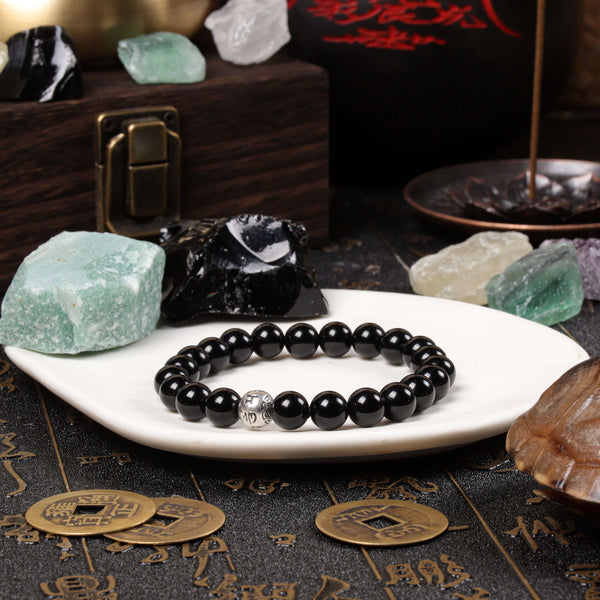
Raw Black Tourmaline or Obsidian: Place near your computer tower or reception desk to anchor energetic boundaries.
Clear Quartz or Amethyst Clusters: Keep near creative workspaces to support focus and composed problem-solving.
Natural Raw Citrine or Pyrite: Display in your Wealth Corner to invite prosperity and creative abundance.
Three Intentional Desk Setups:
The Strategic Founder Set: Solid brass task lamp (Metal element for clarity), raw Black Tourmaline chunk (grounded boundaries), and a hardbound linen strategy journal on the right side.
The Abundance & Flow Set: Potted Jade plant in a glazed ceramic planter, natural Citrine point catch-all tray, and a sleek, warm-neutral desk lamp.
The Creative Visionary Set: Smooth Amethyst cluster for calm insight, miniature ZZ plant for resilient growth, and a ceramic mug with rounded organic lines.

What Color to Paint Office Feng Shui: Five Elements Palette
Recommended Color Harmony by Element
Wood Element: Sage, moss, soft olive. Best for creative and R&D environments.
Fire Element: Terracotta, warm peach. Best for marketing and dynamic presentation areas.
Earth Element: Warm linen, sand, taupe. Best for HR, operations, and finance.
Metal Element: Crisp ivory, warm slate. Best for legal, audit, and executive offices.
Water Element: Midnight navy, deep slate. Best for high-level strategy and consulting.
Avoid saturated, high-gloss fire-engine red across entire walls, as it can inadvertently trigger restlessness over a long workday.

Small Spaces: Feng Shui Cubicle & Home Office Desk Placement
How to Feng Shui Your Office Cubicle
You can establish personal clarity even within a shared, open floor plan:
Fix a subtle, frameless wide-angle convex mirror to your monitor bezel to keep the walkway behind you in view.
Select an ergonomic chair with a high, supportive back in charcoal, deep slate, or warm umber to create personal backing.
Keep your desk surface clean and introduce a compact, easy-care succulent or mini ZZ plant on your left.
Where to Place Desk in Home Office & Workplace Direction
Preserve Clear Boundaries: Avoid placing your desk where your bed is in your direct line of sight. If your desk must share a bedroom, use a tailored linen folding screen or bookcase to separate your work area from your resting space.
Avoid the Corner Trap: Resist tucking your desk facing directly into a dark corner with your back exposed to the room door. Angle your desk outward to maintain an open, welcoming view.

Low-Budget Workspace Upgrades: 10 Instant Adjustments
Quick Spatial Fixes
Clear the Entryway Threshold: Remove cardboard boxes and surplus equipment from behind doors so they open freely.
Re-orient Your Chair: Adjust your seat angle so you can look up and comfortably see the main doorway.
Clean Your Screen Borders: Remove outdated sticky notes, reminders, and clutter from your monitor edges.
Upgrade Your Desk Bulb: Swap out cool, flickering fluorescent bulbs for warm, high-CRI LED lighting.
Move the Wastepaper Basket: Relocate the office trash bin away from your far-left wealth corner.
Refresh Your Greenery: Trim away dry leaves, wipe down dusty foliage, and refresh your potting soil.
Organize Surface Wires: Gather loose cords into neat, discreet under-desk sleeves.
Add a Grounding Element: Place a natural black tourmaline stone between your keyboard and screen.
Display Meaningful Milestones: Hang significant diplomas, certifications, or awards on your left-hand wall.
The 5-Minute Evening Reset: Clear your desk surface at the end of each day so you can begin tomorrow with clarity.

7-Day Office Feng Shui Implementation Plan
Your Step-by-Step Weekly Blueprint
Day 1: Clear Pathways: Unblock the entrance and interior circulation routes.
Day 2: Command Position: Re-orient your desk to establish solid wall backing.
Day 3: Wealth Corner: Clean the top-left quadrant and introduce a living plant.
Day 4: Cable Management: Tidy loose cords and clear the physical desk surface.
Day 5: Living Botanicals: Bring in rounded-leaf, vibrant indoor plants.
Day 6: Lighting & Air: Introduce warm task lamps and improve ventilation.
Day 7: Daily Rhythm: Commit to the 5-minute evening reset for lasting order.
Inspiring Workplace Transformations: Modern Commercial Case Studies
The MAX Zone Tech Campus
By applying classical spatial principles, campus designers integrated curved walkways, balanced open spaces, and quiet alcoves throughout this tech hub. The thoughtfully organized environment improved cross-departmental communication while lowering everyday noise and visual fatigue.
SharkNinja EMEA Headquarters (London)
Guided by classical spatial consultants, every floor of this headquarters incorporates natural daylight channels, sound-absorbing natural materials, and dedicated focus areas. This balanced approach highlights how heritage design traditions continue to shape forward-thinking commercial spaces.

Conclusion: Align Your Space to Empower Your Purpose
Optimizing your workspace does not require grand renovations or complicated rituals. It begins with three practical steps:
Clear your doorway to welcome fresh opportunities.
Take the Command Position to anchor your focus and authority.
Bring life to your Wealth Corner with vibrant greenery and a tidy, intentional layout.
When you intentionally arrange your physical workspace, you communicate clarity, confidence, and respect for your craft. Treat your office not as a passive storage room for desks and screens, but as an active, supportive environment designed to nurture your vision, well-being, and sustained success.
About the Heritage Consultant
Master Gu Haiyun is a recognized lineage holder of the Zi Fu Qi Men tradition and founder of HVibeTune. Blending classical spatial wisdom with modern environmental design, Master Gu advises entrepreneurs, creative leaders, and organizations across the globe on cultivating purposeful, high-performance workspaces.

Frequently Asked Questions (FAQ: Office Feng Shui & Desk Placement)
What is the most critical rule of office Feng Shui?
The Command Position. Sitting with a clear view of the room entrance, supported by a solid wall behind you and away from the direct door path, eases subconscious vigilance, anchors authority, and sharpens analytical focus.
Should my desk face the window or be perpendicular to it?
Ideally, place your desk perpendicular to the window, with your back supported by a solid wall. This configuration avoids screen glare, preserves reassuring structural backing, and provides comfortable ambient daylight throughout the day.
What is the best direction for office table as per Vastu and Feng Shui?
Both Vastu and classical compass Feng Shui favor facing East (for innovation and fresh growth) or North (for clear communication and steady wealth flow). However, the architectural realities of your space always take priority over compass bearings. Never compromise the Command Position simply to face a specific compass direction.
Can I practice office Feng Shui if I only have a small cubicle?
Yes. Energetic harmony applies at any scale. You can place a small convex mirror on your monitor bezel to maintain awareness of the aisle behind you, choose a chair with good back support, keep your desk surface uncluttered, and place a compact potted plant on your left-hand side.
Is cactus good for office Feng Shui?
In classical spatial analysis, plants with sharp spines are best kept away from immediate working surfaces, as their spiky silhouettes introduce subtle visual tension (Sha Qi). Friendly, broad-leaved plants like Jade, Pothos, or Money Trees are much better suited for cultivating calm, steady vitality.
What to do if your office desk faces a wall?
If your desk faces a solid wall, place an expansive landscape artwork depicting an open horizon directly at eye level, or position a small desktop mirror so you can see behind you, opening up your visual and mental field.






Leave a comment