
The Complete Guide to Chi Energy: Meaning, Functions, and How to Increase Your Life Force (Qi)
TABLE OF CONTENTS
- What Is Chi Energy? The Fundamental Life Force
- Chi Energy Meaning and Historical Origins: Ancient Philosophy to Modern Science
- The Functions of Chi Energy: 5 Physiological Actions and 4 Core Movements
- Is Chi Energy Real? The Modern Scientific Perspective
- The Spiritual Meaning of Chi Energy: Mindfulness, Space, and Personal Alignment
- Self-Assessment: What State Is Your Chi Energy In?
- How to Increase, Develop, and Acquire Chi Energy
- Chi Energy Healing and Utilization: How to Channel and Balance Chi
- Chi Energy Meditation: A Step-by-Step Cultivation Guide
- Everyday Maintenance and Clinical Safety Boundaries of Chi
- Summary: Key Takeaways on Cultivating Life Force Energy
- Frequently Asked Questions (FAQ)
Chi (氣) is the foundational concept through which Eastern wisdom understands the primordial current of life itself. At once ancient and timeless, this universal vitality is now being continually rediscovered and validated by contemporary science. This comprehensive guide traverses the entire continuum of Chi: from its classical philosophical origins, multifaceted dimensions, and clinical evidence, to somatic self-assessment, sacred cultivation methods, everyday application, and grounded safety boundaries. Here is an authentic, systematic illumination of what chi energy is, how to cultivate it, how to channel it with reverence, and how to integrate its power into modern life.

What Is Chi Energy? The Fundamental Life Force
Chi energy is the central pillar of classical Eastern longevity traditions—the vital pulse that animates all living creation. Known alternately across spiritual lineages as Qi, Chi, Ki, or Prana, it is the living breath of existence. This chapter establishes an authentic understanding of Chi through its authoritative definitions, cross-cultural expressions, three dimensional realities, four vital classifications, and its sacred symbiotic dance with blood.
The Authoritative Definition of Chi Energy
When modern medical institutions attempt to define chi energy, they turn to centuries of empirical Eastern observation. The U.S. National Institutes of Health (NIH), within its official Medical Subject Headings (MeSH), defines Qi as:
"The vital life force energy of traditional Chinese philosophy and medicine that flows through the body, roughly equivalent to the Greek pneuma, Latin spiritus, and Sanskrit prana."
Complementing this, the Cleveland Clinic describes Chi as "the vital energy, force, or power that flows through the body, giving life and vitality to every cell."
Simply understood, Chi is the fundamental life force sustaining biological existence. It is the dynamic power that keeps the heart pulsing rhythmically, enables digestion, and infuses warmth into our hands and feet. A groundbreaking 2024 paper published on PubMed argues that translating Chi merely as an ethereal "spirit" fails to capture its profound reality. Instead, the true meaning of Chi corresponds directly to how modern physics defines energy—the fundamental thermodynamic substrate underlying all physical matter in the cosmos.
Qi, Chi, Ki, and Prana: One Universal Force Under Different Names
This universal life force is recognized across sacred traditions throughout human history, shifting names across cultural lineages:
Qi (China): The standard modern Pinyin Romanization representing the primordial breath of heaven and earth.
Chi (China - Classical): The traditional Wade-Giles transliteration, through which the West first encountered internal arts like Tai Chi.
Ki (Japan): The sacred vitality cultivated in Japanese traditions such as
Prana (India): The cosmic breath-energy governing Yogic science and Ayurvedic medicine.
The NIH MeSH classification explicitly acknowledges that Qi is the Eastern counterpart to Greek pneuma
The Three Core Dimensions of Chi
Chi is not a single, isolated element. It reveals itself across three interdependent dimensions:
The Physical Dimension:
The Functional Dimension:
The Psychological Dimension: The state of mental clarity and emotional resonance. When a person radiates vibrant clarity, classical philosophy calls it Shen Qi Shi Zu (vital spirit in full bloom); when exhausted and hollowed out by stress, it is diagnosed as
The Four Vital Types of Chi: Yuan Qi, Zong Qi, Ying Qi, and Wei Qi
According to its origins, movement pathways, and functional manifestations, classical tradition classifies internal energy into four primary streams:
Yuan Qi (Original / Ancestral Chi): The most sacred, foundational vitality of the human vessel. Formed from prenatal essence inherited from parents at conception, it resides deep within the Kidney system and relies on postnatal nourishment for preservation. It initiates, drives, and regulates cellular growth, reproductive vigor, and the harmonious functioning of all organs and meridians.
Zong Qi (Gathering / Pectoral Chi): Formed in the thoracic cavity through the alchemy of clear atmospheric energy inhaled by the lungs and refined grain essence extracted by the spleen. It powers respiration, drives the cardiovascular pulse, and anchors vocal projection.
Ying Qi (Nutritive Chi): Derived from the most refined essence of diet and hydration. It flows strictly within the blood vessels, traveling with the vascular rhythm to generate fresh blood and supply direct cellular nourishment throughout the body.
Wei Qi (Defensive Chi): Sourced from the most active, kinetic aspect of nutritional vitality. It travels outside the blood vessels across fascia and skin layers, unbound by rigid pathways. It serves as your primary radiant immune shield—defending the surface against environmental pathogens, regulating pores, and maintaining skin resilience.
In essence:
The Relationship Between Chi and Blood
Classical energetic wisdom presents an eternal golden law:
"Chi is the commander of Blood; Blood is the mother of Chi."
Chi provides the active kinetic impetus that circulates blood through the vessels—where conscious energy flows, living circulation follows. Chi also safeguards vascular tone, keeping blood securely within its channels. In return, Blood serves as the sacred material vessel that anchors, shelters, and carries Chi. To nourish the blood, one must first cultivate the breath and energetic foundation. When blood is severely lost or depleted, Chi disperses, losing its physical sanctuary.

Chi Energy Meaning and Historical Origins: Ancient Philosophy to Modern Science
To truly understand chi energy, one must step beyond modern clinical terminology and return to the sacred philosophical soil from which it emerged.
The Philosophical Concept of Chi in Classical Daoism
The concept of Chi began as a vast cosmological worldview. In the Tao Te Ching, Laozi observed:
Later, the medical canon Huangdi Neijing (The Yellow Emperor's Classic of Medicine) systematized this spiritual philosophy into the cornerstone of holistic wellness. It established that Chi is one of the "Three Treasures" (Jing, Qi, Shen) of human life, declaring: "All disharmony originates from aberrations in Chi."
The Evolution of Chi in TCM, Tai Chi, and Qigong Practices
Within Traditional Chinese Medicine, Chi is the primal substance sustaining biological order, warming the vessel, dispelling external evils, and containing vital essences. The kinetic circulation of energy is termed Qi Ji
Over hundreds of years, lineages of dedicated practitioners refined internal arts like Tai Chi, Qigong, Baduanjin, Liu Zi Jue, and Zhan Zhuang. They transformed philosophical contemplation into accessible somatic practices—harmonizing body, breath, and mind (Tiao Shen, Tiao Xi, Tiao Xin
Parallels in Western Thought: Élan Vital, Bio-Energy, and Physics
Western thought has consistently sought this same underlying mystery. Henri Bergson introduced élan vital (the vital impetus) to explain the evolutionary drive of organic life. Ancient Greek pneuma, Latin spiritus, and Sanskrit prana
A 2024 paper published on PubMed highlights that the ancient Eastern understanding of Chi aligns remarkably with the scientific definition of energy—the fundamental physical basis of all matter in the universe. By comparing ancient Eastern treatises on nature with modern thermodynamics and Yin-Yang dynamics, the study illustrates that both traditions arrived at the identical physical reality, separated only by cultural and linguistic frameworks.

The Functions of Chi Energy: 5 Physiological Actions and 4 Core Movements
Chi is far from an abstract musing; it performs concrete, daily physiological duties within your body.
The Five Essential Physiological Functions of Chi in the Body
Traditional medical wisdom outlines five vital actions that Chi carries out:
Activation (Pushing) Function: Inspires biological growth, physical development, and reproductive vigor; stimulates organ and meridian functions; and initiates the generation and circulation of blood, fluids, and vital essence.
Thermoregulation (Warming) Function: Sustains a stable core temperature; circulates comforting warmth to extremities, organs, and sensory gates.
Defensive Function: Protects the physical surface against environmental pathogens, maintaining the integrity of the body's energetic boundary.
Containment (Holding) Function: Securely holds blood within vascular channels, preventing leakage, and regulates sweat, metabolic fluids, and vital essence from draining unnecessarily.
Transformation (Metabolic) Function: The internal biological furnace that transmutes clean air, water, and food into life-sustaining energy, blood, and vital moisture.
The Four Directional Movements of Chi: Ascending, Descending, Exiting, Entering
The kinetic movement of energy (Qi Ji) flows along four dynamic vectors, attuned to specific organs (for instance, Liver and Spleen Chi ascend, while Lung and Stomach Chi descend):
Ascending (升): Lifts clear, light energy upward toward the mind, enhancing cognitive focus and spiritual clarity.
Descending (降): Guides heavy, turbid energy downward through the digestive tract, ensuring smooth digestion and preventing toxic heat build-up.
Exiting (出): Disperses defensive energy across the skin and fascia, fortifying your outer protective shield.
Entering (入): Concentrates nourishing energy deep into the visceral organs, supporting deep cellular restoration and nourishment.
When these directional currents fall out of rhythm, disharmony occurs. If energy that should descend reverses upward, acid reflux, nausea, and hiccups arise. If clear energy fails to ascend, brain fog, dizziness, and heavy fatigue take hold.
How Chi Shapes Mental Health, Stress Resilience, and Emotional Calm
Abundant Chi creates emotional steadiness, sharp focus, and endurance. Depleted Chi leads to anxiety, chronic exhaustion, and overwhelm. Dynamic movement practices like Qigong combine fluid physical postures with breath control, offering an accessible bridge for individuals who find motionless seated meditation difficult.
A 2025 systematic review and meta-analysis confirmed that traditional Chinese exercises such as Tai Chi and Qigong significantly alleviate anxiety and depression in older adults, showing clear positive correlations with regular practice frequency, intensity, and duration.
The Significance of Chi in Everyday Life: Overcoming Daily Exhaustion
Notice these common daily occurrences:
The Post-Work Burnout: Feeling utterly hollowed out after a long day at the office—this reflects a state of chronic Qi Deficiency.
The Caffeine Trap: Leaning on double espressos only to crash harder later—caffeine provides no real nourishment; it merely forces your body to overdraw from its non-renewable Yuan Qi reserves.
Cold Hands and Feet: Freezing extremities in winter point to deficient Yang energy, showing that the warming thermoregulatory function of Chi is struggling.
Chi is not a distant mystery; it is the raw vitality behind your daily focus, vitality, and resilience.

Is Chi Energy Real? The Modern Scientific Perspective
This is the most common inquiry from contemporary seekers. To answer with integrity, we must look at sensory experience, clinical research, biophysics, and mainstream scientific boundaries.
The Experiential Standpoint: Somatosensory Sensations and Physical Reality
From direct somatic experience, Chi is unmistakably real. During dedicated standing meditation (Zhan Zhuang
Clinical Research and Institutional Stances: NIH, NCCIH, and HRV Evidence
Global research institutions actively study these somatic disciplines:
Fall Prevention & Balance: The National Center for Complementary and Integrative Health (NCCIH) highlights clear clinical evidence that Tai Chi and Qigong reduce fall risks in seniors while improving stability for individuals navigating mild-to-moderate Parkinson's disease or stroke rehabilitation.
Autonomic Regulation & Heart Rate Variability (HRV): A 2025 systematic review and meta-analysis published on PubMed evaluated the physiological effects of Tai Chi and Qigong on Heart Rate Variability (HRV) across 15 clinical trials. The results revealed statistically significant improvements in standard deviation of NN intervals (SDNN, $g = 0.47, 95\%\text{ CI: } [0.22, 0.72], p < 0.001$) and marked elevation in root mean square of successive differences (RMSSD, $g = 0.60, 95\%\text{ CI: } [0.21, 0.99], p = 0.002$). As HRV directly reflects autonomic balance, this data provides quantitative proof of Qigong's capacity to calm sympathetic fight-or-flight stress.
Cardiovascular Health: Meta-analyses show Qigong practice yields significant reductions in systolic blood pressure (weighted mean difference = $-17.40\text{ mmHg}$), alongside improvements in diastolic blood pressure and stroke volume in hypertensive individuals.
Oncology Recovery Support: A 2025 umbrella review and meta-analysis showed that Qigong and Tai Chi substantially improve overall quality of life, physical functioning, fatigue, and sleep quality among cancer survivors, significantly easing cancer-related fatigue in breast cancer cohorts.
The Mainstream Scientific Consensus: From Subtle Force to Biophysical Energy
Mainstream medical science does not use the terminology of an "intangible mystical vapor." Yet, as demonstrated in the 2024 PubMed paper, the operational reality of Chi aligns with the physical definition of energy. Modern biophysical research into fascial continuity and piezoelectricity demonstrates that moving mindfully generates micro-currents through connective tissue liquid crystals. Ancient masters described through poetic language the exact thermodynamic and bioelectric phenomena that modern physics studies today.
A Grounded, Rational Approach: Integrative Mind-Body Tool vs. Medical Treatment
Do not mythologize it, and do not dismiss it. Approach Chi as an empowering mind-body discipline, not an alternative to modern medicine. As the NCCIH notes, while studies show mind-body practices relieve anxiety and support mobility, larger clinical trials are continually needed. Qigong provides long-term preventive vitality support, but must never substitute for emergency clinical care.

The Spiritual Meaning of Chi Energy: Mindfulness, Space, and Personal Alignment
Beyond the physical body, Chi encompasses consciousness, focus, and sacred living presence.
Chi and Spirituality: The Vital Bridge Between Body and Mind
Chi is more than mechanical energy; it is the living bridge between physical form and conscious awareness. In traditional lineage teachings, Chi lives within the sacred trinity of the Three Treasures: Jing (physical essence), Qi (life force), and Shen (conscious spirit). Abundant Chi elevates the spirit; depleted Chi clouds the mind. The NIH MeSH index notes that concepts of life-force energy originated as humanity's conscious awareness of external nature, evolving into disciplined self-reflection on internal vitality.
Chi, Mindfulness, and Moving Meditation: Dynamic Zen in Daily Practice
While contemporary Western mindfulness often emphasizes silent seated observation, energy arts emphasize dynamic Zen (moving meditation)
Chi in Feng Shui, the Five Elements, and Personal Spatial Fields
In Feng Shui, Chi refers to the harmonious, living flow of environmental energy. The Five Elements (Wu Xing) and constitutional mapping (Bazi) are time-honored frameworks used to understand individual energetic alignments:
Sacred Environmental Flow: Creating harmonious living spaces that cultivate uplifting Sheng Qi while dispelling stagnant pockets.
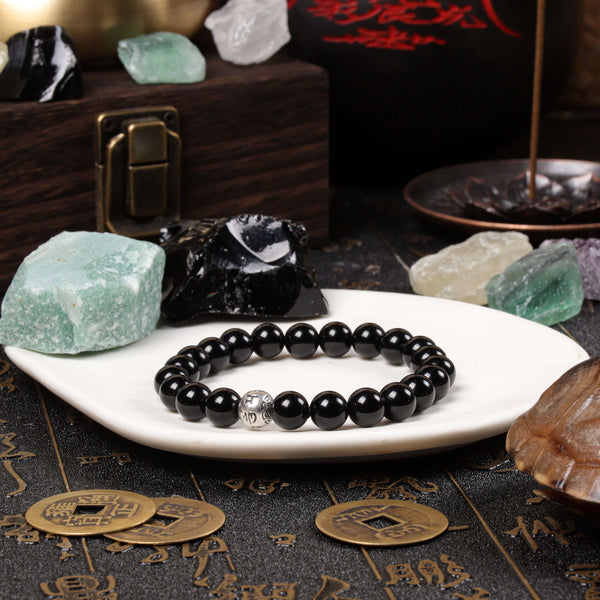
Conduits of Earth Resonance: Incorporating natural earth elements—such as genuine black obsidian for deep grounding or natural citrine for joyful clarity—acts as a tangible wearable energy anchor. Rooted in traditional spatial energy calibrations, these natural minerals serve as sacred physical anchors on your wrist, reminding you throughout modern stress to return to your breath, center your spirit, and maintain your personal energetic boundary.

Self-Assessment: What State Is Your Chi Energy In?
Before building energy, you must know your baseline. As the classical canon notes, "all diseases arise from aberrations in Chi." Traditional frameworks identify four primary functional imbalances:
1. Qi Deficiency: Chronic Fatigue and Depleted Energy Reserves
Qi Deficiency manifests across different organ systems:
Lung Qi Deficiency: Subtle shortness of breath, weak voice, spontaneous daytime sweating.
Heart Qi Deficiency: Heart palpitations, mental fatigue, unrefreshed sleep.
Spleen Qi Deficiency: Weak digestive fire, post-meal bloating, loose stools, muscle weakness.
Kidney Qi Deficiency: Lumbar soreness, weak knees, fatigue, frequent night urination.
General Signs: Systemic physical exhaustion, low voice, catching frequent colds.
2. Qi Stagnation: Stress, Tension, and Blocked Chi Energy
Qi Stagnation occurs when energy is present but its movement is trapped, commonly involving the Liver and Stomach systems:
Liver Qi Stagnation: Tightness across the chest and ribs, poor appetite, irritability, mood swings, and frequent sighing.
Spleen/Stomach Stagnation: Recurrent epigastric distension, irregular bowel movements, and muscle tension that shifts across the body.
3. Qi Reversal: Counter-Flow, Reflux, and Uprising Tension
Qi Reversal happens when internal energy moves in the wrong directional vector:
Lung Qi Reversal: Inability of energy to descend, causing spasmodic coughing and wheezing.
Stomach Qi Reversal: Inability to guide digestive contents downward, causing chronic acid reflux, belching, nausea, and vomiting.
Liver Qi Reversal: Energy surging violently upward, causing throbbing temporal headaches and dizziness.
4. Qi Sinking: Depleted Core Support and Structural Heaviness
When the body's internal ascending, holding energy collapses:
Clinical Signs: A heavy dragging sensation in the lower abdomen, persistent pelvic pressure, chronic diarrhea, and in severe cases, clinical organ prolapse (such as uterine prolapse, gastroptosis, or hemorrhoids).
Clinical Safety Guidelines and Educational Assessment Boundaries
⚠️ Important Safety Guidance: This self-assessment serves strictly as an educational model of traditional functional physiology. It is not an alternative to licensed clinical care. Severe, sudden, or unremitting symptoms require prompt medical evaluation.

How to Increase, Develop, and Acquire Chi Energy
This chapter provides ten structured, actionable methods to build, cultivate, and maintain daily vitality:
The Core Internal Mindset: Relaxation (Song), Stillness (Jing), and Naturalness (Ziran)
Connecting with your internal energetic network requires three internal postures:
Song (松 - Relaxation): Consciously releasing muscular contraction around joints. Chi cannot circulate through rigid, braced musculature.
Jing (静 - Stillness): Quieting analytical inner dialogue. When mental projection ceases, internal energy naturally consolidates.
Ziran (自然 - Naturalness): Allowing breath and movement to settle organically without forced strain or rigid visualizations.
Diaphragmatic Breathwork: Dan Tien Breathing for Parasympathetic Activation
Research confirms that conscious diaphragmatic breathing increases cardiac parasympathetic activity. Studies show that a paced rhythm of 6 breaths per minute markedly strengthens autonomic tone, improving stress resilience. Medical research from Johns Hopkins confirms that diaphragmatic engagement activates the vagus nerve, initiating a systemic relaxation response.
Practice Routine: Inhale deeply through your nose, allowing your lower abdomen to expand naturally outward. Exhale slowly as the abdomen contracts gently back toward the spine. Aim for a relaxed pace of 3 to 5 breaths per minute. The breath should be smooth, fine, gentle, and extended (Yun, Xi, Rou, Chang).
Standing Meditation and Internal Circulation: Zhan Zhuang, Microcosmic Orbit, and Closing
Zhan Zhuang (Standing Stake): Stand with feet shoulder-width apart, knees slightly softened, and arms rounded in front of the chest as if holding a sphere. Relax your shoulders completely. Hold this posture for 5 minutes daily to stimulate microcirculation and build postural alignment.
Microcosmic Orbit (小周天): Inhale while guiding intent from the perineum upward along the spinal column to the crown of the head. Exhale while guiding intent down along the front midline back to the lower Dan Tien.
Closing Integration (收功 - Never Skip): Rub your palms together until warm. Gently smooth your warm palms upward over your face, comb your fingers back through your hair, lightly pat your arms and legs to stimulate surface circulation, and place both hands flat over your lower abdomen for one minute of quiet integration.
Dynamic Movement Systems: Baduanjin, Liu Zi Jue (Six Healing Sounds), and Tai Chi
Baduanjin (Eight Brocades): Synchronizes limb movement with breath control to clear meridians. Recommended postures include "Holding Up the Sky with Both Hands" to stretch the torso and Triple Warmer, and "Raising a Single Hand" to regulate the Spleen and Stomach.
Liu Zi Jue (Six Healing Sounds): Uses acoustic vibration to tune visceral organs. The sounds include "Xu" (Liver), "He" (Heart), "Hu" (Spleen), "Xi" (Lungs), "Chui" (Kidneys), and "Xi" (Triple Warmer). Repeat each sound 6 times with slow exhalations.
Tai Chi: Formally recommended by the CDC for balance control. A 2025 meta-analysis confirmed Tai Chi significantly enhances balance and lowers fall risks in older adults. Focus on three structural fundamentals: suspended crown, dropped shoulders/elbows, and a relaxed, aligned spine.
Nutrition and Herbal Roots: Whole Foods and Adaptogens for Postnatal Chi
Nourishing Daily Staples: Chinese Mountain Yam (Shan Yao—tones Spleen, Lung, and Kidney networks; gentle for weak digestive types), dried red jujube dates, and warm millet porridge.
Herbal Adaptogens:
Astragalus (Huang Qi): The premier adaptogenic root for fortifying surface defensive vitality (Wei Qi) and boosting stamina.
Ginseng (Ren Shen): Highly concentrated; used to replenish compromised reserves during acute exhaustion.
Codonopsis (Dang Shen): A gentler, balanced alternative to Ginseng, well-suited for daily vitality maintenance.
Simple Vitality Tonic: Simmer a few slices of organic astragalus root, fresh ginger, and lean broth for an easily absorbed restorative meal.
Circadian Rest: Preserving Vitality Through the Zi-Wu Sleep Windows
Align sleep schedules with natural biological rhythms:
Zi Hour (11:00 PM to 1:00 AM): Deep sleep during this window is non-negotiable for cellular regeneration, metabolic repair, and liver blood restoration.
Wu Hour (11:00 AM to 1:00 PM): A brief 15-minute quiet rest at midday settles the nervous system and supports mental focus for the afternoon.
Habits to Avoid: Identifying What Silently Drains Your Life Force
Late-Night Screen Use: Over-stimulates visual and cognitive pathways, depleting internal calm and liver blood reserves.
Stimulant Over-Reliance: Forces temporary energy surges by artificially borrowing from unrenewable constitutional Yuan Qi reserves.
High-Intensity Training During Burnout: Pushing through grueling workouts when already running on empty drains essential defensive vitality (Wei Qi).
Consuming Excess Iced Foods: Forces the digestive system to expend metabolic energy warming fluids to body temperature, slowing microcirculation.
Chronic Rumination & Worry: Disperses internal mental focus, draining heart and spleen energy.

Chi Energy Healing and Utilization: How to Channel and Balance Chi
Chi is utilized not only for health maintenance, but also across external healing and internal martial arts.
Internal Healing: "Where Intent Goes, Chi Travels; Where Chi Travels, Blood Follows"
Through breathwork and focused meditation, you can guide conscious intent to areas of discomfort. The governing principle of Eastern medicine states:
"Where intent goes, Chi travels; where Chi travels, Blood follows."
Guiding intent to a specific anatomical region promotes microcirculation, delivering oxygen and nutrients necessary for cellular tissue repair.
External Applications: Tui Na, Moxibustion, Gua Sha, and Tai Chi Push Hands
In internal martial arts, Chi is mobilized to project dynamic force, utilizing intent rather than tension. In everyday wellness, traditional somatic bodywork—such as Tui Na (massage), Moxibustion (warming herb therapy), and Gua Sha (fascial scraping)—serves as physical tools to adjust surface pathways and stimulate circulation.
How to Master and Channel Chi Energy: Directing Mindful Intent with Breath
Mindful intent sets the direction of Chi; respiration governs its rhythm.
Practice Routine: Inhale deeply down to the lower Dan Tien; exhale while softly guiding warm awareness to the target area (such as tight shoulders or lower back). Keep the body relaxed without forcing sensation.
How to Balance Your Chi: Targeted Restorative Solutions for the Four Imbalances
Classical medicine establishes specific clinical therapeutic principles for each imbalance pattern:
For Qi Deficiency: Tonify. Replenish energy with Astragalus, Chinese Yam, and restorative sleep.
For Qi Stagnation: Disperse. Encourage energy circulation using organic rosebud tea, light physical movement, and emotional release.
For Qi Reversal: Descend. Guide energy downward using deep diaphragmatic breathing, acupressure on the Neiguan point (PC6), and avoiding iced meals.
For Qi Sinking: Elevate. Raise core vitality using targeted moxibustion over the Baihui point (GV20) at the apex of the skull, supported by traditional herbal formulas such as Bu Zhong Yi Qi Tang.

Chi Energy Meditation: A Step-by-Step Cultivation Guide
Follow this five-step classical routine to cultivate internal energy:
Align the Body (调身 - Tiao Shen): Sit upright on a comfortable chair, allowing shoulders to drop. Rest the tip of your tongue lightly against the roof of your mouth, just behind your upper teeth. This placement forms an energetic bridge connecting the primary regulatory channels (Ren and Du meridians). Keep eyes half-closed.
Align the Breath (调息 - Tiao Xi): Allow respiration to become slow, even, unhurried, and deep. Avoid holding your breath or forcing a rigid pattern.
Align the Mind (调心 - Tiao Xin): Anchor your awareness gently in the lower Dan Tien—the primary energy reservoir located roughly two inches below your navel and deep inside your core. Rest your focus there without overthinking.
Circulate the Microcosmic Orbit (小周天 - Optional): On inhalation, guide intent from the perineum upward along the spinal column to the crown of the head. On exhalation, guide intent downward along the front midline channel back to the lower Dan Tien.
Closing Integration Routine (收功 - Mandatory): Rub your palms together rapidly until they generate friction heat. Smooth warm palms upward over your face, comb your fingers through your hair from front to back, lightly pat your arms and legs, and place both hands flat over your lower abdomen for one minute. Never skip this closing step.

Everyday Maintenance and Clinical Safety Boundaries of Chi
When practicing energy cultivation, physiological safety takes absolute precedence over chasing sensations.
Seasonal Chi Care: Adapting Your Energy Across Spring, Summer, Autumn, and Winter
Spring: Expand daily movement, rise early, and take long, gentle walks to encourage smooth liver Chi circulation.
Summer: Embrace active vitality, but protect internal calm and stay hydrated during peak heat to support heart energy.
Autumn: Focus on deep, centering breathwork, simplify schedules, and gather personal energy inward to protect pulmonary health.
Winter: Prioritize extra nocturnal rest, conserve energy output, and consume warm, nourishing foods to protect deep kidney reserves.
Who Should Avoid Intensive Energy Supplementation? Excess, Heat, and Contraindications
Not every individual is suited for direct energy supplementation:
Excess Patterns: Severe emotional blockage, acute blood stasis, or severe active constipation. Supplementing energy without first clearing blockages can worsen internal stagnation.
Heat Patterns: High fevers, acute purulent throat inflammation, painful canker sores, or severe hypertensive crises. Supplementation can aggravate acute inflammatory heat.
Psychiatric Precautions: Individuals managing active psychosis, schizophrenia, or severe dissociative conditions should avoid internal energetic manipulation, as it may exacerbate mental destabilization.
Acute Emergencies: Crushing chest pain, symptoms of stroke, or severe physical trauma require immediate 911 emergency services. Energy work supports chronic wellness; it never replaces emergency clinical intervention.
Modern Habits vs. Energy Preservation: Rethinking Daily Depletions
Late-night digital screen exposure over-stimulates mental pathways, depleting restorative calm and liver blood reserves.
Over-reliance on stimulants artificially overdraws constitutional Yuan Qi reserves.
Heavy high-intensity training during burnout exhausts defensive vitality (Wei Qi).
Excess cold beverages force the digestive system to expend metabolic energy warming fluids, slowing circulation.
Chronic emotional rumination disperses internal focus, depleting heart and spleen energy.
When to Seek Immediate Medical Care: Red Flags and Safe Practices
For persistent symptoms, acute flare-ups, or unexplained pain, consult a licensed healthcare provider promptly. Qigong supports health, but does not replace medical treatment. Clinical literature documents a case where a chronic hypertensive patient experienced an intracranial hemorrhage after practicing Qigong due to abnormal blood pressure responses during exercise, highlighting the necessity for individuals with cardiovascular conditions to practice under medical supervision.

Summary: Key Takeaways on Cultivating Life Force Energy
Reviewing the journey:
Chi is the daily vitality and life force you physically experience—the biological fuel sustaining life. Traditional theory categorizes Chi into Yuan Qi, Zong Qi, Ying Qi, and Wei Qi, carrying out five vital functions: activation, thermoregulation, defense, containment, and metabolic transformation.
While modern science avoids the term "mystical life force," the operational meaning of Chi aligns closely with the scientific definition of energy. A 2025 meta-analysis confirmed that Tai Chi and Qigong produce statistically significant improvements in Heart Rate Variability (HRV), providing clinical proof of autonomic nervous regulation. The NIH and CDC validate that these practices lower fall risks, improve balance, reduce systolic blood pressure, and ease cancer-related fatigue.
You can cultivate Chi energy through diaphragmatic breathwork, Zhan Zhuang, meditation, Baduanjin, Liu Zi Jue, Tai Chi, whole foods, and circadian sleep. Restoring energetic balance requires targeted approaches for deficiency, stagnation, reversal, and sinking.
Always remember: Cultivating internal energy is not about chasing unusual physical sensations. It is simply about returning your body to its natural physiological order—softening physical tension, quieting mental noise, and allowing your natural life force to circulate smoothly.
Frequently Asked Questions (FAQ)
What is chi energy in simple terms?
Chi (also spelled Qi) is the foundational life force energy that circulates through the body, sustaining heart function, digestion, circulation, immune resilience, and emotional balance. It corresponds culturally to Japanese Ki, Indian Prana, and Greek Pneuma. The NIH MeSH index formally defines it as the vital life force energy flowing through the body.
Is chi energy scientifically real?
From an experiential perspective, practitioners routinely observe sensations of warmth, tingling, and mild bioelectric resistance. From a clinical perspective, institutions like the NIH, NCCIH, and CDC have funded and validated mind-body practices, demonstrating proven benefits for balance, heart rate variability (HRV) regulation, and blood pressure reduction. Mainstream science approaches Chi not as an incorporeal fluid, but as an experiential framework aligning with bioelectric energy and thermodynamic function.
How do you increase chi energy?
You can build sustainable energy through diaphragmatic Dan Tien breathwork, static standing meditation (Zhan Zhuang), internal circulation meditation, Baduanjin, Liu Zi Jue, Tai Chi, nutrient-dense whole foods (such as Chinese yam and astragalus), restorative circadian sleep, and eliminating habits that drain energy.
How do you develop chi energy?
Developing energy centers on the triad of Relaxation (Song), Stillness (Jing), and Naturalness (Ziran). Begin with 5 to 10 minutes of daily diaphragmatic breathing and standing stake meditation, gradually expanding consistency over time.
How do you acquire chi energy?
Prenatal Yuan Qi is inherited genetically from parents at birth, while postnatal energy is replenished daily through mindful respiration, clean nutrition, fluid movement, and restorative sleep. The key to long-term vitality is nourishing postnatal energy to protect constitutional prenatal reserves.
Does chi energy healing really work?
Systematic reviews and meta-analyses show that practices like Tai Chi and Qigong offer measurable adjunctive benefits for balance stability, blood pressure reduction, bone mineral density, lower back tension, depressive symptoms, and cancer-related fatigue. However, they serve as complementary wellness disciplines, not substitutes for clinical medical treatment.
How do you channel chi energy?
Direct the flow of energy using conscious intent (Yi), and regulate its pace through smooth respiration: "Where intent goes, Chi travels; where Chi travels, Blood follows." Inhale down into your lower Dan Tien, and exhale while gently guiding your focused attention to the target area.
How do you use chi energy?
Internally, Chi is directed to relieve physical tension and encourage cellular repair. Externally, it is expressed through internal martial arts (such as Tai Chi push hands) and applied clinically through physical bodywork modalities including Tui Na, Moxibustion, and Gua Sha.
Are there side effects to practicing chi energy?
When practicing under authentic traditional guidance—avoiding forced strain and completing the mandatory closing integration routine (Shou Gong)—the risk is minimal. However, individuals managing active psychosis or schizophrenia should avoid intensive Qigong. Those with acute fevers, severe infections, or emergency medical conditions must exercise caution and seek professional clinical care.
What is the difference between Qi, Chi, and Ki?
They are conceptually identical, reflecting linguistic and cultural variations. Qi is the modern Chinese Pinyin spelling, Chi is the classical Wade-Giles transliteration, and Ki is the Japanese pronunciation. All refer to the foundational life-force energy.
What is the relationship between Chi and Traditional Chinese Medicine (TCM)?
Chi is the central pillar of TCM theory, underlying physiology, pathology, diagnosis, and treatment. The classical canon Huangdi Neijing states that "all diseases arise from aberrations in Chi," establishing energetic disharmony as a primary driver of illness.
Can you learn chi energy cultivation on your own?
Yes. Beginners can safely practice fundamental breathwork, static standing meditation (Zhan Zhuang), and Baduanjin at home. Focus on gentle consistency, avoid forcing sensations, and consult a qualified healthcare provider for persistent physical symptoms.
What is the connection between Chi and Feng Shui?
Feng Shui focuses on the harmonious balance and flow of spatial environmental energy, with Chi serving as its central operational concept. It represents a traditional cultural practice and should not be presented as a medical therapy.
How do you distinguish between Qi Deficiency, Stagnation, Reversal, and Sinking?
-
Qi Deficiency: Energy depletion; marked by chronic fatigue, shortness of breath, and spontaneous sweating.
-
Qi Stagnation: Energy blockage; marked by chest fullness, abdominal distension, and emotional irritability.
-
Qi Reversal: Upward directional counter-flow; marked by acid reflux, hiccups, nausea, and headaches.
-
Qi Sinking: Depleted core holding power; marked by heavy downward dragging sensations and organ prolapse tendencies.






Leave a comment