
Dragon and Phoenix: Decoding Eastern Wisdom’s Oldest Yin-Yang Symbol
TABLE OF CONTENTS
- Why Are the Dragon and Phoenix Always Paired?
- Archaeological Origins: 5,000 Years of Physical Evidence
- The Philosophical Core: The Perfect Expression of Yin-Yang Harmony
- The Plot Twist: How the Dragon and Phoenix Swapped Genders
- East vs. West: Why Dragon & Phoenix ≠ Western Dragons & Phoenixes
- Everyday Feng Shui: How to Elevate Your Energy with the Sacred Pair
- Crystals & Wearable Feng Shui: Amplifying Your Energy Field
- Modern Lifestyle, Fashion, and Sacred Culture
- Conclusion: A 5,000-Year Wisdom of Harmony
- Ready to Harmonize Your Energy?
- Frequently Asked Questions (FAQ)
From 5,000-Year-Old Sacred Jade to Modern Feng Shui Alignment
Why Are the Dragon and Phoenix Always Paired?
If you have ever glanced at a Chinese restaurant menu, walked into a spiritual crystal boutique, or admired a dual motif on a sacred piece of jewelry, you have likely seen them: The Dragon and The Phoenix.
One commands the heavens, clouds, and life-giving rains, while the other reigns supreme over the avian world with divine grace. They represent two completely different mythical realms. Yet, across thousands of years, they are eternally bound together.
At traditional weddings, you will find them decorating double-happiness candles and silk quilts. During vibrant cultural celebrations, dragon and phoenix dances light up the streets. In fine jewelry design, bracelets and pendants featuring this sacred pair remain among the most cherished keepsakes for personal protection, romance, and energetic harmony.
Why are these two beings always paired together? Why not a Dragon and a Tiger, or two Phoenixes?
The answer lies etched into a 5,000-year-old piece of carved jade. Behind this iconic duo rests the ultimate secret of Eastern philosophy: The Harmony of Yin and Yang.
This symbolic pairing has endured for over 5,000 years—more than twenty times the history of the United States. To truly understand Eastern metaphysics, energetic alignment, and mindful living, one must first decode the sacred bond between the Dragon and the Phoenix.

Archaeological Origins: 5,000 Years of Physical Evidence
The Dragon and Phoenix pairing did not emerge from mere fairy tales or creative folklore; it is anchored in tangible, ancient archaeological discoveries.

The Earliest Defined Dragon and Phoenix
According to Guo Dashun, Executive Director of the Chinese Archaeological Society, the earliest definitive carved forms of both the Dragon and the Phoenix originate from jade artifacts of the Hongshan Culture—a Neolithic civilization that flourished 5,000 to 6,000 years ago along the West Liao River basin.
Between 1983 and 2003, archaeologists excavating the sacred Niuheliang site unearthed multiple exquisite jade dragons and jade phoenixes. One notable jade phoenix was found rested beneath the head of an ancient noble inside a burial tomb, confirming that the Dragon and Phoenix already served as sacred symbols of spiritual authority, noble lineage, and cosmic connection.
The Interlocking Dragon & Phoenix Pendant
Among the most breathtaking discoveries at Niuheliang Tomb 23 is the interlocking Dragon-Phoenix Jade Pendant. Carved with delicate relief techniques, the dragon's snout extends forward alongside the phoenix's raised crown and upturned beak, their heads spiraling in a sacred dance of unified energy.
The "First Dragon of China" and Tribal Integration
Even earlier origins can be traced to the Chahai site in Liaoning, where an 8,000-year-old stone-stacked dragon sculpture was uncovered, known today as the "First Dragon of China."
Historically, both creatures emerged as composite totems created by combining features from various ancient tribal animals:
The Dragon unified the snake, crocodile, fish, deer, ox, and horse, alongside natural elements like clouds and thunder (representing the Xia tribe).
The Phoenix combined the rooster, eagle, swallow, crane, and peacock, infused with the essence of the sun and wind (representing the Yin/Shang tribe).
As famous scholar Wen Yiduo noted in Fuxi Kao:
"The dragon is a mythical creature existing not in biological reality, but in the realm of sacred totems—a harmonious synthesis created by blending the symbols of diverse ancient tribes."
Core Insight: The origin of the Dragon and Phoenix pairing stands as the earliest physical testimony to the Eastern spirit of unity, inclusion, and energetic synthesis.

The Philosophical Core: The Perfect Expression of Yin-Yang Harmony
If archaeology reveals where the Dragon and Phoenix came from, philosophy explains why they remain inseparable.
What is "Yin and Yang"?
Yin-Yang philosophy forms the bedrock of Eastern metaphysics and holistic wellness. It views the cosmos as governed by two complementary, primordial energies:
Yin: Earth, gentleness, receptivity, moonlight, inner reflection, and feminine energy.
Yang: Heaven, vitality, strength, sunlight, dynamic action, and masculine energy.
Yin and Yang are never in conflict; they exist in a dynamic, mutually nourishing balance. True vitality, peace, and abundance arise when these two forces align in complete equilibrium.
The Energetic Attributes of Dragon & Phoenix
In classical metaphysics, the Dragon represents pure Yang—embodying action, strength, heavenly protection, and commanding leadership. The Phoenix represents pure Yin—embodying grace, beauty, nurturing wisdom, and magnetic attraction.
Together, their union creates the ultimate balance of universal energy. The traditional idiom "Dragon and Phoenix Bring Auspiciousness" was first recorded in the ancient text Kong Cong Zi, where Confucius observed that when a leader governs with virtue and harmony, sacred omens—led by the Dragon and Phoenix—manifest in the physical world.
The Dragon (Yang): Represents heaven, vitality, dynamic strength, water, clouds, and rain.
The Phoenix (Yin): Represents earth, grace, nurturing magnetism, fire, sun, and renewal.
Their Combined Result: Brings auspicious blessings, personal protection, relationship harmony, and lasting peace and prosperity.

The Plot Twist: How the Dragon and Phoenix Swapped Genders
A fascinating yet little-known historical fact: The gender associations of the Dragon and Phoenix were not always as they are today. In fact, they underwent a complete historical evolution.
Early History (Neolithic to Spring and Autumn Era):
Originally, the Dragon represented Yin energy (associated with subterranean water, rivers, and rainfall), while the Phoenix represented Yang energy (associated with the southern sun bird and fire element).
The Imperial Era Transformation:
During the Qin and Han Dynasties, Qin Shi Huang (the First Emperor of China) declared himself the "Ancestral Dragon." From that point forward, emperors claimed the Dragon as the exclusive symbol of imperial, masculine power (Yang). Naturally, the Phoenix—celebrated for its elegance and divine grace—became the symbol of the Empress (Yin).
Linguistic Nuance (Feng and Huang):
Etymologically, the bird itself originally contained two genders: Feng (male) and Huang (female), as reflected in the classic romance Feng Qiu Huang ("The Male Phoenix Seeks the Female"). However, when paired directly with the Dragon, the entire Phoenix archetype acts as the feminine counterpart (Yin) to the Dragon's masculine leadership (Yang).

East vs. West: Why Dragon & Phoenix ≠ Western Dragons & Phoenixes
For Western readers, spiritual practitioners, and enthusiasts of Eastern culture, understanding the linguistic and symbolic differences is crucial.
1. Chinese Dragon (Loong) vs. Western Dragon
The Western Dragon: A heavy, winged, fire-breathing reptile—often depicted in Western folklore and mythology as a dangerous beast guarding hoarded treasure, symbolizing chaos to be overcome.
The Chinese Dragon (Loong): A benevolent, water-ruling deity. With the horns of a stag, the scales of a carp, the claws of an eagle, and the body of a serpent, the Loong rides the wind without wings, bringing life-giving rain, prosperity, and divine protection.
To bridge this cultural gap, linguists and scholars increasingly advocate using "Loong" to distinguish this sacred water deity from the Western dragon.
2. Chinese Phoenix (Fenghuang) vs. Western Phoenix
The Western Phoenix: Famous for rising from its own ashes—a symbol of fire, rebirth, physical resurrection, and immortality.
The Chinese Phoenix (Fenghuang): The undisputed Queen of Birds. The Fenghuang represents peace, virtue, high aesthetic harmony, and auspicious grace. It does not go through a fire-death-rebirth cycle in native tradition; its presence alone signifies a peaceful and prosperous world.
Mythological Archetype Breakdown
Chinese Dragon (Loong):
Primary Meaning: Auspiciousness, authority, leadership, and rain.
Elemental Alignment: Water, clouds, and sky.
Human Connection: Benevolent protector and divine symbol.
Unique Trait: Wingless flight with composite animal attributes.
Western Dragon:
Primary Meaning: Fire, destruction, and greed.
Elemental Alignment: Fire and subterranean earth.
Human Connection: Adversary to be defeated by heroes.
Unique Trait: Winged reptile capable of breathing fire.
Chinese Phoenix (Fenghuang):
Primary Meaning: Grace, virtue, and peaceful prosperity.
Elemental Alignment: Symbolic fire and sunlight.
Human Connection: Bringer of joy and spiritual blessing.
Unique Trait: Queen of Birds embodying complete moral virtue.
Western Phoenix:
Primary Meaning: Rebirth, immortality, and renewal.
Elemental Alignment: Fire and solar rays.
Human Connection: Symbol of personal transformation and resurrection.
Unique Trait: Cyclic rebirth from its own ashes.
The Sacred Pair: In Western mythology, there is no equivalent to the Dragon and Phoenix pair. Using two divine creatures to represent the cosmic equilibrium of Yin and Yang is a uniquely Eastern contribution to global spiritual philosophy.

Everyday Feng Shui: How to Elevate Your Energy with the Sacred Pair
In classical Feng Shui, the ancient art of harmonizing human life with surrounding energy fields, symbols act as energetic mirrors and focal points for Qi—the primordial life force.
"Qi scatters when blown by the wind, and gathers when bounded by water."
— Guo Pu (276–324 AD), The Book of Burial
The Dragon and Phoenix combination is considered the ultimate Feng Shui cure for love, relationship harmony, and balanced personal power.
The Three Core Applications
Attracting Love & Relationship Bliss:
Placing Dragon and Phoenix artwork or symbols in the bedroom helps balance masculine and feminine dynamics. For single individuals, it helps attract a balanced, high-compatibility partner. For couples, it deepens emotional connection and resolves friction.
Activating Abundance & Success:
In Earth Branch astrology, the Dragon and the Phoenix form one of the "Six Harmonies" that transforms into Gold element energy. The Dragon rules authority and wealth (Water brings wealth), while the Phoenix attracts recognition and opportunity (Fire brings prestige). Together, they support both career progression and financial stability.
Warding Off Negative Energy & Harmonizing the Home:
As divine protectors, the Dragon and Phoenix elevate the overall aura of a residence, transforming chaotic energy into peaceful, balanced Qi.
Placement Recommendations
In the Bedroom: Ideal for love, marriage, and romance. Place in the South or Southwest corner of the room. Avoid pointing sharp carved angles directly at the bed.
In the Living Room: Ideal for family harmony and overall abundance. Display in prominent, elevated areas (such as a glass cabinet) to anchor noble energy.
In the Home Office: Ideal for career growth and professional influence. Position the decor facing inward toward your workspace to invite clear leadership and creative wisdom.
Areas to Avoid: Keep sacred symbols away from kitchens and bathrooms. Heavy grease, moisture, or unorganized clutter disrupts spiritual balance.
Did You Know?
Chinese lore speaks of the "Nine Sons of the Dragon"—nine mythical creatures, each with unique talents. For instance, Bixi resembles a giant tortoise and excels at carrying heavy loads (often carved at the base of stone monuments), while Chiwen loves swallowing fire and guards roof ridges against burning.

Crystals & Wearable Feng Shui: Amplifying Your Energy Field
In modern spiritual wellness, authentic gemstones and natural crystals are widely appreciated for their natural vibrational frequencies. When combined with sacred iconography like the Dragon and Phoenix, they become powerful tools for personal alignment—often referred to as Wearable Feng Shui.
Combining Natural Crystals (Earth Element) with the Dragon & Phoenix Motif (Yin-Yang Harmony) creates a harmonized personal aura and serves as a daily mindfulness anchor.
Quick Energy Check
Are you currently leading with Dragon Energy (focused on drive, ambition, and swift action) or Phoenix Energy (focused on grace, magnetic attraction, and intuition)? Identifying where you stand is the first step toward achieving true energetic balance.
Gemstone Pairing Guide
For Love & Connection:
Recommended Gemstones: Rose Quartz, Carnelian.
Energetic Effect: Resonates with the Heart Chakra; cultivates romantic warmth, trust, and emotional alignment between partners.
For Wealth & Opportunity:
Recommended Gemstones: Citrine, Green Phantom.
Energetic Effect: Activates the Solar Plexus Chakra; combines the Dragon’s ambitious drive with the Phoenix’s fortunate breakthroughs.
For Protection & Grounding:
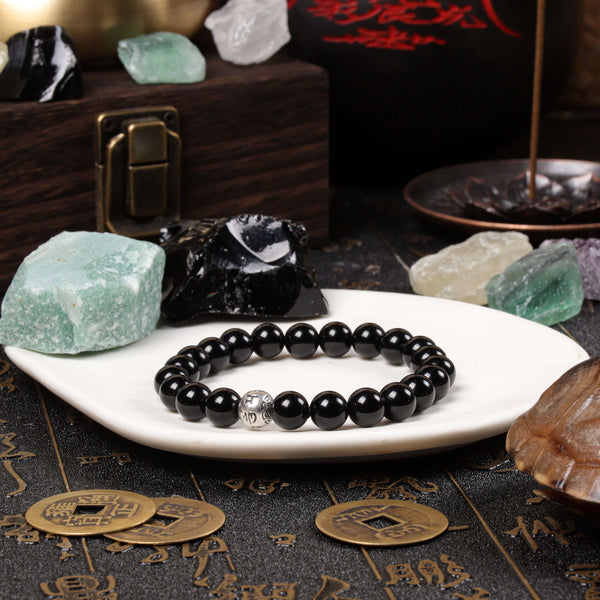
Recommended Gemstones: Black Obsidian, Tiger's Eye.
Energetic Effect: Provides Root Chakra anchoring; wards off negative influences while strengthening personal boundaries.
For Wisdom & Inner Peace:
Recommended Gemstones: Amethyst, Aquamarine.
Energetic Effect: Aligns the Crown and Throat Chakras; calms overactive thinking and fosters clear, confident self-expression.
How to Select Quality Feng Shui Jewelry
Choose Natural Gemstones over Glass: Genuine minerals carved from the Earth hold authentic mineral resonance.
Prioritize Artistic Clarity: Look for fluid, balanced carvings where both Dragon and Phoenix details are distinct and harmoniously rendered.
Seek Mindful Craftsmanship: Choose designs crafted with respect for cultural heritage and conscious intention.

Modern Lifestyle, Fashion, and Sacred Culture
The Modern Jewelry Revival
From heritage goldsmithing to sleek, minimalist modern designs, the Dragon and Phoenix motif continues to inspire contemporary fashion. Worldwide, people choose Dragon-Phoenix bracelets, rings, and pendants as everyday mindfulness reminders of inner strength, grace, and energetic balance.
Sacred Ceremonies & Festivals
Traditional Weddings: Dragon-Phoenix candles, embroidered tea sets, and silk garments remain central to honoring lineage and blessing newlyweds with lifetime harmony.
Festive Celebrations: The spirited Dragon and Phoenix dances performed during global Lunar New Year events bring communities together to clear out old energy and welcome fresh blessings.
Cultural Respect Reminders
Honor the Pair: Avoid isolating one symbol if your intention is Yin-Yang balance; the power rests in their mutual presence.
Keep in Upright Orientation: Display and wear sacred symbols in an upright, respectful position rather than inverted or discarded casually.
Practice Intentional Mindfulness: Wear your pieces as daily reminders to align your actions with courage (Dragon) and compassion (Phoenix).

Conclusion: A 5,000-Year Wisdom of Harmony
From 5,000-year-old Neolithic jade pendants to modern natural crystal bracelets, the Dragon and Phoenix pair remains the most enduring symbol of Yin-Yang harmony in Eastern thought.
If there is one core insight to carry forward, it is this: The Dragon and the Phoenix are not rivals; they are lifelong partners. Their power comes not from dominating one another, but from elevating each other through balance, mutual respect, and peaceful co-existence.
In a fast-paced modern world, the wisdom of the Dragon and Phoenix invites us to cultivate our own internal equilibrium—balancing action with rest, strength with grace, and ambition with inner peace.
Ready to Harmonize Your Energy?
Whether you are seeking to invite romantic alignment into your life, activate career breakthroughs, or elevate your everyday personal aura, surrounding yourself with sacred geometry and intentional gemstones makes all the difference.
Explore our artisan-crafted Dragon & Phoenix Gemstone Jewelry Collection—carved from genuine, ethically sourced crystals to bring 5,000 years of Eastern wisdom into your daily style.
Frequently Asked Questions (FAQ)
Q1: What is the main meaning of the Dragon and Phoenix symbol?
A: The Dragon and Phoenix represent the ultimate union of Yin and Yang energies—masculine strength and feminine grace, action and receptivity, sky and earth. Together, they symbolize perfect relationship harmony, peace, protection, and abundant blessings.
Q2: What is "Dragon and Phoenix" at a Chinese restaurant or on a Chinese menu?
A: On a Chinese food menu, "Dragon and Phoenix" is a classic dual-style dish that features two distinct proteins served side-by-side on a single platter. The Dragon represents seafood (typically jumbo shrimp or lobster meat), while the Phoenix represents poultry (tender chicken breast). Often, the chicken is prepared in a vibrant, savory, or mildly spicy sauce (such as Hunan or General Tso's style), while the seafood is stir-fried with fresh vegetables in a delicate white wine sauce.
Q3: Are Chinese dragons and Western dragons the same thing?
A: No, they are fundamentally different. Western dragons are historically portrayed as winged, fire-breathing creatures of legend. The Chinese Dragon (Loong) is a wingless, benevolent water deity that rules rain, clouds, rivers, and leadership, representing dignity, protection, and supreme good fortune.
Q4: How is the Chinese Phoenix (Fenghuang) different from the Western Phoenix?
A: The Western Phoenix is famous for its cyclic fire-death and rebirth from its own ashes, symbolizing immortality. The Chinese Phoenix (Fenghuang) is a sacred bird of high virtue and grace that symbolizes peace, prosperity, and joy. It does not go through a fire-and-ashes rebirth cycle in original Eastern traditions.
Q5: What does a Dragon and Phoenix tattoo symbolize?
A: A Dragon and Phoenix tattoo symbolizes complete energetic harmony, personal balance, and the sacred union of power and beauty. It reflects the wearer's search for equilibrium between strong leadership (Yang) and mindful, compassionate wisdom (Yin).
Q6: Can I wear a Dragon and Phoenix Feng Shui bracelet every day?
A: Yes. Wearing a natural crystal Dragon-Phoenix bracelet serves as an excellent daily anchor for mindfulness, balance, and protection. It aligns your personal energy field throughout the day while reminding you to act with both confidence and grace.
Q7: Which wrist should I wear my Dragon and Phoenix bracelet on?
A: In traditional energetic practice, the left hand is considered the receptive hand (absorbing positive Qi, love, and luck into your energy field), while the right hand is the active hand (releasing stagnant energy and offering protection). Most practitioners prefer wearing love and wealth intention bracelets on the left wrist.
Q8: Where should I place a Dragon and Phoenix statue or painting in my home?
A: The best locations are the bedroom (to enhance romantic harmony and marriage), the living room (to support overall household peace and prosperous energy), or the home office (to foster career clarity and balanced leadership). Avoid placing sacred symbols in kitchens or bathrooms.
Q9: Is the Dragon and Phoenix symbol only meant for married couples?
A: While it is famously associated with marital bliss and weddings, single individuals can also use the symbol to attract a well-balanced soulmate or to harmonize their own internal Yin and Yang energies.
Q10: Why do some Western video games or movies show Chinese dragons breathing fire?
A: This is a common cultural mashup in Western media. Traditional Chinese dragons are water deities associated with rainfall and ocean depths rather than fire. Depicting a Chinese dragon breathing fire comes from blending Western dragon traits into Eastern visual designs.



Leave a comment