
The Ultimate Guide to the God of Wealth (Caishen): 2026 Rituals, Cultural Archetypes, and Mindful Energy Anchors
TABLE OF CONTENTS
- Who Is the God of Wealth? Understanding Global Abundance Archetypes
- What Is the God of Wealth’s Real Meaning? (Beyond the "Get-Rich-Quick" Myth)
- Can You Honor Wealth Deities from Other Traditions?
- How to Welcome and Pray to the God of Wealth in 2026
- How to Wear a God of Wealth Bracelet: Choosing Your Energy Anchor
- Frequently Asked Questions (FAQ)
Across global spiritual traditions, the God of Wealth is not a single mythological figure. Instead, it represents a universal archetype of abundance, honorable prosperity, and mindful stewardship.
While Eastern metaphysics honors figures like Cai Shen (Zhao Gongming) and Guan Yu (Guan Gong), Vedic tradition venerates Lakshmi and Kubera, Greek mythology speaks of Plutus, and Norse folklore reveres Freyr. Even Hades is frequently brought into the conversation—not because he is a deity of fortune, but because ancient cultures tied the underworld to subterranean mineral wealth.
Welcoming a wealth deity into your modern life has nothing to do with superstitious "get-rich-quick" promises. Rooted in centuries of Eastern wisdom, true prosperity practice centers on four foundational pillars: Reverence, Diligence, Benevolence, and Wealth Stewardship.
This comprehensive guide clarifies who the gods of wealth are across world traditions, resolves common Western mythological mix-ups, details the 2026 welcoming rituals and Feng Shui placements, and explains how to choose an authentic wearable energy anchor for your daily journey.

Who Is the God of Wealth? Understanding Global Abundance Archetypes
Just as the title "healer" or "mentor" encompasses various roles, the term God of Wealth reflects distinct expressions of abundance: steady career income, entrepreneurial expansion, asset protection, and fertile peace.
The Chinese God of Wealth (Caishen): Civil, Martial, and Five-Direction Guardians
In Eastern spatial metaphysics, wealth guardians are grouped into three primary lineages:
Civil Gods of Wealth (Wen Caishen): Exemplified by historical luminaries like Bi Gan and Fan Li. They embody strategic intellect, fair accounting, ethical enterprise, and steady, deserved career income (Zheng Cai).
Martial Gods of Wealth (Wu Caishen): Exemplified by Zhao Gongming and Guan Yu (Guan Gong). Acting as energetic shields and guardians of business, they safeguard assets, clear spatial friction, and invite entrepreneurial windfalls and commercial growth (Pian Cai).
The Five-Direction Gods of Wealth (Wu Lu Cai Shen): Led by Zhao Gongming alongside four celestial ministers representing North, South, East, West, and Center. This archetype signifies opening clear energetic pathways for fortune to flow in from every direction.
For modern households, studios, and executive offices, honoring Guan Gong, Zhao Gongming, or the Five-Direction Caishen remains the most enduring practice for stabilizing living spaces and attracting honorable fortune.
Hindu and Buddhist Wealth Deities: Lakshmi, Kubera, and Zambhala
Eastern metaphysics expands across Vedic and Himalayan traditions with distinct energetic vibrations:
Goddess Lakshmi: The supreme divine mother of spiritual and material abundance, fortune, and household harmony. She represents organic, life-giving auspiciousness (Sri).
Lord Kubera: The Vedic treasurer of the cosmos and guardian of the Northern direction, overseeing precious underground resources and worldly wealth.
Jambhala (Zambhala): Revered within Himalayan Buddhist traditions, Zambhala vows to remove material lack so practitioners can focus on inner cultivation, clarity, and selfless generosity.
Plutus vs. Hades: Who Is the Real Greek God of Wealth?
One of the most frequent search inquiries asks: Is Hades the god of wealth? The historical distinction is clear:
Plutus: The true personification of abundance in Greek mythology (son of Demeter). He carries a cornucopia and embodies agricultural and monetary harvest. In classical literature, he was often depicted as blind—symbolizing how fortune often lands without regard to merit.
Hades (Roman Pluto): The sovereign ruler of the underworld. Hades is not a deity of business or trade. However, because ancient civilizations unearthed gold, silver, and precious gemstones from deep within the earth, the Romans granted him the epithet Pluto ("The Wealthy").
The Distinction: Plutus governs actual prosperity; Hades rules the subterranean realm whose mineral treasures earned him a fortune-associated title.
Norse, Japanese, and Global Prosperity Symbols
Norse (Freyr): The Vanir deity of solar warmth, bountiful harvests, and peace, representing organic vitality and land wealth rather than minted coin.
Japanese (Daikokuten & Ebisu): Cherished figures among the Seven Lucky Gods (Shichifukujin). Ebisu protects honest labor and commercial trades, while Daikokuten carries a magical wealth mallet (Uchide no Kozuchi) and sacks of rice to signify enduring domestic abundance.
Egyptian: While ancient Egypt had no direct equivalent to Caishen, agricultural fertility and home safety were safeguarded by life-giving river deities like Hapi and domestic protectors like Bes.
Global Wealth Archetypes at a Glance
| Cultural Tradition | Core Deities | Energetic Domain | Traditional Symbols |
| Chinese (Feng Shui) | Zhao Gongming, Guan Gong, Five-Direction Caishen | Direct career income, business trade, asset security | Gold Sycee (Ingot), abacus, dragon blade |
| Vedic / Himalayan | Lakshmi, Kubera, Zambhala | Auspicious grace, cosmic treasuries, dharmic sufficiency | Lotus flower, treasure mongoose, jewel vase |
| Greek | Plutus | Material wealth and prosperity | Cornucopia, coins |
| Greco-Roman | Hades / Pluto | The underworld, hidden earth minerals | Scepter, helm, raw gemstones |
| Norse | Freyr | Agriculture, fertile land, societal peace | Golden boar, harvest sheaves |
| Japanese | Daikokuten, Ebisu | Commercial fairness, coastal trade, pantry plenty | Golden mallet, rice sacks, sea bream |

What Is the God of Wealth’s Real Meaning? (Beyond the "Get-Rich-Quick" Myth)
A wealth deity should never be viewed as an automatic transactional machine. In authentic Eastern practice, bringing a wealth anchor into your life serves three mindful purposes:
Cultural and Ethical Alignment: A grounding reminder that lasting prosperity requires uncompromising integrity, strategic focus, and honorable value creation.
Subconscious and Behavioral Anchoring: Displaying an altar figure or wearing an intentional crystal bracelet functions as an environmental anchor. It consistently redirects your daily habits toward disciplined financial stewardship and purposeful effort.
Harmonious Seasonal Rituals: Annual traditions—such as the Lunar Welcoming Ceremony—unite household intentions, clearing stagnant energy and creating an atmosphere of renewed clarity and optimism.
No metaphysical symbol replaces sound financial literacy, legal diligence, active risk management, or persistent hard work. Authentic traditions emphasize personal accountability over speculative shortcuts.

Can You Honor Wealth Deities from Other Traditions?
Modern spiritual seekers often wonder if they can connect with Caishen, Lakshmi, or Zambhala outside their ancestral lineage. The answer is yes, provided three rules of cultural integrity are honored:
Rule 1: Honor the Original Lineage. Understand the underlying philosophy before adopting a deity purely for decorative novelty or trendiness.
Rule 2: Avoid Chaotic Syncretism. Do not blend conflicting ceremonial elements at a single altar. Chinese Caishen is customarily acknowledged with fresh loose-leaf tea, fresh seasonal fruit, and clean botanical incense; Hindu deities receive fresh flowers, ghee lamps, and pure sweets. Keep your sacred spaces clean, coherent, and distinct.
Rule 3: Differentiate Cultural Appreciation from Formal Devotion. Wearing a symbolic pendant or displaying an artistic figurine as an aesthetic energy anchor is welcoming to everyone. However, setting up a formal consecration altar requires consistent daily care, cleanliness, and dedication.

How to Welcome and Pray to the God of Wealth in 2026
When to Receive the God of Wealth in 2026 (Dates & Timelines)
In the traditional lunar calendar, the universal celebration for welcoming Caishen occurs on the 5th Day of the First Lunar Month.
2026 Welcoming Date: Saturday, February 21, 2026.
Preparation Window: Many households cleanse their living spaces and set out fresh arrangements on the evening of February 20, completing ceremonies during the auspicious morning hours of February 21.
Step-by-Step Ritual: How to Welcome the God of Wealth at Home
Purify the Environment: Deep-clean your front entryway, foyer, and primary living area. Physical clutter directly restricts the smooth movement of vital life energy (Qi).
Prepare the Offerings: Set out clean, respectful offerings: fresh citrus fruits (symbolizing golden abundance), simple sweet pastries, fresh water or brewed loose-leaf tea, and natural botanical incense.
Open Pathways: Open your front door or main living room windows slightly to signify inviting fresh, vibrant cosmic energy across your threshold.
Speak an Intentional Aspiration: Light your incense, center your breathing, and articulate your aspirations with clarity:
"With sincerity and respect, we welcome the auspicious presence of Caishen. May this space foster harmony, ethical trade, and wise stewardship over every resource received."
Express Grounded Gratitude: Settle your thoughts in silence. Avoid frantic demands; cultivate an inner posture of peaceful abundance, resolve, and appreciation.
Where to Place the God of Wealth at Home in 2026 (Feng Shui Placement Guide)
Proper spatial orientation balances your home's natural energetic layout:
Civil God of Wealth (Wen Caishen): Position facing inward toward your living room or executive study. This symbolically channels abundance, insight, and career stability straight into the heart of the home.
Martial God of Wealth (Wu Caishen / Guan Gong): Position facing outward toward the primary entrance or front door. This shields the perimeter, repels disharmonious external energy, and guards incoming commercial ventures.
Essential Spatial Taboos:
Never place statues facing restrooms, bathroom doors, kitchens, or utility areas.
Avoid positioning directly underneath heavy overhead architectural beams.
Never leave statues in cluttered, dusty, or unlit storage spaces.
Maintain a dedicated, respectful separation from ancestral memorial shrines.

How to Wear a God of Wealth Bracelet: Choosing Your Energy Anchor
If a full home altar does not match your living space or lifestyle, a wearable energy anchor serves as an intimate, portable companion to reinforce your daily financial mindfulness.
5 Standards for Selecting an Authentic Prosperity Bracelet
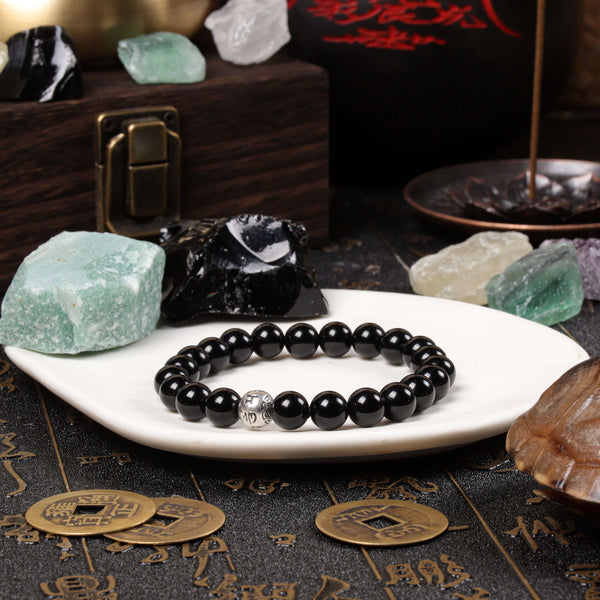
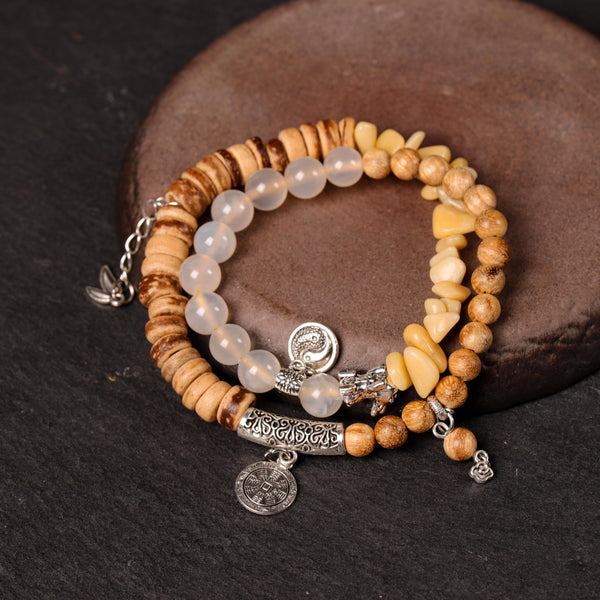
Natural Mineral Resonance: Genuine stones—such as natural untreated Citrine (solar abundance), Black Obsidian (energetic shielding), or Red Agate (grounding and vital courage)—carry authentic earth frequencies that synthetic materials cannot match.
Intentional Alignment: Match your chosen gemstone to your primary focus: career stability (Zheng Cai), entrepreneurial growth (Pian Cai), or emotional equilibrium and boundaries.
Daily Ergonomics: Select refined, durable designs that sit comfortably on your wrist during daily tasks, computer work, and travel.
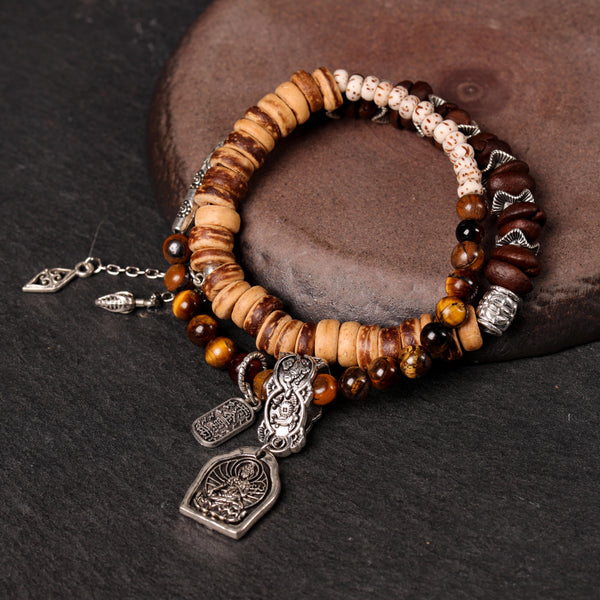
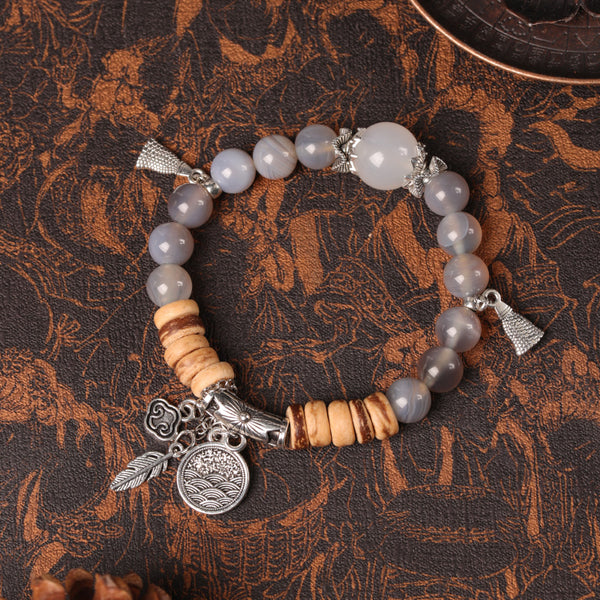
Cultural Integrity: Choose artisan pieces that honor sacred geometry and traditional iconography rather than distorted, commercial mass production.
Wear & Care Etiquette: Remove before showering, swimming, or sleeping to protect the stones' polish and honor your ritual boundaries. Wear on your receptive (typically left) hand to invite balanced environmental energies inward.
The HVibeTune Philosophy: Centuries of Eastern Energy Calibration
At HVibeTune, metaphysical jewelry is crafted as a modern Zen instrument—a tangible wearable energy anchor rather than a superstitious charm.
Centuries of Heritage: Rooted in hundreds of years of Eastern spatial metaphysics and energy traditions, each design is shaped alongside seasoned practitioners.
Mindful Craftsmanship: Every natural stone and carved motif undergoes focused energetic calibration before dispatch, ensuring pure, harmonious vibrational clarity.
A Grounded, Modern Zen Aesthetic: HVibeTune avoids fear-based marketing, superstitious claims, or exaggerated promises. Each piece serves as a physical touchpoint to quiet the mind, protect your inner boundaries, and navigate your career with clarity and integrity.

Frequently Asked Questions (FAQ)
1. Who is the God of Wealth?
The God of Wealth is a universal archetype representing fortune, abundance, and ethical commerce. In Chinese culture, the most widely revered figures are Zhao Gongming (the Martial God of Wealth), Guan Gong, and the Five-Direction Caishen.
2. Is the God of Wealth the same as the God of Luck?
Not entirely. While luck deities govern random serendipity and sudden chance, wealth deities govern disciplined enterprise, material stability, asset protection, and the tangible rewards of honest labor.
3. Is Hades the God of Wealth?
No. Hades is the sovereign lord of the Greek underworld. He became linked with wealth because the subterranean realm holds the earth's natural gold, silver, and precious gems, which earned his Roman counterpart the title Pluto ("The Rich").
4. Who is the true Greek God of Wealth?
The Greek deity of wealth is Plutus, the son of Demeter, who represents agricultural plenty, harvest bounty, and economic abundance.
5. Who are the primary Chinese Gods of Wealth?
They include the Civil Wealth Gods (Bi Gan and Fan Li), the Martial Wealth Gods (Guan Yu and Zhao Gongming), and the Five-Direction Guardians.
6. Who is the Hindu God of Wealth?
The most prominent deities are Goddess Lakshmi (auspicious fortune and life-giving abundance) and Lord Kubera (guardian of cosmic wealth). Within Esoteric Buddhism, Zambhala fulfills a complementary role.
7. Can I honor both Chinese and Hindu wealth deities?
Yes, provided you respect their individual traditions by maintaining dedicated, tidy spaces and offering authentic customary elements for each.
8. When do we welcome the God of Wealth in 2026?
The annual Lunar Welcoming celebration falls on February 21, 2026 (the 5th Day of the First Lunar Month).
9. Where should the God of Wealth be placed at home?
Civil Caishen should face inward toward your living quarters to welcome stability and career wisdom home. Martial Caishen should face outward toward the primary entrance to protect incoming business opportunities. Avoid locations near restrooms, kitchens, or under heavy overhead beams.
10. Do God of Wealth bracelets actually work?
They function as psychological and energetic anchors. Wearing natural gemstones keeps your daily intentions centered, curbs impulsive spending, and grounds your daily work ethic.
11. Can I wear a God of Wealth bracelet if I am not religious?
Yes. Authentic Eastern philosophy views these designs as mindfulness tools and natural energetic anchors that reinforce personal equilibrium, focus, and integrity.
12. How do I pray to or invoke the God of Wealth?
Approach your practice with a clean physical environment, clear intentions, simple respectful offerings (fruit and tea), and heartfelt gratitude. Meaningful prayers focus on seeking mental clarity, protection, and fair fruit for diligent effort.
True wealth stewardship begins with understanding cultural lineages, organizing personal finances, and grounding daily habits in Reverence, Diligence, Benevolence, and Wealth Stewardship. Whether through an intentional altar setup or a mindful natural stone bracelet, dedicating an anchor in your daily life keeps that commitment clear and steady every single day.



Leave a comment