
The Complete Guide to Yin and Yang: Origins, Symbol Meaning, and Modern Living
TABLE OF CONTENTS
- What is Yin and Yang? Explained in One Simple Sentence
- The Origins and Cultural History of Yin and Yang (Where Does Yin and Yang Come From?)
- The Core Philosophy of Yin-Yang: "One Yin and One Yang is Called the Dao"
- Yin vs. Yang: What Does Yin and Yang Represent?
- Which is Yin and Which is Yang? How to Tell the Difference
- The Yin Yang Symbol Meaning: Deconstructing the Taijitu
- How Yin and Yang Interconnects with Other Traditional Systems
- Yin and Yang in Traditional Chinese Medicine and Holistic Health
- Practical Applications of Yin and Yang in Everyday Modern Life
- Contemporary Interpretations of Yin-Yang: Science, Psychology, and Philosophy
- Common Misconceptions and Critical Thinking
- Summary: How to Truly Understand and Embody Yin and Yang
- Frequently Asked Questions (FAQ)
You have likely seen it on meditation mats, spotted it outside acupuncture clinics, or noticed it printed on modern graphic apparel. But what is Yin and Yang, really? How has this ancient Chinese philosophy endured for thousands of years, continuing to shape the way we think, heal, and navigate daily life?
This guide moves beyond dry, inaccessible academic jargon. Beginning with the simple play of light and shadow across a mountain slope, let us explore the roots, symbolism, energetic dynamics, and daily applications of Yin-Yang—so you can truly understand its wisdom, appreciate its cultural lineage, and embody it in modern living.

What is Yin and Yang? Explained in One Simple Sentence
The Core Definition of Yin and Yang
If you take time to observe a mountain ridge on a clear morning, you will notice a striking natural contrast:
The southern slope receives direct, abundant sunlight. The grass grows lush and vibrant, and the winter snow melts early.
The northern slope rests in cool, damp shadow. Moss carpets the ground, and winter frost lingers well into spring.
Ancient observers studied this daily reality and distilled it into two foundational words:
Yang: The sunny side of the mountain.
Yin: The shady, sheltered side of the mountain.
It is truly that simple. Over centuries, thinkers recognized that this interplay between light and shade was not confined to hillsides; it permeates every dimension of the cosmos: day and night, summer and winter, activity and rest, excitement and stillness.
Yin and Yang evolved from the concrete observation of sunlight into a universal framework describing how interdependent forces relate to one another:
Yin represents the receptive, inward, quiet, descending, and cooling aspect of existence.
Yang represents the expansive, outward, active, ascending, and warming aspect of existence.
Yin and Yang are not two separate, physical objects. They are a relationship—just like "up" and "down." Without "down," the concept of "up" cannot exist.
Why Yin and Yang is Not Black-and-White Thinking
Many people mistakenly assume that Yin and Yang represents a rigid, black-and-white dualism. In reality, it teaches the exact opposite.
Within the classic Taiji symbol, the dark half cradles a white dot, while the white half holds a dark dot. This visualizes the eternal principle of "Yin within Yang, and Yang within Yin."
When you are in a state of absolute physical stillness (Yin), your body is internally repairing, regenerating cells, and gathering strength—which is an active Yang process. Conversely, when you are in a state of intense physical exertion (Yang), your body is steadily expending and draining its somatic reserves—relying directly on your underlying Yin foundation. Yin and Yang are not absolute opposites, and they never represent moral categories of good versus bad or righteousness versus evil.
The Four Universal Principles of Yin-Yang: Opposition, Interdependence, Waxing-Waning, and Transformation
To master Yin-Yang philosophy, you only need to understand four core dynamics:
Opposition (Dui Li): Yin and Yang possess opposing natures. Like day and night or cold and heat, their inherent qualities contrast and naturally balance one another.
Interdependence (Hu Gen): One cannot exist without the other. There is no daytime without night, and no motion without stillness.
Dynamic Waxing and Waning (Xiao Zhang): They are in continuous, cyclical flux. After the winter solstice, Yang energy gradually rises; after the summer solstice, Yin energy steadily returns.
Mutual Transformation (Zhuan Hua): When an energy reaches its absolute peak, it naturally begins shifting into its opposite. Extreme joy yields sorrow; extreme cold gives rise to heat.
These four principles are not isolated rules; they are interconnected facets of a single, self-regulating dynamic system.
Why Yin-Yang Emphasizes Dynamic Balance, Not Static Equality (Why It Is Not 50/50)
Balance does not mean keeping an exact 50/50 split at all times. Daytime requires dominant Yang energy to sustain outward focus and productivity; night requires dominant Yin energy to facilitate deep biological healing. Demanding a rigid equal distribution at every moment disrupts natural human circadian rhythms.
Classical philosophy seeks Zhong He (dynamic harmony)—maintaining overall coordination through continuous, responsive change rather than frozen equality. Like riding a bicycle, balance is achieved through ongoing micro-adjustments in motion, not by standing completely still.

The Origins and Cultural History of Yin and Yang (Where Does Yin and Yang Come From?)
Yin and Yang was not invented overnight by a single individual. It evolved through a gradual, multi-century journey from concrete observations to an expansive philosophical cosmology.
From Sunlight and Mountain Shadows to Classical Philosophy
During the Western Zhou dynasty (c. 1046–771 BCE), Yin and Yang was already being used to explain major natural phenomena. In 780 BCE, when a severe earthquake struck the capital during the reign of King You of Zhou, the court scholar Boyang Fu explained:
"The Yang energy has sunk below and cannot rise; the Yin energy is trapped above and cannot disperse. Because these forces have lost their natural order, the earth quakes."
This historic analysis marked a pivotal transition: moving away from superstitious mythology and toward understanding the universe through natural, physical laws.
Pre-Qin Naturalists and the I Ching (Book of Changes)
While the foundational divination text of the I Ching rarely used the literal compound word "Yin-Yang," the alternation and transformation of these forces form its very backbone. By the time the commentaries (Ten Wings, specifically the Xici or Great Treatise) were compiled, the famous dictum was immortalized:
"One Yin and one Yang—this is called the Dao." (一阴一阳之谓道)
Yin and Yang was officially elevated to the supreme law governing the cosmos. During the Warring States period, the philosopher Zou Yan established the School of Naturalists (the Yin-Yang School), systematically combining Yin-Yang with the Five Elements (Wu Xing) to explain natural transitions, seasonal farming, and the rise and fall of historical dynasties.
Yin and Yang in Daoism, Confucianism, and Traditional Chinese Medicine
Daoism: Laozi wrote in the Dao De Jing (Chapter 42): "All things carry Yin on their backs and embrace Yang to their chests, blending their vital breaths into harmony." Here, Yin and Yang are defined as the fundamental conditions of all creation.
Confucianism: Aligned the hexagram Qian with pure creative Yang and Kun with pure receptive Yin, comparing them to cosmic parents who guide social ethics and mutual duty.
Traditional Chinese Medicine: The foundational canon Huangdi Neijing (The Yellow Emperor's Inner Classic) opens by declaring: "Yin and Yang are the way of Heaven and Earth, the net that strings all creation together." It established Yin-Yang as the core operational foundation of human health.
Developments After the Han Dynasty and the Song Dynasty Taiji Diagram
During the Han dynasty, Dong Zhongshu integrated Yin-Yang with the cosmological theory of interaction between nature and humanity, making the system even more comprehensive.
Later, during the Song Dynasty renaissance, Neo-Confucian philosopher Zhou Dunyi composed the treatise Taijitu Shuo (Explanation of the Diagram of the Supreme Ultimate). Around this era, scholars formalized the precise visual design of interlocking fish. Using black and white swirls to symbolize the cyclical rise and fall of energy, the elegant S-curve and reciprocal circular eyes visualized the path of dynamic moderation (Zhong Dao) and mutual coexistence. From then on, Yin-Yang philosophy deeply influenced art, literature, medicine, and spatial layout.
The Japanese Tradition: An Overview of Onmyodo
When Yin-Yang cosmology crossed the sea into Japan during the Asuka and Heian periods, it synthesized with native Shinto traditions and esoteric Buddhism, giving birth to Onmyodo (The Way of Yin and Yang). Practitioners, known as Onmyoji, served the imperial court as official astrologers, diviners, and ritual protectors.
Abe no Seimei and the Esoteric Text Hoki Naiden
Abe no Seimei (921–1005 CE) is the most iconic figure in the history of Japanese Onmyodo. Renowned for his extraordinary skill in divination, celestial observation, and energetic protection, his legacy was preserved in cultural lore and texts such as the Hoki Naiden. This work covers directional alignment, calendar calculations, spatial geomancy, and ritual invocations, reflecting how deeply Yin-Yang principles integrated into Japanese culture.
Shikigami, Ritual Invocations, and Directional Divination
Within Onmyodo, shikigami were spiritual familiars utilized by diviners to assist in tasks, observations, or protection. Ritual invocations included purification (Harai), land-calming rites, and protective charms. Directional divination used the Five Elements and Yin-Yang to determine favorable orientations for travel, building, and daily tasks. While often viewed through a mystical lens today, their underlying logic was rooted in traditional relational cosmology.

The Core Philosophy of Yin-Yang: "One Yin and One Yang is Called the Dao"
The phrase "One Yin and one Yang—this is called the Dao" from the I Ching represents the most concise summary of Chinese thought. It does not mean that one unit of Yin plus one unit of Yang equals the Dao; rather, it reveals that the continuous, cyclical interplay of Yin and Yang is itself the living Dao. The Dao is not a static rule, but an ongoing process of transformation.
The Principle of Opposition (Dui Li)
Yin and Yang are fundamentally distinct. Sky and Earth, Sun and Moon, day and night, cold and heat—these polarities are the fundamental architecture of the natural order. However, opposition does not mean hostility; it represents complementary contrast. Night gives meaning to day, and the experience of cold allows us to appreciate warmth.
The Principle of Mutual Rooting (Hu Gen)
Mutual rooting means that each force serves as the prerequisite for the other's existence. Without Yin, there can be no Yang; without rest, there can be no continuous motion. In the Taiji symbol, this unbreakable relationship is shown as two fish holding each other in a circle. You cannot isolate pure Yin, just as you cannot isolate "up" without reference to "down."
The Principle of Waxing and Waning (Xiao Zhang)
Yin and Yang are never stationary; they constantly expand and recede in rhythmic cycles. Throughout the year, the winter solstice marks the moment when Yin reaches its peak and the first spark of Yang returns; the summer solstice marks the peak of Yang and the first emergence of Yin. Throughout a single day, midnight (Zi Shi) represents the peak of Yin where Yang begins to stir, while noon (Wu Shi) represents the peak of Yang where Yin begins to gather. Change is constant; extremes never remain forever.
The Principle of Mutual Transformation (Zhuan Hua)
When the expansion of either Yin or Yang pushes to its outer limit, it naturally transitions into its opposite. The ancient strategist Fan Li summarized this: "When Yang reaches its peak, it turns to Yin; when Yin reaches its peak, it turns to Yang." Extreme cold produces heat; intense joy can turn to sorrow. Transformation is rarely an abrupt accident; it is the natural outcome when energetic cycles culminate.
Energetic Resonance and Dynamic Harmony (Zhong He)
Yin and Yang do not operate in isolated bubbles; they continuously interact, communicate, and resonate with each other. This continuous resonance is what creates life and transformation. The ultimate ideal of traditional culture is distilled into the concept of Zhong He (centered harmony), and the Taiji diagram remains its most elegant visual map.

Yin vs. Yang: What Does Yin and Yang Represent?
What Does Yin Represent? (Yin Energy, Meaning, and Attributes)
The core nature of Yin is gathering, inward-moving, soft, tranquil, and descending.
In Nature: Night, the moon, earth, cold, winter, dampness, shaded valleys.
In Human Physiology: Physical substance, blood, essential fluids, bone structure, cellular repair.
In Mental States: Stillness, preservation, reflection, receptivity, deep rest.
Yin is not a negative or deficient state. It is the indispensable reservoir of all life; without the nourishment of Yin, Yang has no fuel to express itself.
What Does Yang Represent? (Yang Energy, Meaning, and Attributes)
The core nature of Yang is expanding, outward-moving, dynamic, strong, and ascending.
In Nature: Day, the sun, heaven, heat, summer, wind, mountain peaks.
In Human Physiology: Vital energy (Qi), metabolic heat, cardiovascular activity, nervous stimulation.
In Mental States: Movement, initiative, expression, clarity, assertiveness.
Yang is not inherently superior or good. It represents the vital drive of life; without the activation of Yang, Yin becomes dormant and stagnant.
Yin vs. Yang Attributes Comparison Chart
| Dimension | Yin (阴) | Yang (阳) |
| Light & Tone | Dark, Shadow, Moonlight | Bright, Clear, Daylight |
| Thermal Quality | Cold, Cool, Soothing | Hot, Warm, Radiating |
| Kinetic State | Still, Gathering, Receptive | Active, Ascending, Expressive |
| Spatial Direction | Below, Inward, Right, North | Above, Outward, Left, South |
| Texture & Nature | Soft, Yielding, Fluid | Firm, Strong, Resilient |
| Seasonal Timing | Autumn, Winter | Spring, Summer |
| Somatic Reality | Fluids, Blood, Physical Tissues (Jing) | Energy Metabolism, Movement (Qi) |
| Cultural Associations | Earth (Kun), Receptive Feminine | Heaven (Qian), Generative Masculine |
Note: This chart serves as a relational reference rather than rigid, permanent labels. An element's Yin or Yang quality can shift depending on its context.

Which is Yin and Which is Yang? How to Tell the Difference
Which is Yin and Which is Yang in Practice?
To determine whether something embodies Yin or Yang, look to this diagnostic standard:
Anything that initiates, warms, illuminates, ascends, expands, or activates belongs to Yang.
Anything that moderates, cools, dims, descends, reflects, or calms belongs to Yin.
If you look at the human body:
The back is Yang; the chest and abdomen are Yin.
The outer surface of the body is Yang; the inner organs are Yin.
Functional energy (Qi) is Yang; blood and nourishing fluids are Yin.
The answer always depends on the specific level and context you are evaluating.
Is Yin Black or White? Understanding the Symbol's Colors
In standard Taiji designs, black represents Yin and white represents Yang. This has become a universal cultural standard.
However, from a philosophical perspective, color polarity is relative. While the night sky is dark (Yin), a piece of black coal releases intense radiant heat (Yang) when burned. Color is simply a visual teaching tool, not the literal definition of the energy itself.
Yin and Gender: Balancing the Feminine and Masculine Archetypes
In classical cultural metaphors, women were often associated with Yin and men with Yang, based on descriptive pairings like softness and firmness, or receiving and initiating.
However, philosophical traditions have always recognized nuance, noting that within specific contexts, female energy expresses potent Yang traits and male energy holds deep Yin traits. More importantly, the essence of Yin-Yang philosophy is complementary interdependence rather than social hierarchy. Neither Yin nor Yang is superior to the other.
Is Yin Good or Bad? Dismantling the Moral Myth
Yin is neither bad nor evil. In traditional wellness, nourishing fluids (Yin) are the very baseline of life; a deficiency in Yin leads to hot flushes, dry skin, anxiety, and sleeplessness. However, an excessive accumulation of Yin can also cause fluid stagnation and coldness in the body.
Likewise, a deficiency in Yang results in lethargy, poor circulation, and low vitality, while an overabundance of Yang causes inflammation, fever, and acute agitation. The true value lies solely in balance, not in accumulating more of one side.

The Yin Yang Symbol Meaning: Deconstructing the Taijitu
You have certainly seen the classic emblem: a circle divided by a graceful S-curve into black and white halves, with a white dot inside the dark section and a black dot inside the light section. It is so familiar that we rarely pause to ask: why two interlocking fish? Why does each fish hold an opposing eye?
What Does the Yin-Yang Symbol Look Like?
The authentic Yin-Yang symbol is a circle divided by a continuous S-shaped curve into two halves—one black, one white. Within the widest curve of the black section rests a white circle, and within the white section rests a black circle. In traditional Chinese thought, this design is known as the Taijitu (Diagram of the Supreme Ultimate) or the Xiantian Tu (Pre-Heaven Diagram).
The Symbolic Meaning of the Taiji Diagram
The Taijitu communicates the core tenets of natural cosmology with minimal visual elements:
The Outer Circle: Symbolizes the unified whole of the cosmos (Taiji)—the unbroken container of all existence.
The S-Curve: Represents the smooth, non-linear waxing and waning of cycles.
The Two Dots: Signify the mutual containment of opposites—"Yin within Yang, and Yang within Yin."
The entire symbol is not frozen; it suggests a wheel in gentle, continuous rotation, embodying dynamic centered harmony.
The Black and White Dots: "Yin Within Yang, Yang Within Yin"
These two circular dots are the most ingenious design element of the Taijitu. They remind us that absolute, isolated Yin or Yang does not exist in nature:
Within the deepest midnight darkness (Yin) lies the quiet seed of dawn (Yang).
At the peak of midsummer solar noon (Yang) lies the subtle beginning of cooler days (Yin).
In personal life, this brings practical resilience: it reflects the wisdom of finding renewal during difficult times and remaining mindful during seasons of prosperity.
Continuous Rotation and Living Equilibrium
The Taijitu is an image of balance in perpetual motion. As the black and white fish pursue each other, they show that life is never static. This idea parallels modern systems theory, which describes how living organisms maintain steady states far from rigid equilibrium through constant feedback.
The Daoist Connection and Sacred Cosmology
While the Yin-Yang symbol is deeply associated with Daoism, the concepts themselves predate organized Daoist institutions. Daoism later embraced the Taijitu as a primary emblem to visualize how the formless Dao unfolds into the diverse physical world: "The Dao gives birth to One, One gives birth to Two, Two gives birth to Three, and Three gives birth to the ten thousand things."
Yin-Yang philosophy is not exclusive to Daoism; it forms the shared working vocabulary for Confucian ethics, acupuncture, martial arts, classical architecture, and astronomy.
What Does the Yin Yang Symbol Actually Mean?
In simple terms: the Taijitu represents a worldview founded on the unity of opposites, dynamic equilibrium, and mutual transformation. It is a philosophical diagram rather than a dogmatic religious icon. It teaches that the world is not composed of warring, incompatible forces, but of deeply connected relationships that nourish one another.
Common Misconceptions: Yin-Yang is Not a Battle of Good vs. Evil
Many Western interpretations view the symbol as an eternal clash between good and evil. Yet classical Eastern philosophy makes no such moral judgment here. Yin is not evil, and Yang is not righteous; Yin represents inward consolidation, while Yang represents outward movement. Good and evil are human moral values, whereas Yin and Yang are the natural operating rhythms of the universe.
How to Draw a Classic Yin Yang Symbol Step-by-Step
Drawing a traditional Taiji symbol is a rewarding exercise:
Draw a clean circle and mark the exact center point.
Divide the circle into top and bottom poles along a vertical line.
In the top half, draw a semi-circle curving to the right that touches the center. In the bottom half, draw a matching semi-circle curving to the left from the center. This creates the continuous S-curve.
Fill the left section with black ink and leave the right section white.
Draw a small white dot in the center of the widest black section, and a small black dot in the center of the widest white section.
A Simple Guide to Sketching a Quick Yin Yang Icon
For a quick sketch: draw a circle, sketch a flowing S-line down the center, shade one side dark, and place an opposing dot in each half. With a bit of practice, you can draw the entire motif in a single flowing movement.
Yin Yang Imagery, PNG Assets, and Digital Wallpapers
Today, you can find thousands of Yin-Yang illustrations, transparent PNG graphics, and minimalist wallpapers online. Using them as device backgrounds or desk art serves as a visual mindfulness anchor, quietly reminding you throughout the day that every situation has multiple perspectives, and true stability comes from adapting to change.

How Yin and Yang Interconnects with Other Traditional Systems
Yin and Yang does not stand alone. It is interwoven with the Five Elements, the Eight Trigrams, the calendar cycles, and spatial geometry to form a comprehensive framework for understanding reality.
Yin-Yang and the Five Elements (Wu Xing)
The Five Elements—Wood, Fire, Earth, Metal, and Water—each express a specific Yin or Yang quality:
Wood: Lesser Yang (Shao Yang) — Sprouting, awakening, the morning light of spring.
Fire: Supreme Yang (Tai Yang) — Blazing, expansive, the intense heat of summer noon.
Metal: Lesser Yin (Shao Yin) — Condensing, harvesting, the clear focus of autumn evening.
Water: Supreme Yin (Tai Yin) — Still, deep, the restorative dormancy of winter midnight.
Earth: Balanced Center — The neutral pivot that balances and facilitates all four seasonal shifts.
Their generative and moderating cycles simply track how Yin and Yang naturally transform through different states.
Yin-Yang and the Eight Trigrams (Bagua) of the I Ching
The Eight Trigrams are constructed using combinations of two fundamental lines: broken Yin lines (-- --) and unbroken Yang lines (-----).
In the Early Heaven (Xiantian) arrangement, the trigrams Qian, Dui, Li, and Zhen express dominant Yang phases, while Xun, Kan, Gen, and Kun express dominant Yin phases. The changing positions of these lines across sixty-four hexagrams illustrate the shifting patterns of human circumstances.
Heavenly Stems and Earthly Branches: Temporal and Astrological Polarity
The Ten Heavenly Stems: Jia, Bing, Wu, Geng, and Ren carry Yang attributes; Yi, Ding, Ji, Xin, and Gui carry Yin attributes.
The Twelve Earthly Branches: Zi, Yin, Chen, Wu, Shen, and Xu are Yang; Chou, Mao, Si, Wei, You, and Hai are Yin.
These polarity pairings are used not only for historical calendars, but also in traditional medicine to calculate peak circadian organ rhythms throughout the day (Zi Wu Liu Zhu).
Astronomical Rhythms and the 24 Solar Terms
The Sun and Moon are the most immediate celestial representations of this duality: the Sun is Yang, and the Moon is Yin. The rhythm of day and night is our daily experience of waxing and waning energy.
The twenty-four solar terms break this yearly cycle down with precision:
The Winter Solstice (Dongzhi): The longest night of the year marks the peak of Yin, where the first subtle spark of returning light awakens ("One Yang Arises").
The Summer Solstice (Xiazhi): The longest day of the year marks the peak of Yang, where the first gentle breath of cool shade begins to gather ("One Yin Arises").
Spatial Directions, Geography, and Physical Alignment
In traditional spatial theory:
The East and South belong to Yang; the West and North belong to Yin.
The upper and left sides belong to Yang; the lower and right sides belong to Yin.
These associations reflect natural relationships with sunlight, winds, and geography. In diagnostic pulse reading, the physician's left and right hand placements correspond to different Yin and Yang organ networks, demonstrating how this philosophy guides practical clinical analysis.

Yin and Yang in Traditional Chinese Medicine and Holistic Health
Physiology: Yang Transforms Qi, Yin Forms Structure
The classical canon Huangdi Neijing summarizes human biology in four words: "Yang transforms Qi, Yin creates physical structure" (阳化气,阴成形).
Yang governs functional metabolism, converting nutrients into usable energy and warmth.
Yin governs structural substance, condensing energy into blood, tissues, and restorative fluids.
When both processes work in unison, the body enjoys resilient energy and physical integrity.
Pathology: Understanding Energetic Disharmony
Traditional medicine views illness as an imbalance of Yin and Yang:
Excess Yang generates intense heat, fever, and acute inflammation.
Excess Yin produces internal coldness, lethargy, and fluid retention.
Deficient Yang manifests as chills, fatigue, and poor digestion.
Deficient Yin shows up as restlessness, dry throat, and night sweats.
Identifying whether a pattern stems from an excess or a deficiency is the foundation of diagnosis.
Diagnosis and Healing Principles: Restoring Dynamic Balance
The diagnostic system of the Eight Principles—Yin/Yang, Exterior/Interior, Cold/Heat, and Deficiency/Excess—holds Yin and Yang as its overarching foundation.
The core goal of treatment is simple: to adjust Yin and Yang until dynamic harmony is recovered. This means clearing excess where energy is trapped, and nourishing deficiency where resources are drained, using dietary therapy, herbal support, acupuncture, and bodywork.
Seasonal Living: Nurturing Yang in Spring-Summer, Preserving Yin in Autumn-Winter
The Huangdi Neijing advises aligning daily habits with nature's seasons:
Spring and Summer: As Yang energy expands outdoors, wake a little earlier, stay physically active, spend time in the sun, and express creative ideas.
Autumn and Winter: As Yin energy deepens, go to bed earlier, keep your body warm, eat slow-cooked nourishing foods, and protect your inner reserves through quiet reflection.
Balancing Daily Habits: Sleep, Nutrition, and Mindful Movement
Sleep: Going to bed early nurtures Yin; waking with the morning sun invigorates Yang. Sleeping during the midnight hour (Zi Shi) is essential for replenishing cellular vitality.
Diet: Cool-natured foods carry Yin properties; warm, spiced foods carry Yang properties. Tailor your meals to your body's tendencies and the current weather.
Movement: Dynamic exercise stimulates Yang; seated meditation, stretching, and stillness nurture Yin. Combining both prevents physical stagnation and mental burnout.

Practical Applications of Yin and Yang in Everyday Modern Life
Diet and Circadian Rhythms: Thermal Food Properties and the Noon-Midnight Sleep
Applying Yin-Yang wisdom to food does not mean eating only steaming hot or raw cold meals; it means eating in harmony with your environment. During summer heat, adding lightly cooling foods helps release internal warmth; during winter, enjoying warming spices supports inner vitality.
Regarding sleep, quality and timing matter far more than rigid schedules. Taking a brief ten-minute rest during the midday peak (Wu Shi) calms the nervous system, while sleeping before midnight allows the body to complete its deepest physical repair.
Emotional and Psychological Equilibrium: Softness, Strength, and Stress Cycles
Emotions also follow energetic rhythms:
Passion, ambition, and excitement carry Yang qualities.
Calmness, introspection, and patience carry Yin qualities.
Mental well-being is not about forcing yourself to stay relentlessly positive. Chronic excitement without downtime triggers nervous exhaustion, while perpetual isolation leads to emotional stagnation. A healthy mind moves easily between outward engagement and quiet retreat.
Movement and Energetic Cultivation: Tai Chi, Daoyin, and Breathwork
Traditional practices such as Tai Chi, Daoyin, and Baduanjin are designed around balancing complementary movements: opening and closing, rising and falling, advancing and yielding.
In conscious breathwork, inhalation acts as Yang (gathering vital oxygen and energizing the core), while exhalation acts as Yin (releasing muscular tension and calming the pulse). These exercises use mindful movement to restore your internal baseline.
Spatial Harmony and Feng Shui: Embracing Yin and Facing Yang
Classical building traditions emphasize the concept of "Embracing Yin and Facing Yang" (Fu Yin Bao Yang)—placing a structure with a protective mountain behind it and an open body of water before it, facing south toward the sun.
This design choice was born from centuries of practical architectural observation: the northern hillside blocks cold winter winds, while the southern opening invites summer breezes and natural light. It is an intelligent harmonization with climate and geography.
Art, Aesthetics, and Modern Management: Empty Space, Substantial Form, and Leadership
In classical painting and calligraphy, beauty arises from the interplay of void and substance (Xu Shi Xiang Sheng). The brushstrokes represent Yang; the deliberate, unpainted white space (Liu Bai) represents Yin.
In leadership and organizational management, a skilled leader balances firmness (Yang) with empathy (Yin), pairing clear standards with genuine care for team well-being.
Interpersonal Relationships and Communication: Complementary Flow
Yin-Yang reminds us that healthy relationships thrive on balance rather than uniformity. When one person expresses frustration (Yang), the other can offer grounded, active listening (Yin).
True balance is not about locking people into rigid roles; it comes from both individuals feeling comfortable alternating between leading and supporting as situations evolve.
Yin and Yang in Romantic Partnerships
In romantic relationships, Yin and Yang appears as the rhythm between sharing and listening, taking initiative and welcoming connection, independence and togetherness. A fulfilling bond is not one where one partner is always the initiator and the other is always receptive; it is a shared space where both people adapt with flexibility and care.
Family Dynamics and Team Collaboration
Within families and workplaces, some individuals excel at long-term vision and planning, while others shine in execution and day-to-day organization; some lead with analytical logic, others with emotional empathy. These differences are not flaws—they are complementary strengths. Balance is achieved when people collaborate from their natural gifts.
Somatic Practices: Yin-Yang Yoga, Bodywork, and Energy Healing
In modern bodywork, Yin-Yang yoga pairs the extended floor holds of Yin yoga (which release fascial tension and calm the nervous system) with the active flows of Yang yoga (which build muscle tone and cardiovascular heat).
Similarly, balanced massage therapy alternates between broad, soothing strokes and focused acupressure to help the body reset.
Visual Culture: Yin-Yang Tattoos, Jewelry, and Art
What Does a Yin Yang Tattoo Mean?
Yin-Yang tattoos typically symbolize harmony, personal resilience, and the acceptance of life's natural ups and downs. Many people personalize the design by weaving in other meaningful elements, such as swimming koi fish (symbolizing continuous flow), lotus blossoms, or sun-and-moon motifs.
Yin-Yang Necklaces, Herbal Blends, and Mindful Decor
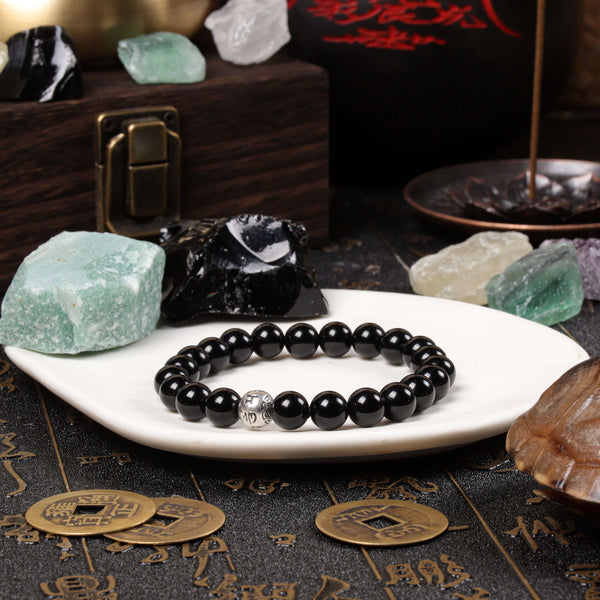
A minimalist Yin-Yang pendant or gemstone bracelet acts as a tactile reminder to stay centered throughout a hectic day. Herbal teas blended with balancing botanical ingredients and digital wallpapers featuring clean Taiji artwork bring this timeless philosophy into modern lifestyle routines.

Contemporary Interpretations of Yin-Yang: Science, Psychology, and Philosophy
Systems Theory and Cybernetics: Feedback Loops and Homeostasis
The Yin-Yang model of waxing, waning, and self-correction shares striking parallels with modern cybernetics. To remain resilient, any open system requires two things:
Positive Feedback (Yang): Drives growth, innovation, and change.
Negative Feedback (Yin): Dampens extremes, stabilizes boundaries, and preserves safety.
Yin-Yang serves as an intuitive, ancestral model of dynamic system equilibrium.
Yin-Yang vs. Western Dialectics: Hegel's Conflict vs. Eastern Harmony
While both Yin-Yang and Hegelian dialectics explore the relationship between polar opposites, they approach transformation from different angles:
Hegelian Dialectics: Emphasizes thesis, antithesis, and synthesis—resolving contradictions through struggle to achieve an elevated stage of development.
Yin-Yang Philosophy: Focuses on cyclical harmony, mutual interdependence, and returning to the center. It does not seek the elimination of one force by another, but honors their ongoing coexistence.
Modern Depth Psychology: Jungian Archetypes and Complementary Dependence
In analytical psychology, Yin and Yang resonate with Carl Jung’s archetypal frameworks:
Anima and Animus: The complementary feminine and masculine qualities residing within every human psyche.
The Shadow: The hidden, unintegrated aspects of the self (Yin) that need conscious recognition (Yang) to achieve psychological wholeness.
In relationships, it reminds us that healthy interdependence is not weakness; it is an honest recognition that human beings are meant to connect.
Ecological Science and Environmental Rhythms
Yin-Yang provides a clear lens for ecological awareness. Nature’s water cycles, nutrient flows, and predator-prey dynamics all maintain health through continuous balance. When human activity pushes past natural carrying capacities, environmental systems experience disharmony, echoing the medical truth: "Where there is chronic imbalance, illness follows."
Scientific Boundaries: Distinguishing Philosophy from Empirical Medicine
It is essential to maintain clarity: Yin-Yang is a cultural, observational, and philosophical model, not an empirical modern science.
While it offers valuable insights for lifestyle, stress regulation, and holistic living, it cannot replace microbiology, modern surgery, or clinical diagnostics. Trying to equate Yin-Yang directly with quantum mechanics or general relativity stretches metaphors beyond their useful scope. Honoring this philosophy means appreciating its wisdom while remaining grounded in scientific discernment.

Common Misconceptions and Critical Thinking
Misconception 1: Yin and Yang Are Moral Equivalents of Good and Evil
Yin and Yang are descriptive categories of natural relationship, not ethical pronouncements. Equating Yin with negativity and Yang with goodness completely misunderstands the philosophy. Yin is quiet containment, and Yang is expressive movement—neither holds moral superiority.
Misconception 2: Yin and Yang Represent Rigid Absolute Dichotomies
There is no such thing as isolated, pure Yin or pure Yang. Every phenomenon contains both currents, and its classification changes depending on the point of comparison. The opposing dots in the Taiji diagram serve as a constant reminder against black-and-white thinking.
Misconception 3: Yin and Yang Are Fixed, Unchangeable Labels
Associating women with Yin and men with Yang is a historical cultural metaphor, not an absolute truth. Natural variations among individuals far outweigh broad demographic generalizations. Using Yin and Yang as rigid labels strips away its true value as a flexible way of understanding change.
Misconception 4: Yin-Yang Philosophy is a Form of Superstition
Yin-Yang itself is a system of natural philosophy. While it was sometimes adapted into folk divination practices throughout history, its core value lies in its rational, observational understanding of balance. It is a mental tool for reflection, not a magical doctrine.
Misconception 5: Yin-Yang Balances Can Replace Modern Clinical Medicine
While Chinese medical theory has a rich history and unique clinical applications, modern medical diagnostics are indispensable. Anyone facing medical concerns should consult qualified healthcare practitioners. Yin-Yang principles are best used as an everyday guide for stress reduction, balanced habits, and personal well-being.

Summary: How to Truly Understand and Embody Yin and Yang
To understand Yin and Yang, hold onto three essential words: Relationship, Movement, and Balance.
Yin and Yang Summarized in One Core Sentence
Yin and Yang are not two physical things, but an ongoing relationship; not a frozen division, but a cyclical transformation; not a battle to be won, but the art of maintaining dynamic balance through continuous change.
The Three Master Keys: Relationship, Movement, and Balance
Relationship: Yin and Yang define and support each other.
Movement: Nothing stays still; energy is constantly shifting.
Balance: The goal is never for one side to crush the other, but to maintain centered harmony within change.
How to Begin Observing Yin and Yang in Your Daily Life Today
Starting today, try viewing your daily routines through this simple lens:
Notice the transition between daytime energy and nighttime rest.
Pay attention to your own rhythm between speaking and listening, working and unwinding.
Observe how challenges often carry the quiet beginnings of new opportunities.
You will find that Yin and Yang is not an abstract ancient concept, but a clear, grounded way to navigate your world with greater ease.
Frequently Asked Questions (FAQ)
What does Yin and Yang mean?
Yin and Yang is a foundational concept in Chinese philosophy describing how seemingly opposing forces are interconnected, interdependent, and mutually transformative. Yin represents dark, quiet, cool, internal, and receptive qualities; Yang represents bright, active, warm, external, and dynamic qualities.
Which is Yin and which is Yang?
In the classic Taiji symbol, the black side is Yin and the white side is Yang. As a general rule: forces that are warming, active, ascending, and expanding are Yang; forces that are cooling, restful, descending, and quiet are Yin.
What does Yin represent? What does Yang represent?
Yin represents inward containment, stillness, softness, and restoration, correlating with night, winter, the earth, and bodily fluids. Yang represents outward expansion, movement, warmth, and vitality, correlating with day, summer, the sky, and active energy (Qi).
What does the Yin-Yang symbol mean?
The Taiji symbol visualizes dynamic equilibrium, the unity of opposites, and mutual transformation. The interlocking black and white fish show the natural waxing and waning of energy, while the opposing dots illustrate that each force carries the inner seed of the other.
Is Yin black or white?
In standard traditional depictions, Yin is black and Yang is white. However, color is merely a visual metaphor; the true nature of Yin and Yang lies in energetic qualities and relative relationships, not physical pigment.
Is Yin and Yang part of a religion?
Yin and Yang originated as a nature philosophy long before formal religious institutions were created. While it was later embraced by Daoism and Confucianism, it remains a universal philosophical framework used across traditional medicine, martial arts, aesthetics, and lifestyle practices.
What is the relationship between Yin-Yang, the Five Elements, and the Bagua?
Both the Five Elements (Wu Xing) and the Eight Trigrams (Bagua) are built upon Yin-Yang. Each of the Five Elements expresses a different phase of Yin or Yang, while the Bagua is composed of alternating solid Yang lines and broken Yin lines.
What are the practical uses of Yin and Yang in daily life?
Yin-Yang principles help guide balanced eating habits, consistent sleep schedules, emotional stress regulation, healthy relationship boundaries, and intentional home design. The central practice is honoring natural rhythms and avoiding burnout.
How does Yin and Yang relate to Traditional Chinese Medicine?
Yin and Yang forms the core foundation of traditional medicine. Classic texts state that "Yang transforms Qi, while Yin builds structure." Health issues are viewed as energetic imbalances, and treatment focuses on helping the body regain its natural, centered equilibrium.
Is Yin and Yang a superstition?
No. Yin-Yang is a cultural and philosophical model for understanding natural relationships. When used to cultivate self-awareness, balance daily habits, and appreciate life cycles, it serves as a rational, reflective framework.
Is Yin and Yang originally from China?
Yes. Yin-Yang originated in ancient China, with earliest written references appearing in Western Zhou dynasty texts, and was later codified in classics such as the I Ching, the Dao De Jing, and the Huangdi Neijing.
Where does Yin and Yang come from?
The concept arose from ancient agricultural observations of how sunlight fell across mountain ridges: the sunny southern face was named Yang, and the shady northern face was named Yin. Over time, it was broadened into a universal framework for understanding change.
What is Yin energy and Yang energy?
In everyday wellness language, Yin energy refers to a grounded, restorative, and calming state, while Yang energy refers to a dynamic, productive, and expressive state. A healthy life requires an easy, continuous transition between both.
What does a Yin-Yang tattoo mean?
A Yin-Yang tattoo typically symbolizes a personal commitment to inner balance, resilience through life's transitions, and the harmonious integration of light and shadow within oneself.
What is Yin-Yang yoga?
Yin-Yang yoga blends the passive, long-held floor poses of Yin yoga (which target deep fascia and support nervous regulation) with the active, flowing sequences of Yang yoga (which build muscular strength and cardiovascular warmth).
What is Yin-Yang massage?
Yin-Yang massage combines firm, stimulating techniques (Yang) to awaken circulation with slow, gentle, soothing strokes (Yin) to release muscle tension, leaving the entire body in a state of relaxed balance.



Leave a comment