
Lotus Flower Meaning: Symbolism, Spiritual Significance, and Feng Shui Guide
TABLE OF CONTENTS
- What Is a Lotus Flower? Botany, Meaning, and the Lotus Effect
- Lotus vs. Water Lily: Key Botanical and Cultural Differences
- The 7,000-Year History of the Lotus: An Ancient Living Fossil
- What Does a Lotus Flower Symbolize? Core Meanings and Colors
- Lotus Flower Color Meanings: What Each Hue Represents
- The Spiritual Meaning of the Lotus Flower Across Eastern Traditions
- Modern Interpretations: Mindfulness, Meditation, and Lotus Tattoos
- Lotus Feng Shui Meaning: Harmonizing Energy in Your Home
- Bringing Lotus Energy into Daily Life: The HVibeTune Lotus Bracelet
- Conclusion: Ancient Wisdom for Modern Living
- Frequently Asked Questions (FAQ)
Rooted deeply in stagnant pond silt yet emerging entirely immaculate upon the water’s surface, the sacred lotus (Nelumbo nucifera) has walked hand-in-hand with Eastern civilization for millennia. Across thousands of years of cultural evolution, this resilient aquatic bloom has transcended its botanical identity to become an enduring emblem of spiritual enlightenment in Buddhism, an auspicious vessel in Taoism, and the definitive archetype of noble character in Confucian philosophy.
This comprehensive guide explores the multifaceted world of the lotus—bridging botanical science, ancient archaeological discoveries, comparative Eastern metaphysics, spatial Feng Shui applications, and contemporary mindful living.
Key Takeaways
Core Symbolism: The lotus represents purity, spiritual awakening, resilience, and personal rebirth. Growing through dark mud to bloom unstained, it mirrors the human ability to transform adversity into wisdom.
Lotus vs. Water Lily: True lotuses (Nelumbo) rise several feet above the water with rounded, unnotched leaves and a prominent central seed pod, whereas water lilies (Nymphaea) float flat upon the surface.
Color Meanings: White denotes spiritual purity; pink embodies divine compassion; red signifies heart-centered love; and blue represents intellect and wisdom.
Feng Shui Placement: Governed by the Wood element, lotus art and live plants thrive best in the East (health) and Southeast (abundance) sectors of a home.

What Is a Lotus Flower? Botany, Meaning, and the Lotus Effect
A lotus flower is a perennial aquatic plant belonging to the family Nelumbonaceae, revered globally for its large, fragrant petals and pristine, water-repellent foliage. Culturally and spiritually, it serves as a universal symbol of purity, self-regeneration, and enlightenment across major world philosophies.
Botanical Definition: Nelumbo nucifera
Scientifically classified as Nelumbo nucifera, the sacred lotus is native to tropical and temperate regions across Asia and northern Australia. While local varieties display diverse petal counts, colors, and dimensions, phylogenetic research confirms that these Asian lotuses comprise a single unified species. Modern plant taxonomy places the lotus in an independent family (Nelumbonaceae), distinguishing it from common water lilies.
The Science Behind the "Lotus Effect"
The plant’s celebrated reputation for rising from the mud unstained is grounded in a physical phenomenon known as the Lotus Effect (ultrahydrophobicity).
Microscopic Architecture: The upper surface of every lotus leaf is covered with microscopic epidermal bumps (papillae) coated in epicuticular wax crystals.
Self-Cleaning Mechanism: Because water cannot adhere to this textured surface, droplets remain spherical, rolling off freely even at slight angles.
Debris Removal: As these water beads roll across the leaf, they pick up dirt particles, algae spores, and mud residues, leaving the foliage pristine.
Sturdy, fibrous stems support both leaves and blooms high above the waterline, presenting broad, concave petals that unfold in synchrony with the morning light.
Main Cultivars and Sacred Varieties
Cultivated for thousands of years, global lotus cultivars now exceed 2,000 documented varieties, traditionally categorized into three functional groups:
Rhizome Lotus (Ou Lian): Selected for crisp, nutrient-dense edible root vegetables.
Seed Lotus (Zi Lian): Grown for protein-rich seeds used in traditional wellness tonics and culinary preparations.
Ornamental Lotus (Hua Lian): Bred for meditation pools, temple gardens, and domestic altars.
Specialized variations hold high cultural esteem:
The Twin Lotus (Bingdi Lian): An extraordinary botanical anomaly where a single stalk produces two identical, blooming flowers. Occurring naturally in roughly one out of every 100,000 blooms, it represents faithful love, emotional harmony, and lifelong companionship.
The Thousand-Petal Lotus (Qianban Lian): A magnificent heritage cultivar displaying over 1,000 overlapping petals within a single blossom.
The Bowl Lotus (Wan Lian): Miniature cultivars bred specifically to flourish in shallow ceramic bowls, bringing peaceful nature directly into compact living spaces.

Lotus vs. Water Lily: Key Botanical and Cultural Differences
Although often conflated in colloquial speech, true lotuses (Nelumbo) and water lilies (Nymphaea) belong to distinct botanical families and carry divergent historical roles:
| Feature | True Lotus (Nelumbo nucifera) | Water Lily (Nymphaea) |
| Growth Habit | Emergent: Flowers and leaves rise 1 to 5 feet above the water | Floating: Flowers and leaves rest directly on the water surface |
| Leaf Morphology | Completely circular, unbroken margin, no slit | Distinct radial split or "V"-shaped notch at the leaf base |
| Center Anatomy | Distinctive, flat-topped central seed pod | Dense circle of stamens; lacks an elevated seed pod |
| Daily Cycle | Remains open once fully in bloom | Typically opens during the day and closes tightly at night |
| Cultural Center | Central to Buddhist, Taoist, and Confucian philosophy | Prominent in Ancient Egyptian and Greco-Roman traditions |

The 7,000-Year History of the Lotus: An Ancient Living Fossil
The lotus is an evolutionary marvel. Thriving long before human civilization took root, its seeds possess an extraordinarily dense, impervious shell that protects the internal plant embryo. Archaeologists have successfully germinated ancient lotus seeds preserved in peat bogs for hundreds of years, making the plant an enduring symbol of longevity and indomitable vitality.
Archaeological Heritage in Eastern Civilization
China remains one of the ancient evolutionary centers of the sacred lotus, with excavations documenting thousands of years of co-existence:
Hemudu Culture (circa 5000 BCE): Excavations in Yuyao, Zhejiang Province, yielded fossilized lotus pollen confirmed by radiocarbon testing to be over 7,000 years old.
Yangshao Culture (circa 3000 BCE): Archaeologists in Zhengzhou, Henan Province, unearthed carbonized lotus seeds dating back more than 5,000 years.
Shang Dynasty Tombs (circa 1500 BCE): Intact carbonized seeds recovered from ritual vessels illustrate intentional agricultural curation and symbolic reverence.
From Ancient Motifs to Moral Philosophy
Stylized lotus engravings appeared as early as the Neolithic Hemudu period, maturing into intricate relief work on Shang and Zhou ritual bronzes. As trade and cultural exchange expanded along the Silk Road, the lotus evolved from a botanical resource into an international artistic language representing spiritual purity and resilience.
During the Song Dynasty, philosopher Zhou Dunyi authored his foundational treatise, An Ode to the Lotus Flower (Ai Lian Shuo), permanently linking the lotus to the classical ideal of the Noble Gentleman (Junzi):
"I love the lotus because it grows out of mud yet remains unstained; it is cleansed by clear ripples yet is not flirtatious. It is hollow within and straight without, neither creeping nor branching; its fragrance grows purer with distance, standing erect and clean, fit to be admired from afar rather than toyed with."
Through this work, the lotus became a moral standard—representing a person who remains honest, centered, and principled regardless of surrounding social turbulence.

What Does a Lotus Flower Symbolize? Core Meanings and Colors
The symbolism of the lotus flower centers on the soul’s capacity to rise above worldly distraction, preserve internal integrity, and bloom into clarity.
Core Universal Symbolism
Spiritual Awakening and Enlightenment: Breaking through dark water into brilliant daylight represents the soul's path toward self-realization.
Purity and Untainted Grace: The natural ability to remain clean amidst muddy conditions illustrates the preservation of inner innocence.
Cyclical Rebirth and Renewal: Because the lotus simultaneously displays closed buds, open blossoms, and ripe seed pods on the same stem, it embodies the continuous cycle of past, present, and future.
Inner Resilience: Thriving in oxygen-poor silt proves that difficult environments can nurture profound strength and grace.
Devotion and Marital Harmony: Symbolized especially by the rare twin lotus, signifying mutual loyalty and emotional alignment.

Lotus Flower Color Meanings: What Each Hue Represents
Different colored lotuses carry specific symbolic associations across Eastern meditation traditions, classical literature, and energy philosophy:
White Lotus Meaning
Symbolism: Supreme spiritual purity, mental silence, emotional clarity, and transcendence.
Significance: Often called the Pundarika in classical texts, the white lotus represents an awakened state of consciousness untroubled by worldly distractions.
Pink Lotus Meaning
Symbolism: Divine compassion, unconditional love, gentle kindness, and spiritual authority.
Significance: Recognized as the supreme lotus (Padma), the pink lotus is closely associated with historic spiritual masters, reflecting warmth and deep empathy.
Red Lotus Meaning
Symbolism: Courage, passionate love, heart-centered devotion, and emotional fortitude.
Significance: Linked directly to the heart energy center (Kamala), the red lotus symbolizes enthusiasm, perseverance, and genuine human affection.
Blue Lotus Meaning
Symbolism: Wisdom, intellectual depth, sensory self-mastery, and the pursuit of knowledge.
Significance: Often depicted partially open (Utpala), the blue lotus illustrates ongoing learning and the triumph of conscious intent over impulsive reactions.
Purple Lotus Meaning
Symbolism: Spiritual awakening, intuition, esoteric balance, and higher awareness.
Significance: Regarded as an emblem of sacred meditation, the purple blossom reflects the alignment of body, mind, and spirit.
Gold or Yellow Lotus Meaning
Symbolism: Radiance, abundant fortune, intellectual clarity, and complete realization.
Significance: Evoking the life-giving warmth of the morning sun, the golden lotus honors the fulfillment of long-sought spiritual or personal goals.

The Spiritual Meaning of the Lotus Flower Across Eastern Traditions
The Lotus in Buddhism: Awakening from Samsara
In Buddhist philosophy, the development of the lotus mirrors the path of personal liberation. All individuals begin in the dark mud of suffering (Dukkha) and ignorance (Avidya). Supported by study, mindfulness, and discipline, consciousness ascends toward enlightenment:
The Lotus Throne (Padmasana): Buddhas and Bodhisattvas are traditionally shown seated upon open lotus pedestals, symbolizing that while they engage with the physical world, their minds remain unattached to illusion.
The Flower Sermon (Nian Hua Yi Xiao): The wordless foundation of Zen occurred when the Buddha held up a single golden flower before his disciples. Only Mahakasyapa understood the direct transmission of truth, responding with a quiet smile.
The Auspicious Symbol: As one of the Eight Auspicious Symbols (Ashtamangala), the lotus signifies pure speech, pure action, and a pure heart. Historically, monastic robes were honored with the title "Lotus Robes" (Lianhua Yi).
Taoist Alchemy: Longevity and Energy Flow
Within Taoist philosophy, the lotus represents vital life force (Qi), natural balance, and spiritual longevity. Immortal figures—such as He Xiangu of the Eight Immortals—are depicted carrying a lotus blossom to clear stagnant energy and cultivate inner peace. Its hollow stalk reflects the Taoist ideal of inner emptiness (Wu Wei), creating space for cosmic harmony to circulate freely.
Confucian Ethics: Upright Character
Confucianism interprets the lotus through a practical social lens. Rather than retreating into monastic isolation, the noble individual (Junzi) participates actively in society while preserving moral clarity. The upright, unbranching stalk of the lotus reflects an honest disposition that refuses to flatter corrupt influences or bow to unprincipled trends.
Hindu Cosmology: Creation and Prosperity
In Hindu tradition, the lotus (Padma) represents the creative matrix of the cosmos. Lord Brahma, the creator, is described as appearing atop a golden lotus blooming from the navel of Lord Vishnu. The Sanskrit term for the central seed pod shares roots with Garbha (womb), celebrating fertility, life-giving abundance, and the goddess Lakshmi.

Modern Interpretations: Mindfulness, Meditation, and Lotus Tattoos
In contemporary culture, the lotus has transitioned from ancient sacred architecture into everyday wellness, mindful design, and artistic expression.
The Lotus Pose (Padmasana) in Daily Practice
In yoga and meditation, the Lotus Pose (Padmasana) remains the quintessential foundation for seated contemplation. By anchoring the lower body firmly while extending the spine toward the sky, the posture mirrors the rooted yet elevated nature of the blossom itself.
Visualizing an opening lotus during mindfulness exercises helps practitioners:
Release stress and soothe overactive thinking patterns.
Reframe past difficulties (the "mud") as necessary soil for future personal growth.
Cultivate patient, non-judgmental presence throughout daily routines.
What Does a Lotus Flower Tattoo Mean?
The lotus remains an enduring motif in fine-line and illustrative tattoo art. Individuals typically choose a lotus tattoo to commemorate significant personal milestones:
Overcoming Hardship: Honoring personal healing, recovery from health challenges, or navigating difficult life transitions.
Personal Dedication: Serving as an enduring reminder to live with patience, kindness, and self-respect.
Cultural Lineage: Drawing inspiration from traditional Japanese water motifs or Southeast Asian Sak Yant sacred geometry to promote emotional balance and clarity.
Wearable Energy Anchors: Mindful Jewelry
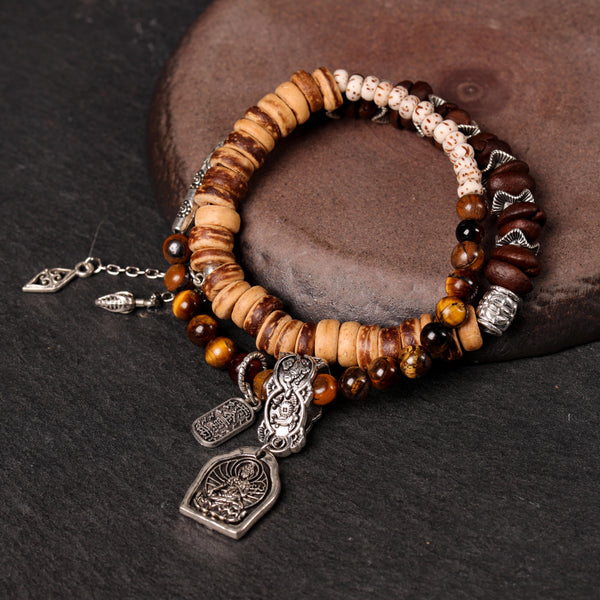
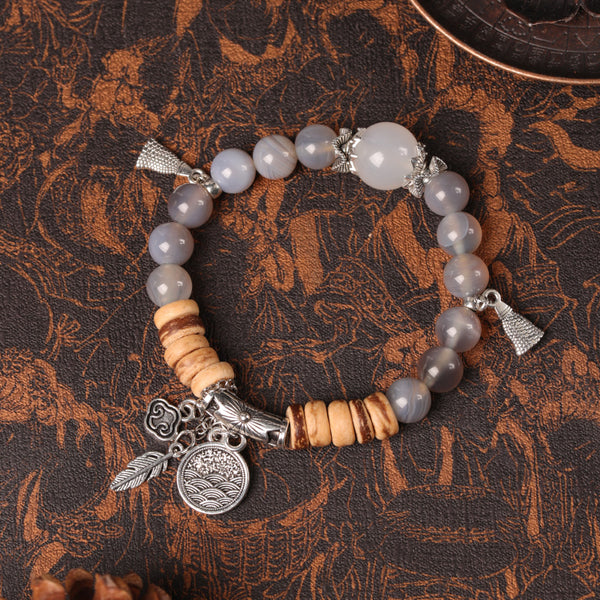
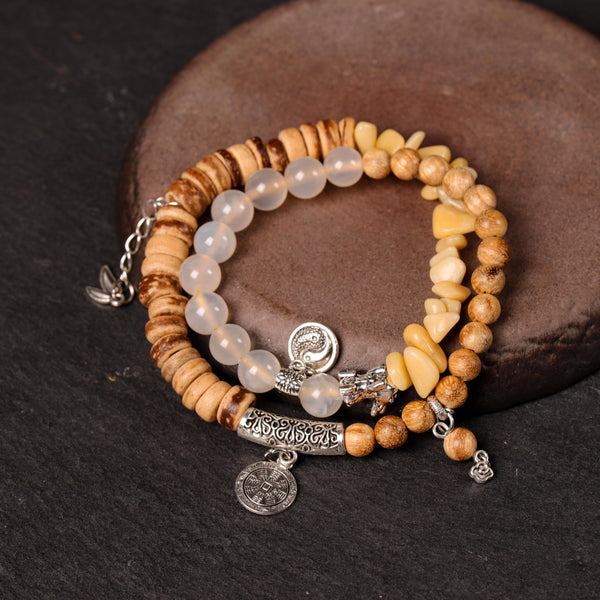
In modern wellness, natural jewelry featuring lotus elements serves as a wearable energy anchor.
Rather than functioning as mere ornamentation, an intentional piece provides a tangible, tactile touchpoint throughout a busy day. Gently touching a lotus pendant or bracelet during stressful situations serves as a physical reminder to pause, breathe deeply, and re-establish inner boundaries.

Lotus Feng Shui Meaning: Harmonizing Energy in Your Home
In classical Feng Shui (Kan Yu), spatial arrangements influence the flow of environmental life energy (Qi). The lotus is celebrated as an effective harmonizer, capable of shifting stagnant, sluggish vibrations into a clean, uplifting atmosphere.
Five Elements Balance: Wood and Water Synergy
The living lotus primarily embodies the Wood Element (vitality, personal growth, upwards expansion), nurtured directly by its aquatic medium, the Water Element (resource flow, emotional intuition).
Wood Resonance: Stimulates professional creativity, personal well-being, and family harmony.
Water Support: Promotes calm communication and helps household energy circulate smoothly.
Optimal Room Placements for Lotus Decor
The Living Room: Placing lotus artwork or decor here fosters warm communication and domestic peace, making it a natural gathering focal point.
The Foyer or Entryway: Positioned near the primary entrance, a lotus image acts as a visual filter, helping transition bustling exterior energy into a tranquil domestic vibe.
The Home Office or Study: Calms occupational stress, enhances mental clarity, and supports sustained creative focus.
The Master Bedroom: Displaying imagery of the twin lotus (Bingdi Lian) encourages marital devotion, mutual trust, and affectionate connection.
Directional Alignment Guide
East Sector (Health and Family): Corresponds to the Wood element. Displaying lotus motifs here revitalizes household health, physical vitality, and family balance.
Southeast Sector (Abundance and Prosperity): Also governed by Wood. Because the lotus pod is naturally filled with numerous seeds, it symbolizes consistent accumulation and fruitful investments.
Placement Caution: Classical practices suggest avoiding large water-heavy lotus art in the South (Fire sector) to prevent energetic clashes between opposing elements.
Caring for Feng Shui Decor and Bowl Lotuses
Clear Water for Live Plants: If keeping an indoor bowl lotus (Wan Lian), use a round ceramic vessel and maintain clean, fresh water. Promptly trim away yellowing leaves to prevent stagnant energy (Sha Chi) from lingering.
Regular Dusting: Clean decorative items monthly with a soft cloth to keep their presentation bright and purposeful.
Handling Broken Items: If a ceramic, stone, or crystal lotus ornament breaks accidentally, traditional Feng Shui holds that the object shielded the space by absorbing an energetic stress point. Express silent appreciation, dispose of the broken pieces mindfully, and replace them with a whole piece to preserve balanced spatial harmony.

Bringing Lotus Energy into Daily Life: The HVibeTune Lotus Bracelet
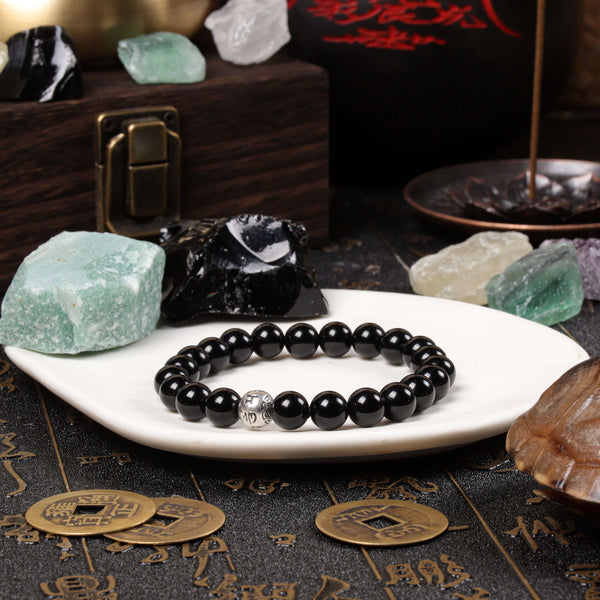
For those who wish to carry the centering presence of the lotus throughout the day, the HVibeTune Feng Shui Lotus Bracelet translates ancient spatial philosophy into a contemporary, personal accessory.
Drawing inspiration from centuries of traditional Eastern energy practices, this piece is designed as a modern, minimalist wearable energy anchor. Featuring a carefully carved lotus centerpiece crafted from genuine natural jade paired with fine accents, the design reflects the core philosophy of Zhou Dunyi’s Ai Lian Shuo—standing poised, grounded, and clear amidst external pressures.
Best Occasions for Wear
Mindfulness and Yoga Practice: Acts as a tactile focal point during breathwork and morning meditation.
High-Paced Work Environments: Serves as a grounding reminder to maintain emotional equilibrium during demanding assignments.
Everyday Style: A discreet, versatile design that complements casual and professional attire alike.
A Meaningful Gift: A thoughtful gesture for friends and family embarking on new career chapters, personal healing, or life transitions.
(Note: Mindful accessories serve as cultural keepsakes and personal mindfulness anchors. They are designed to support personal reflection and do not replace professional medical or psychological care.)

Conclusion: Ancient Wisdom for Modern Living
The lotus flower remains an enduring guide for daily life. It demonstrates that our integrity, peace of mind, and personal grace are not dictated by external circumstances. Regardless of life's complexities, we retain the capacity to process challenges into wisdom, maintain clear boundaries, and step forward into the light.
By welcoming the timeless essence of the lotus into your living environment, mindfulness practices, and personal routines, you align yourself with an inspiring tradition of resilience that has flourished for thousands of years.
Frequently Asked Questions (FAQ)
What does a lotus flower symbolize?
A lotus flower symbolizes spiritual awakening, purity, resilience, and personal rebirth. Because it rises unstained from murky pond mud, it represents the human soul overcoming life’s adversities to achieve wisdom, emotional peace, and clarity.
What is the difference between a lotus and a water lily?
A true lotus (Nelumbo nucifera) holds its flowers and round, unnotched leaves high above the waterline on sturdy stems, featuring a signature flat seed pod at its center. Water lilies (Nymphaea) float directly upon the surface, have a visible "V"-notch in their leaves, and lack a central seed pod.
What does the lotus flower mean in Buddhism?
In Buddhism, the lotus symbolizes the soul's journey out of worldly delusion (Samsara) into clear enlightenment (Nirvana). The Buddha is traditionally depicted seated upon an open lotus throne to illustrate a mind that remains completely untroubled by worldly suffering.
What do different colored lotus flowers represent?
-
White Lotus: Absolute mental purity, spiritual clarity, and inner peace.
-
Pink Lotus: Divine compassion, warmth, and the highest spiritual truth.
-
Red Lotus: Passionate love, courage, heart-centered devotion, and resilience.
-
Blue Lotus: Wisdom, philosophical intellect, and self-mastery over worldly desires.
-
Purple Lotus: Intuition, mystical insight, and deep meditative focus.
What does a lotus flower tattoo mean?
A lotus flower tattoo generally represents personal transformation, resilience, and triumph over hardship. It serves as a visual testament that the wearer has walked through difficult circumstances ("the mud") and emerged stronger, calmer, and wiser.
Where should I place a lotus in my home for good Feng Shui?
The most favorable locations for lotus decor are the living room (for domestic harmony), the entryway (to cleanse incoming energy), and the home office (for creative focus). Directionally, place lotus items in the East to support family health or the Southeast to encourage steady wealth and abundance.
What should I do if a Feng Shui lotus decor piece breaks?
In traditional energy practice, an ornament that chips or fractures unexpectedly is understood to have absorbed an incoming environmental stress on your behalf. Express silent gratitude for its protection, safely discard the damaged pieces, and replace them with a fresh item to keep household energy flowing smoothly.



Leave a comment