
The Complete Guide to Mala Beads: Meaning, 108 Beads Symbolism, Meditation, and Energy Alignment
TABLE OF CONTENTS
- What Are Mala Beads? Definition, Origins, and Core Anatomy
- Mala Beads Meaning and Cultural Symbolism
- Key Benefits of Using Mala Beads for Well-Being
- 108 Beads Symbolism: The Sacred Mathematics of Malas
- How to Use Mala Beads for Meditation: Step-by-Step Practice
- Wearable Energy Anchors: Metaphysical Craft and Calibration
- Frequently Asked Questions
A mala (commonly called mala beads or meditation beads) is a strand of traditionally 108 sacred beads used across Hindu, Buddhist, and yogic traditions for japa meditation, breath counting, prayer, and mindful intention setting. By uniting physical touch, rhythmic cadence, and focused breathing, mala beads serve as a grounding anchor that stabilizes wandering thoughts, regulates the nervous system, and cultivates lasting inner presence.
While bead-based contemplation spans cultures worldwide, traditional mala beads represent one of humanity's most enduring, complete systems of tactile mindfulness and somatic awareness.

What Are Mala Beads? Definition, Origins, and Core Anatomy
Quick Definition: A mala is a circular string of counting beads—traditionally composed of 108 counter beads and one central Guru Bead—used in mindfulness and meditation practices to track repetitions of mantras, breaths, or affirmations while keeping the physical body grounded in the present moment.
The word Mala comes from the ancient Sanskrit term meaning "garland" or "wreath." In classical contemplative traditions, malas function as tactile counters that allow the conscious mind to release mental arithmetic and enter deep, undisturbed contemplation.
The Essential Anatomy of a Mala
108 Counting Beads: The main body of the strand used to track recitations or intentional breaths during seated practice.
The Guru Bead (Meru): The larger, central focal bead (the 109th bead) that marks the start and completion of a meditative cycle without being counted.
The Tassel: The tied fiber bundle suspended beneath the Guru Bead, symbolizing spiritual connection, personal unity, and the roots of the lotus flower.
Hand-Tied Knots: High-quality traditional malas feature a hand-tied knot between each bead to add structural durability, prevent wear, and facilitate smooth fingertip movement.
What Mala Beads Are Not
Not mere fashion accessories: Although widely worn as jewelry in modern wellness culture, their authentic purpose is to serve as intentional tools for presence and spiritual focus.
Not restricted to one religion: Malas are shared across Hinduism, Buddhism, Jainism, Sikhism, and modern secular mindfulness disciplines.
Not clinical medical equipment: Mala beads do not replace professional psychological care or medical interventions; they function as somatic support tools for stress regulation and intentional habit-building.
Comparing Traditional Contemplative Beads
| Bead Style | Historical Lineage | Traditional Bead Count | Core Function & Philosophy |
| Mala Beads | Vedic & Pan-Indian Lineages | 108 counter beads + 1 Guru Bead | Japa meditation, breathwork tracking, and personal intention setting. |
| Buddhist Prayer Beads | Mahayana & Tibetan Buddhism | 108 beads (with secondary counters) | Chanting sacred sutras and purifying the 108 worldly delusions. |
| Daoist Flowing Beads | Ancient Daoist Monasticism | 81 beads | Represents the 81 transformations; top bead aligns with the celestial North Star. |
| Western Rosary | Christian & Catholic Mysticism | 59 beads (standard five-decade) | Recitation of formal vocal prayers and structured scriptural mysteries. |
| Casual Crystal Bracelets | Contemporary Fashion / Gemstone Lore | Variable (typically 14–24 beads) | Decorative styling and general crystal resonance without counting rituals. |
Who Are Mala Beads For?
Anyone seeking reduced stress, improved attention control, or a tactile daily mindfulness routine can benefit from mala beads. You do not need to identify with a specific belief system, change your spiritual background, or recite ancient languages. High-stress professionals, meditators, yoga practitioners, creatives, and anyone navigating mental overwhelm frequently use mala beads as an analog tool for personal stillness.

Mala Beads Meaning and Cultural Symbolism
Core Meaning: In spiritual traditions, mala beads symbolize the path of self-awareness and the purification of mental distractions. In modern somatic psychology, they serve as a physical touchstone that interrupts automated stress loops and anchors attention in sensory reality.
Sanskrit Roots: From Floral Offerings to Eternal Garlands
In ancient India, devotees honored sacred teachers and divine presences with garlands woven from fresh flowers. Because organic blossoms wilted within hours, practitioners developed lasting strands crafted from sacred tree seeds (such as Bodhi and Rudraksha), fragrant hard timbers, and polished mineral gemstones. When these contemplative tools expanded into East Asia, scholars translated the concept as mindfulness beads and magnificent flower garlands, preserving this heritage of wearable reverence.
Spiritual Perspectives Across Traditions
Vedic & Yogic Lineage: Malas are central to Japa Yoga—the meditative repetition of sacred sound frequencies. Rolling the beads across specific reflexology points on the fingers stimulates inner vitality and awakens higher clarity.
Tibetan Buddhist Lineage: The 108 counter beads correspond to the spoken volumes of classical wisdom texts and the systematic clearing of 108 emotional afflictions that veil natural mental clarity.
Daoist Integration: Daoist practitioners cultivated independent bead lineages known as Flowing Beads, using them to align the physical body with cosmic energetic rhythms and internal energy centers.
The Neuroscience of Mindful Touch
From a neurological perspective, mala beads act as a somatic touchstone. During moments of sudden stress, sensory overload triggers the sympathetic nervous system into survival mode. Shifting attention to the smooth texture, natural cool density, and rhythmic progression of beads re-engages motor-sensory pathways. This tactile rhythm activates the vagus nerve, supporting parasympathetic recovery and physiological calm.
The Analog "Pause Button" for Daily Stress
A mala requires no digital screen, charging cable, or internet connection. Kept on an office desk or worn beneath clothing, it functions as a tangible pause button. Touching three beads during high-pressure situations and pairing each with a slow exhalation creates an immediate mental reset within 60 seconds.

Key Benefits of Using Mala Beads for Well-Being
Effortless Focus: Passing one bead per breath provides the kinesthetic body with a gentle task, preventing the mind from drifting into mental loops or restless overthinking.
Nervous System Equilibrium: Repeated physical movements paired with deliberate breathing down-regulate acute anxiety, soften muscular tension, and support emotional balance.
Daily Intention Anchors: Beginning your day by passing 108 beads through your hands creates a calm transition from morning reactivity to focused intentional living.
Wearable Energy Anchors: Within classical Eastern metaphysics, authentic mineral and wooden malas serve as wearable energy anchors, using stable natural mineral frequencies to support personal energetic balance.

108 Beads Symbolism: The Sacred Mathematics of Malas
Why 108 Beads? The number 108 represents cosmic and spiritual wholeness. It reflects the 108 worldly defilements in Buddhist philosophy, the 108 subtle energy pathways converging at the human heart center, and profound mathematical alignments connecting the Earth, Sun, and Moon.
The Meaning Behind the Number 108
The 108 Defilements: Classical philosophy teaches that sensory awareness operates across six faculties (sight, sound, smell, taste, touch, thought), evaluated as pleasant, painful, or neutral, originating internally or externally, across past, present, and future:
Completing 108 repetitions symbolically clears these perceptual attachments.
The Heart Center Energy Lines: Yogic anatomical maps identify 108 primary subtle energy channels converging directly at the heart center (Anahata).
Cosmic Alignments:
The diameter of the Sun is approximately 108 times the diameter of Earth.
The average distance from the Earth to the Sun is approximately 108 times the Sun's diameter.
The average distance from the Earth to the Moon is approximately 108 times the Moon's diameter.
Vedic Numerology: The number 1 represents the singular ultimate truth; 0 represents humility and the open void; 8 represents infinity and renewal.
The Guru Bead: Meaning and Etiquette
The larger 109th bead resting at the strand's apex is the Guru Bead (also called the Teacher Bead or Buddha Head). It honors wisdom guides, ancestral lineages, and personal inner truth.
Traditional etiquette holds that you must never cross over the Guru Bead during practice. Stepping over the Guru Bead symbolizes allowing the ego to override spiritual boundaries. Upon finishing 108 recitations and arriving at the Guru Bead, pause in silent gratitude, rotate the entire strand 180 degrees, and proceed in the reverse direction.
The Symbolism of the Tassel
The thread tassel suspended beneath the Guru Bead mirrors the roots of the lotus blossom, rising from dark mud toward pure awareness. Energetically, its combed natural fibers serve as a grounding terminal that disperses mental static and accumulated emotional tension.
Sacred Materials and Energetic Properties
| Material Category | Classic Mineral / Botanical | Energetic Profile & Physical Tactile Feel |
| Sacred Botanicals | Bodhi Seed, Rudraksha, Lotus Seed | Awakening, deep spiritual devotion, and classical contemplative tradition. |
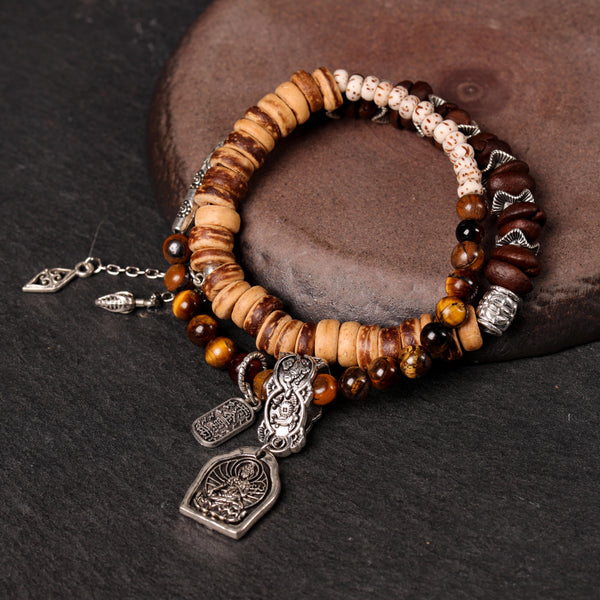
| Aromatic Woods | Sandalwood, Agarwood, Cedar | Warm touch, comforting aromatic oils, calming to overstimulated nerves. |
| Clarifying Gemstones | Amethyst, Lapis Lazuli, White Jade | Cooling sensation, mental discernment, intuition, and serene insight. |
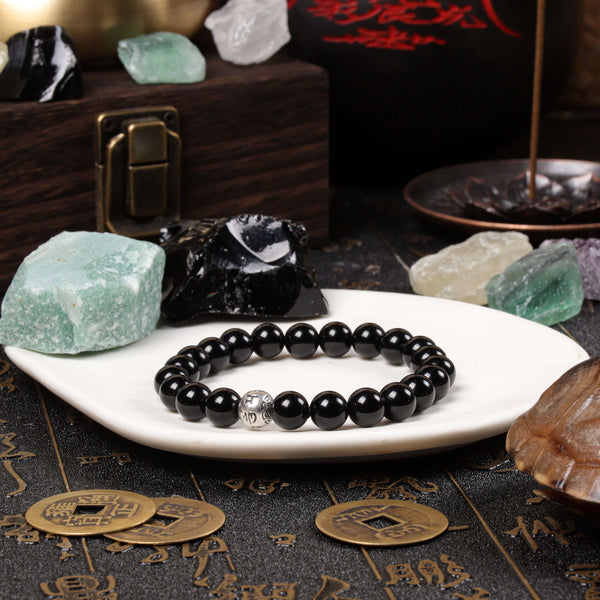
| Protective Minerals | Black Obsidian, Red Agate, Tourmaline | Heavy physical weight, grounding energetic protection, and deep stability. |
Color Associations in Contemplative Beads
White & Clear (Clear Quartz, White Jade): Clarity, energetic cleansing, mental spaciousness, and renewal.
Red & Terracotta (Red Agate, Carnelian): Vitality, inner stamina, dynamic courage, and emotional warmth.
Deep Blue & Violet (Lapis Lazuli, Amethyst): Intuitive wisdom, authentic communication, and quiet contemplation.
Jet Black & Charcoal (Black Obsidian, Onyx): Grounding stability, shielding against chaotic environments, and presence.
Exploring Bead Counts: 108, 54, 27, and Wrist Malas
108 Beads: The complete ceremonial format; ideal for dedicated 10-to-15-minute daily seated meditation sessions.
54 Beads: Half-length strand; two complete circuits equal the full 108 count.
27 Beads: One-quarter format; an ideal compact strand for quick desktop breaks or travel mindfulness.
18 to 21 Beads (Wrist Malas): Portable bracelets designed for continuous daily wear, discreet tactile grounding, and ongoing personal presence.

How to Use Mala Beads for Meditation: Step-by-Step Practice
Direct Practice Guide: Drape your mala over your middle finger, leaving your index finger extended outward. Use your thumb to gently draw one bead toward your heart per breath or mantra. Repeat across all 108 beads. When you reach the Guru Bead, pause, rotate the strand, and never cross over it.
Step 1: Prepare Your Posture, Breath, and Space
Choose a supportive chair or floor cushion where your spine rests naturally tall without stiffness. Relax your shoulders, soften your facial expressions, and cast your gaze gently downward. Take three slow, grounding breaths to transition away from outward tasks.
Step 2: How to Hold Mala Beads Properly
While traditional preferences vary (some lineages favor the left hand, others the right), finger mechanics remain consistent:
Rest the strand comfortably across your middle finger.
Place your thumb on the first bead next to the Guru Bead.
Keep your index finger extended away: Classical mudra philosophy associates the index finger with ego, judgment, and analytical critique. Keeping it off the beads keeps your practice anchored in non-judgmental presence.
Step 3: Select Your Contemplative Anchor
Choose a single focal point for your practice:
Sacred Mantra: Such as the universal sound Om or the compassion mantra Om Mani Padme Hum.
Breathwork Cadence: One full, unhurried inhalation and exhalation per bead, with no verbal words.
Mindful Affirmation: A grounded phrase such as "I am grounded in this moment" or "I release what I cannot control."
Step 4: The 108-Bead Meditation Sequence
Locate the Starting Point: Position your thumb on the counter bead immediately beside the Guru Bead.
Recite and Advance: Speak or silently repeat your anchor. As the breath completes, roll the bead inward toward your palm, moving forward to the next.
Maintain Steady Rhythm: Move at a steady, unhurried pace like clean water flowing over smooth river stones.
Pause at the Guru Bead: After completing 108 recitations, your fingers will touch the Guru Bead. Pause here in quiet reflection.
Turn Around: To begin a second round, pivot the strand 180 degrees using your thumb and middle finger. Resume counting back in the opposite direction without crossing the Guru Bead.
Step 5: The 27-Bead Micro-Practice for Busy Days
When a full 12-minute session is impractical, practice with a 27-bead wrist mala. Completing 27 mindful breaths takes less than three minutes, making it ideal before high-stakes meetings or right before sleep.
Common Mistakes to Avoid
Gripping the beads tightly: Keep your fingers relaxed and supple. Straining your hands causes tension that counteracts mental calm.
Judging wandering thoughts: Noticing that your attention drifted on bead 40 is not a failure—it is the practice of mindfulness. Gently touch the physical bead and return to your rhythm.
Dragging over the Guru Bead: Respect the traditional structural boundary of the Guru Bead by turning the strand around.

Wearable Energy Anchors: Metaphysical Craft and Calibration
The Philosophy of Calibrated Energy Vessels
HVibeTune views mala beads not as mass-produced accessories, but as calibrated energetic vessels and wearable anchors for daily life. Drawing on centuries of Eastern spatial energy and metaphysical principles, an authentic energetic tool requires deliberate material balance, purification, and conscious construction to serve as a focused conduit of natural vitality.
Metaphysical Consecration and Intentional Alignment
Every HVibeTune mala strand undergoes traditional metaphysical blessing and energetic clearing procedures. Rather than imposing religious dogma, this alignment clears manufacturing residues, infusing the natural elements with clear intentions for emotional stability, protection, and balanced vitality.
4096Hz Acoustic Purification
Before final packaging, each strand undergoes sound purification using 4096Hz crystal tuning forks. In vibrational energy practices, this precise high-frequency sound wave clears energetic stagnation within mineral crystal lattices, restoring the stones to their natural resonance.
Five Elements Balance Architecture
HVibeTune layouts are engineered according to the classical Five Elements framework (Wood, Fire, Earth, Metal, Water). Combining specific minerals—such as grounding volcanic Obsidian, stabilizing Red Agate, and balancing quartz varieties—creates a harmonious loop that prevents the lightheaded, ungrounded sensation common with arbitrarily assembled crystal jewelry.
Artisanal Sealing of the Guru Circuit
The Guru Bead and tassel terminations are knotted by hand by dedicated practitioners. Balanced cord tension and knot geometry establish a secure energetic boundary that supports focus during personal practice and provides wearable energetic grounding throughout the day.

Frequently Asked Questions
What are mala beads?
Mala beads are traditional garland-style strands—typically composed of 108 counting beads and one primary Guru Bead—used for tracking mantra repetitions, breath counts, and mindful focus during contemplative practice.
Are mala beads the same as Buddhist prayer beads?
Not strictly. While Buddhist prayer beads belong to a specific monastic and lay lineage, mala beads is a broader historical term encompassing Hindu, Buddhist, Jain, and modern secular mindfulness traditions.
Why are there 108 beads on a mala?
The number 108 represents cosmic and spiritual wholeness, linking the purification of 108 human defilements, 108 subtle energy channels converging at the heart, and sacred astronomical proportions between the Earth, Sun, and Moon.
How many beads should an authentic mala have?
While 108 is the traditional standard for seated practice, smaller variations of 54, 27, 21, and 18 beads are equally legitimate as portable wrist malas or desktop tools.
How do you use mala beads for meditation?
Rest the strand on your middle finger, use your thumb to advance one bead per breath or mantra, and rotate the strand 180 degrees upon reaching the Guru Bead without crossing over it.
How do you wear mala beads properly?
A 108-bead mala can be worn as a continuous necklace or looped multiple times around the wrist. Wearing it keeps its tactile presence close to your body as an all-day reminder of mindfulness.
Can you sleep with mala beads on?
While smooth botanical or wooden beads can be worn to bed, we recommend placing gemstone malas on a bedside table before sleeping to prevent cord wear and support quiet physical rest.
Can you shower or swim with mala beads?
No. Water, cleansers, and personal care products degrade natural cord fibers, weaken structural knots, and erode the surface finish of porous crystals and natural aromatic woods.
Can you wear mala beads while working out?
Light walking or restorative yoga is fine, but remove your mala during heavy workouts or athletic sports. Perspiration contains salts and acids that damage natural cords and minerals over time.
What does it mean if your mala breaks?
A broken mala is not a negative omen. In traditional philosophies, a break indicates that the strand absorbed an energetic impact or completed a dedicated phase of personal work. Gather the beads and have them restrung with renewed intentions.
How do you clean and energetically maintain mala beads?
Wipe natural woods with a soft, dry cotton cloth. Gemstones may be gently wiped with a damp cloth and dried immediately. Energetically clear them with sunlight, moonlight, sound vibration, or natural incense.
Can crystal mala beads get wet?
Durable non-porous stones like Clear Quartz, Obsidian, and Agate tolerate brief contact with clean water if dried immediately. Porous stones like Malachite, Lapis Lazuli, and Turquoise must never be submerged.
Can you use mala beads if you are not Buddhist?
Yes. Mala beads are universal tools for presence and emotional equilibrium. Millions of non-Buddhists use them for breath counting, stress reduction, and personal centering.
Can Daoist practitioners use mala beads?
Yes. While traditional Daoism features its own 81-bead Flowing Bead lineage, many modern practitioners work with 108-bead malas while respecting the energetic differences between systems.
Are mala beads cultural appropriation?
Wearing and using mala beads with respect, mindfulness, and an understanding of their historical roots is an act of cultural appreciation. Cultural appropriation occurs when sacred traditions are cheapened or treated as meaningless costume novelties.
Can men wear mala beads?
Yes. Mala practice has never been restricted by gender. Men often choose 8mm to 10mm beads in grounding materials such as Black Obsidian, Sandalwood, or Bodhi seeds.
Can you wear mala beads as a necklace?
Yes. Wearing a 108-bead strand as a necklace rests the Guru Bead near the heart or solar plexus, serving as a steady physical reminder of personal presence throughout the day.
How do you choose your first mala?
Select based on your lifestyle and immediate tactile preference. If you need portable grounding at work, choose a 27-bead wrist mala. If you want seated meditation routines, choose a 108-bead strand.
Which is better: wood or gemstone mala beads?
Neither is universally superior. Natural woods are lightweight, warm, and comforting for sensitive skin. Gemstones offer grounding weight, cooling touch, and structured mineral vibrations for somatic presence.
Where can you buy authentic, properly crafted mala beads?
Look for makers who use untreated natural materials, authentic hand-knotted construction, and transparent sourcing. For energetically calibrated pieces, select studios like HVibeTune that honor centuries of classical metaphysical design, Five Elements balancing, and 4096Hz sound purification.
Disclaimer: The information in this guide is provided for educational, cultural, and informational purposes only and does not constitute medical, psychiatric, or healthcare advice. Metaphysical, crystal, and spatial energy concepts shared reflect historical traditions and personal wellness practices rather than medical consensus. If you are experiencing acute physical or psychological distress, please consult a licensed healthcare professional.



Leave a comment