
Symbols of Wealth and Prosperity: The Ultimate East-West Guide to Good Luck Symbols and Abundance
TABLE OF CONTENTS
- What Are Good Luck Charms and Symbols of Wealth?
- Why Do We Believe in Lucky Symbols? The Psychology Behind Good Luck and Fortune
- How to Categorize Symbols of Wealth and Good Luck
- Sacred Eastern Good Luck Symbols: Ancient Feng Shui Charms for Prosperity
- Iconic Western Symbols of Luck and Good Fortune
- How to Choose, Wear, and Place Your Good Luck Charms
- HVibeTune Feng Shui Wealth Bracelets: Wearable Energy Anchors for Daily Intention
- Frequently Asked Questions: Good Luck Symbols & Feng Shui
Step into almost any Asian teahouse, artisan boutique, or bustling neighborhood market, and you will likely be greeted by a smiling Maneki-Neko beckoning warmth from the entrance, or a three-legged golden toad perched quietly near the register with an ancient coin resting in its mouth.
Walk through Manhattan’s Financial District, and you will see travelers from around the world lining up to touch the horns of the legendary Wall Street Charging Bull. In Germany, homes showcase small porcelain pigs symbolizing rich harvests. Across Ireland and throughout the West, wanderers scan meadows for a rare four-leaf clover, reverently tucking it into a wallet or journal.
Across cultures, languages, and continents, humanity shares a quiet, enduring consensus: certain symbols awaken within us a palpable sense of good luck, fortune, and prosperity.
Why do these physical objects resonate so deeply across centuries? Are they merely archaic superstitions, or do they serve a deeper psychological and energetic purpose?
Far from blind superstition, true wealth symbols function as tangible, daily touchstones—grounded in human psychology, historical reverence, and conscious intention. Below, we explore the origins, sacred meanings, and daily practices behind the world's most enduring symbols of abundance.

What Are Good Luck Charms and Symbols of Wealth?
Definition: A symbol of wealth and prosperity is any natural element, artifact, creature, sacred geometry, or motif traditionally imbued with the intention to attract abundance, cultivate fruitful opportunities, protect accumulated resources, or anchor career momentum.
From the mythical Chinese Pixiu and Japanese Jin Chan to the European horseshoe and Celtic clover, these artifacts do not mechanically print currency. Instead, they act as mindful energetic anchors that shape personal focus, emotional resilience, daily clarity, and outward action.
Amulet, Talisman, or Charm: The Sacred Nuances of Good Luck Charms
Before exploring individual emblems, it is essential to distinguish between three concepts often used interchangeably in Western spiritual circles:
Amulet (Protective Shield): An object worn or placed to repel negative energetic intrusions, ward off bad luck, or protect against depletion. Its primary frequency is defensive and grounding.
Talisman (Intentional Conduit): An engraved or consecrated piece inscribed with sacred symbols, scripts, or geometry, created to channel a specific manifestation—such as financial prosperity, career elevation, or creative breakthrough.
Good Luck Charm (Daily Anchor): The most accessible and beloved category, including natural stones, birthstones, and botanical symbols, cherished for invoking everyday optimism and serendipity.
The wealth symbols explored in this guide traverse all three realms: shielding your prosperity, directing your ambitions, and brightening your daily momentum.

Why Do We Believe in Lucky Symbols? The Psychology Behind Good Luck and Fortune
Our resonance with symbols of good luck is rooted not in ignorance, but in how the human mind bridges intention with reality. Decades of behavioral psychology reveal the mechanics behind their efficacy:
1. The Illusion of Control and Grounded Agency
In her landmark 1975 Harvard study, psychologist Dr. Ellen Langer observed that when individuals are given active agency over uncertain scenarios—such as hand-selecting their own lottery numbers—their sense of personal control increases dramatically. In modern mindfulness, holding or wearing an intentional object restores personal agency during high-stress financial or career decisions, replacing passive anxiety with calm composure.
2. The Science of the "Lucky Ball": Self-Efficacy in Action
A celebrated 2010 study led by Lysann Damisch at the University of Cologne examined the impact of good luck beliefs. Participants who were simply told they were putting with a "lucky golf ball" performed significantly better than those using a standard ball.
The researchers concluded that lucky charms do not alter the physical laws of gravity; they elevate perceived self-efficacy, deepen focus, and prolong task persistence. When your mind believes support is present, your commitment deepens—and persistence directly yields better real-world outcomes.
3. Intentional Conditioning and Visual Reminders
B.F. Skinner’s foundational 1948 research demonstrated how actions and perceived rewards intertwine to create behavioral reinforcement. In everyday life, an auspicious symbol serves as an immediate visual and tactile anchor. It interrupts mental distraction and repeatedly prompts you: Stay disciplined. Keep creating value. Protect your energy.
In essence: a symbol does not rewrite destiny from the outside; it aligns your inner state—your confidence, mental clarity, and perseverance. Real wealth inevitably follows clarity and action.

How to Categorize Symbols of Wealth and Good Luck
To find the talisman that truly aligns with your journey, consider these three frameworks:
By Core Intention
Opportunity Attraction (Sheng Cai): Welcoming fresh prospects, business expansion, and creative breakthroughs.
Resource Protection (Shou Cai): Safeguarding savings, preventing financial drain, and stabilizing assets.
Professional Growth & Mentorship (Gui Ren): Career promotion, authority, and attracting generous mentors.
Windfall & Investment: Fortifying intuition for trading and speculative ventures.
Stable Livelihood (Zheng Cai): Sustained rewards from steady labor, honest enterprise, and craftsmanship.
By Lineage and Cultural Origin
Eastern Lineage: Rooted in Feng Shui, Daoist, Buddhist, and Shinto traditions, prioritizing natural balance, moral harmony, and energetic flow.
Western Tradition: Celtic, European folklore, Greco-Roman heritage, and modern commercial archetypes, emphasizing natural serendipity, resilience, and optimism.
By Physical Application
Wearable Adornment: Bracelets, pendants, and signet rings for constant personal touch and alignment.
Spatial Placement: Work desks, cash registers, and sanctuary entryways to harmonize ambient flow.
Mindful Gifting: Welcoming milestones such as housewarmings, business openings, and life transitions.

Sacred Eastern Good Luck Symbols: Ancient Feng Shui Charms for Prosperity
Eastern wealth traditions treat prosperity not as mere material accumulation, but as an equilibrium of energy (Qi), moral integrity, and harmony with natural law.
Maneki-Neko (The Beckoning Cat): Japan’s Sacred Symbol of Luck and Prosperity
Originating during the Edo period in Japan, the legend of Maneki-Neko is intimately tied to the historic Gotoku-ji temple in Tokyo. According to lore, a noble samurai was beckoned into the temple gates by a resident cat just moments before a lightning strike obliterated the tree he had been standing beneath. In deep gratitude, the samurai patronized the temple, transforming the beckoning feline into an eternal emblem of divine serendipity and commerce.
Paw Gestures: A raised right paw traditionally invites direct wealth and financial luck; a raised left paw welcomes cherished clients, guests, and community goodwill.
Colors & Energetics: Classic white signifies purity and comprehensive good fortune; radiant gold focuses on material prosperity; black wards off malevolent spirits.
Jin Chan (The Three-Legged Money Frog): How to Position This Chinese Symbol for Wealth
Steeped in the Daoist myth of the adept Liu Hai and the celestial toad, the Jin Chan is depicted with red eyes, flared nostrils, and a distinctive single hind leg, sitting upon heaps of treasures. It is revered in spatial Feng Shui for transmuting scarcity into abundance.
The Inward Facing Rule: If the Jin Chan holds an ancient coin in its mouth, place it facing inward into your home or office, directing wealth into your sanctuary.
The Outward Facing Rule: If it has an empty mouth, position it facing toward the entryway, symbolically charging outside to seek out abundant opportunities.
Pixiu: A Mythical Beast and a Powerful Symbol of Luck and Protection
The Pixiu (Pi Yao) is an imperial celestial guardian combining the fierce grace of a winged lion and a dragon. In classic Chinese mythology, the Pixiu was granted the extraordinary privilege of consuming gold, silver, and precious gems as its sole sustenance.
According to ancient legend, after an imperial misstep in the heavenly courts, its digestive exit was permanently sealed by decree. Thus, every treasure the Pixiu consumes remains within its sacred form forever—becoming the supreme Chinese emblem of inflow without outflow (attracting wealth and halting financial leaks).
Male Alignment (Tian Lu): Stepping forward with the left foot, venturing outward to attract dynamic new opportunities.
Female Alignment (Bi Xie): Stepping with the right foot, guarding existing family assets and dispelling misfortune.
The Five Emperor Coins: Historical Feng Shui Charms for Abundance
Authentic Five Emperor Coins honor the zenith of the Qing Dynasty—spanning the reigns of Shunzhi, Kangxi, Yongzheng, Qianlong, and Jiaqing. This 180-year epoch of cultural flourishing, peace, and trade stability infuses these coins with powerful grounding energy.
Cosmic Harmony: The round exterior represents Heaven (Yang, flow, vision), while the inner square cutout embodies Earth (Yin, stability, material reality). Strung along red cord, they act as an ancient conduit harmonizing Heaven, Earth, and Humanity, traditionally worn or suspended over entryways to dissolve stagnation and guard against deceptive influences.
Caishen, Wu Lou, and the Chinese Symbol of Hope and Prosperity
Caishen (The God of Wealth): Far from an arbitrary deity, Caishen embodies the ethics of upright trade, unshakeable diligence, and generosity. Honoring Caishen is a daily commitment to honest enterprise.
Wu Lou (The Sacred Gourd): Historically carried by healers and Daoist travelers to store medicines, clean water, and divine elixirs. Its narrow neck and expansive belly are utilized in Feng Shui to safely absorb stress and negative energy, protecting the vitality of the home.
Golden Ingots (Yuanbao) & The Number 8: Ship-shaped gold ingots serve as timeless visual manifestations of luxury. The numeral 8 (ba) remains beloved due to its phonetic resonance with fa (prosperity and expansion), while visually tracing the sacred infinity loop of limitless potential.
Japanese Lucky Symbols: Daruma Dolls, Omamori, and the Seven Lucky Gods
The Daruma Doll: A representation of Bodhidharma, the Daruma is an unwavering symbol of grit and goal achievement. You paint in one eye upon setting a financial milestone, and leave the other blank as a silent daily reminder until your dream is realized.
Omamori: Sacred talismans crafted within shrines, consecrated specifically for flourishing business (Shobai Hanjo), peaceful passage, and academic focus.
Daikokuten and Ebisu: The beloved patrons among the Seven Lucky Gods, patronizing honest merchants, harvest abundance, and sustainable enterprise.

Iconic Western Symbols of Luck and Good Fortune
Western talismans echo a parallel longing: reading the gentle whispers of nature, finding resilience in the soil, and facing risk with unyielding courage.
The Four-Leaf Clover: A One-in-Ten-Thousand Symbol of Good Luck
Finding a natural four-leaf clover in the wild is mathematically rare—estimated at roughly 1 in 10,000. In Western folklore dating back to Sir John Melton’s 1620 treatises, each distinct leaf carries a sacred blessing: Faith, Hope, Love, and Luck. Tucking one into a wallet serves as a quiet reminder of life’s rare, serendipitous blessings.
The Horseshoe: Ancient European Charm for Good Luck
Linked to the 10th-century legend of Saint Dunstan—the blacksmith who outsmarted a disruptive spirit with an iron shoe—the crescent iron horseshoe has guarded European hearths for generations.
Upward Positioning: Hung with the ends pointing upward like a "U", it collects, cradles, and preserves blessings. Turn it upside down, and tradition warns that your good fortune may spill away.
The Lucky Pig (Glucksschwein): Rooted Abundance and the Piggy Bank
In northern European agricultural heritage, keeping a healthy pig meant safety through harsh winters—a living storehouse of nutrition, fertility, and survival. This deep cultural reverence evolved directly into the universal piggy bank, honoring the quiet discipline of steady savings.
The Wall Street Charging Bull: Modern Commercial Power and Optimism
Sculpted by Arturo Di Modica in the wake of the 1987 financial crisis and delivered anonymously to the heart of Wall Street, this 3.5-ton bronze powerhouse captures unstoppable forward momentum. Its lowered head and coiled muscles embody unflagging courage, economic resilience, and bold ambition.
The Evil Eye (Nazar): Protecting Fortune from Envy
Spanning thousands of years across the Mediterranean, Levant, and Middle East, the cobalt-blue glass Nazar absorbs and deflects the envious gaze of onlookers. In the realm of prosperity, its purpose is protective rather than acquisitive—shielding your breakthroughs from envy, doubt, and subtle energetic draining.

How to Choose, Wear, and Place Your Good Luck Charms
1. The Art of Selection: Intention Over Decoration
Never choose a talisman purely as a passive accessory. Clarify your immediate journey:
Seeking Brand-New Horizons: Choose active, outward-moving symbols of expansion.
Stabilizing and Preserving Assets: Select protective, grounding emblems that prevent financial leaks.
Launching Creative Ventures: Wear symbols that invoke courage, clarity, and sustained mental focus.
2. Sacred Placement in Your Living and Work Space
The Executive Desk: A subtle crystal piece, Maneki-Neko, or polished jade talisman keeps your working hours centered and purposeful.
The Retail Register: A Jin Chan facing inward or a beckoning cat honors every client interaction.
The Home Foyer: Hanging Five Emperor Coins or a Wu Lou near the entrance purifies incoming energy and anchors household peace.
The Wealth Corner (Xun Position): In traditional Feng Shui, the far left corner from your main entrance governs wealth. Keep this space pristine, radiant, and free of clutter. Stagnant clutter creates mental noise.
3. Gifting Good Fortune: Thoughtful Good Luck Gifts for Milestones
Business Launch or Store Opening: A Pixiu sculpture or Maneki-Neko conveys heartfelt blessings for thriving hospitality and trade.
New Home or Relocation: A natural Wu Lou or Five Emperor Coins brings grounded stability and harmonious Qi.
Milestone Promotion: A refined Feng Shui wealth bracelet or Four-Leaf Clover pendant offers daily confidence and quiet authority.
4. Common Misconceptions About Good Luck and Wealth Symbols
Myth 1: "More Symbols Mean More Wealth." Surrounding yourself with dozens of uncurated charms generates visual chaos and mental distraction. Choose one or two pieces that evoke genuine peace.
Myth 2: "The Symbol Replaces the Work." No talisman can replace strategic thinking, daily discipline, and honest service. A talisman is your compass—you must still walk the path.
Myth 3: "Detached Commercial Souvenirs." Wearing sacred motifs without understanding their lineage diminishes their resonance. Take time to honor the ancient roots of your personal anchors.

HVibeTune Feng Shui Wealth Bracelets: Wearable Energy Anchors for Daily Intention
Why Wear Your Wealth Symbol as a Sacred Bracelet?
Statues rest quietly upon home shelves, but a bracelet stays gently against your wrist throughout meetings, creative work, travel, and quiet contemplation.
Glancing down at your wrist dozens of times a day creates a series of mindful micro-pauses: a tactile reminder to breathe deeply, align your posture, speak with clarity, and welcome new opportunities.
Rooted Craftsmanship: Balancing the Five Elements
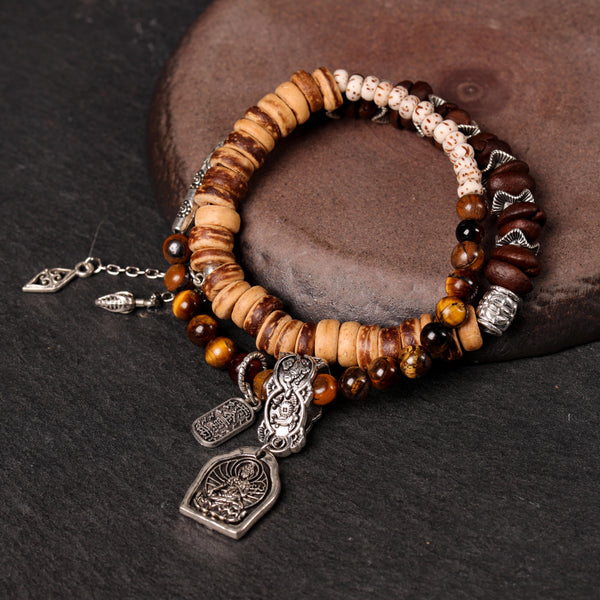
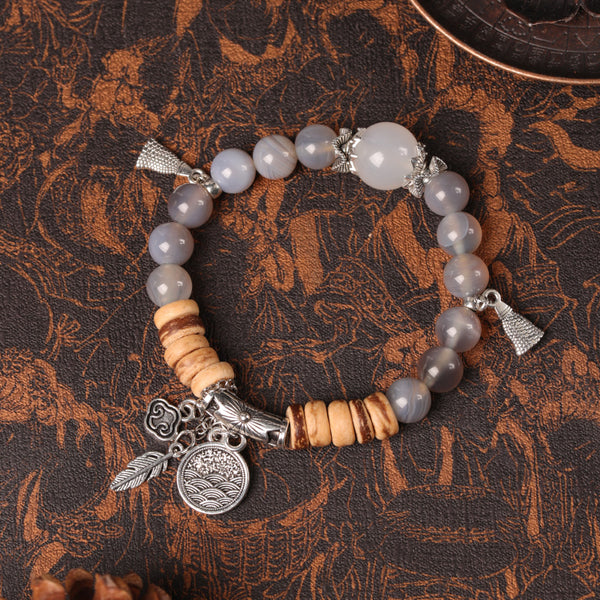
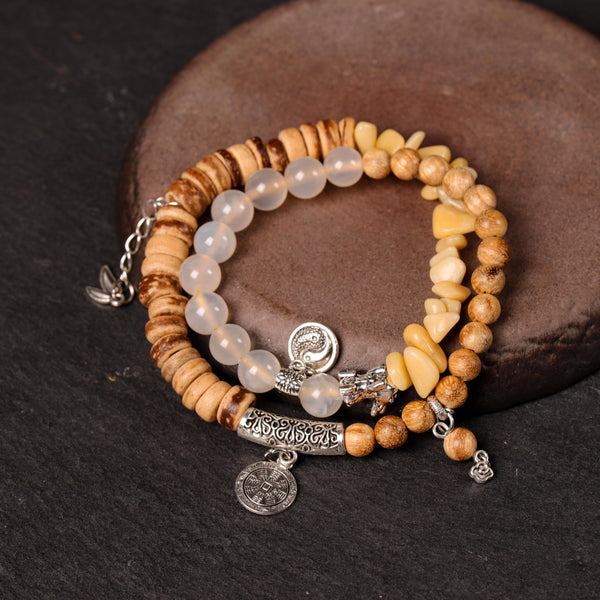
Crafted under the guidance of traditional Eastern lineage and metaphysical practitioners, HVibeTune's Feng Shui Bracelet Collection is founded on harmonizing the Five Elements (Wood, Fire, Earth, Metal, Water).
Wearable Energy Anchors: Designed to center your personal aura, soften environmental static, and foster clear, focused intention.
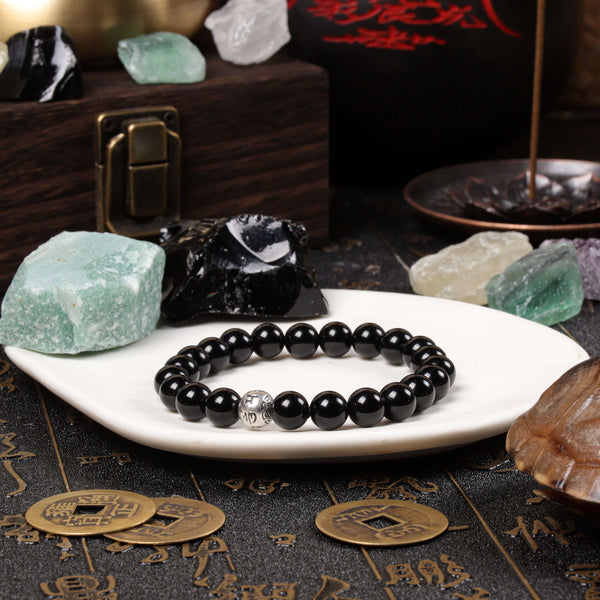
Natural Mineral Beads: Sourced from rich obsidian, protective red agate, and deep jade, honoring the grounding textures of natural stone rather than synthetic reproductions.
The Left-Right Energy Flow Principles
| Placement | Energetic Direction | Core Purpose | Ideal Stones & Symbols |
| Left Wrist | Receiving Yang Energy | Attracting abundance, welcoming mentors, and inviting fresh financial opportunities. | Pixiu, Jade, Citrine, Green Aventurine |
| Right Wrist | Releasing Yin Energy | Clearing stagnant frequencies, shielding personal aura, and warding off envy or burnout. | Black Obsidian, Hematite, Protective Agate |
A Grounded, Honest Promise: Energy Anchors, Not Magic Wands
HVibeTune does not make sensationalized claims of effortless overnight riches. True abundance is born of your personal choices, your daily resolve, and your courage to act.
Our bracelets are created to be your daily companion in quiet mindfulness—a physical reminder that wherever you place your attention, your life's momentum will follow.

Frequently Asked Questions: Good Luck Symbols & Feng Shui
Q1: What are good luck charms and symbols of wealth?
Symbols of wealth are culturally revered items, geometric designs, natural minerals, and animal archetypes (such as Pixiu, horseshoes, and the four-leaf clover) that represent financial expansion and protection. They function by anchoring positive intention, steadying mental focus, and inspiring proactive daily habits.
Q2: Can a good luck charm actually make me wealthy?
Not through supernatural means alone. Psychological research (such as Damisch et al., 2010) demonstrates that lucky charms meaningfully enhance self-efficacy, persistence, and task performance. They shift your inner emotional state, cultivating the focus and grit that lead to tangible success.
Q3: What is the most famous Chinese symbol for wealth?
The most renowned Chinese wealth symbols include Pixiu, Jin Chan (The Money Frog), The Five Emperor Coins, the character Fu (Fortune and Blessings), and Caishen (The God of Wealth). Each carries a rich legacy celebrating harmonious balance and moral diligence.
Q4: Where is the best place to put a Maneki-Neko?
Position your Maneki-Neko where it is naturally visible: by your business entryway, atop a checkout counter, or along the front-facing boundary of your desk. A raised right paw attracts wealth; a raised left paw welcomes cherished clients and supportive relationships.
Q5: How should a Pixiu be positioned for home Feng Shui?
If using an auspicious pair, position them angled toward the main door or window rather than directly facing people or mirrors. The male (left foot leading) looks outward for opportunity, while the female (right foot leading) anchors stability within.
Q6: Which way should the Jin Chan (Money Frog) face?
If the Jin Chan holds a coin securely in its mouth, face it inward toward the interior of your room to draw abundance in. If its mouth is empty, place it facing toward the entryway to seek out new financial horizons.
Q7: Should a horseshoe be hung up or down?
Hang your horseshoe with the curved base down and the open ends pointing upward in a "U" shape to collect, cradle, and preserve your household's blessings.
Q8: Which wrist should I wear my wealth bracelet on?
Under classic Eastern energetic principles, wear wealth-attracting bracelets on your left wrist (the receptive side that welcomes incoming energy). Wear protective or shielding stones on your right wrist (the expressive side that clears away stagnant energy).
Q9: Can I wear multiple lucky charms or energy bracelets together?
Yes, provided their energies complement each other. We recommend keeping your stack to two or three intentional pieces to maintain a peaceful, uncluttered aesthetic and keep your focus clear.
Q10: Is using symbols of good luck considered mere superstition?
When understood through cultural history and behavioral psychology, they are far more than superstition. They are tangible ritual objects and visual mindfulness anchors that deepen presence, elevate focus, and reduce stress in uncertain times.
Q11: Who are HVibeTune Feng Shui bracelets created for?
They are thoughtfully made for founders, creators, independent professionals, and mindful seekers who value Eastern aesthetics, tactile grounding, and intentional living. They also serve as meaningful gifts for milestones, new ventures, and seasonal celebrations.
Q12: How can I work with wealth symbols in a grounded, healthy way?
Treat your chosen symbol as a quiet mirror of your inner commitment rather than an external quick fix. Keep it where you will see it during the day, ground yourself in its presence, and then focus on what matters most: acting with courage, creating real value, and showing up every day.



Leave a comment