
Chinese vs Western Zodiac: The Complete Dual Astrology Guide, Sign Correspondences, and Compatibility
TABLE OF CONTENTS
- The Deep Connection Between Eastern and Western Astrology
- Chinese Zodiac vs Western Zodiac: Key Structural Differences
- Celestial Coordinates: The Ecliptic, 28 Lunar Mansions, and 12 Solar Stations
- Complete Chinese and Western Zodiac Combined Master Table
- Reading Chinese and Western Astrology Together
- How to Find Your Four Pillars and Western Astrological Placements
- Origins and Cultural Lineage: Western Astrology and Chinese Metaphysics
- Zodiac and Chinese Zodiac Compatibility: How Dual Signs Interact
- Selecting Crystals for Energy Alignment and Mindfulness
- Understanding Cycles: Ben Ming Nian, Tai Sui, and Mercury Retrograde
- Astrology, Cognitive Psychology, and Self-Reflection
- Integrated Chart Case Studies
- Mindful Next Steps
- Frequently Asked Questions
Have you ever felt like your bold Aries Sun wants to charge ahead and disrupt the industry, while your cautious Ox birth year prefers to build reserves, test the foundation, and move in complete silence?
You are not conflicted—you are navigating a dual celestial blueprint.
Millions of people check their daily Western horoscopes while consulting their Chinese zodiac sign when life feels out of sync. While Western astrology maps your conscious psychology and emotional wiring, Eastern metaphysics tracks your macro-environmental timing, ancestral baseline, and generational cycles.
When integrated consciously, these two ancient frameworks do not compete. They provide a multi-dimensional map for self-mastery, relationship clarity, and sustained personal growth.
3-Minute Quick Take
Short on time? Here are the 8 core principles of dual astrology:
Macro Timing vs. Micro Mind: The Chinese zodiac charts your broad yearly environment; your Western zodiac sign outlines your personal psychological traits.
Archetypal Resonance, Not Constellation Coordinates: The two systems correspond through energetic archetypes and natural elements, not identical astronomical coordinates.
Core Pairings: Rat aligns with Aquarius, Ox with Capricorn, Tiger with Sagittarius, and through the complete cycle. Review the Master Table below for all twelve.
Compatibility Dynamics: Chinese astrology evaluates generational harmony and tension; Western astrology assesses elemental flow, emotional needs, and synastry aspects.
Daily Alignment Tools: Chinese zodiac crystals stabilize your external environment, while Western zodiac stones balance your inner emotional state.
Holistic Chart Synthesis: A complete evaluation brings together your Year Pillar (Zodiac), Sun sign, Rising sign, Moon sign, and BaZi Day Master.
Cycles as Self-Care: Zodiac return years (Ben Ming Nian) and Mercury retrogrades highlight natural intervals for mindful recalibration, not unavoidable bad luck.
Self-Agency Over Determinism: Astrology is a navigational compass, not a fixed script. Your daily choices and conscious actions shape your life.

The Deep Connection Between Eastern and Western Astrology
Both systems explore how natural cosmic cycles correspond to human nature, sharing deep astronomical and geometric foundations.
The Sacred Number Twelve
Eastern metaphysics divides time using the Twelve Earthly Branches: Zi (Rat), Chou (Ox), Yin (Tiger), Mao (Rabbit), Chen (Dragon), Si (Snake), Wu (Horse), Wei (Goat), Shen (Monkey), You (Rooster), Xu (Dog), and Hai (Pig).
Western tropical astrology segments the Sun's apparent yearly path (the ecliptic) into twelve 30-degree signs: Aries, Taurus, Gemini, Cancer, Leo, Virgo, Libra, Scorpio, Sagittarius, Capricorn, Aquarius, and Pisces.
Mapping Celestial Rhythms: Jupiter and the Sun
Ancient Chinese astronomers measured the path of Sui Xing (Jupiter), which orbits the Sun in roughly 11.86 years. By rounding this cycle to 12 years, they segmented the sky into the "Twelve Stations" to understand earthly timing.
Western astrology maps the Sun’s annual journey across the seasons. One framework reads the twelve-year macro-cycle of Jupiter; the other observes the single-year solar cycle. Both segment celestial space into twelve phases to understand human rhythm.
Time and Consciousness
Your Chinese zodiac sign reflects the energetic environment of your birth year. Your Western birth chart maps the planetary placements at your exact moment of birth.
Important Distinction: Archetypal resonance does not mean identical astronomical coordinates. Being born in the Year of the Rat does not make you an Aquarius in astronomical terms; rather, both archetypes share a resonant energetic signature.

Chinese Zodiac vs Western Zodiac: Key Structural Differences
Understanding how both systems operate keeps you from confusing outer conditions with inner psychology.
Annual Cycles vs. Monthly Solar Transitions
Chinese Zodiac (Annual): While cultural celebrations follow the Lunar New Year, classical BaZi metaphysics strictly begins the astrological year at the solar term of Li Chun (Beginning of Spring, typically February 4). If you were born between late January and early February, your birth year must be calculated from this exact solar transition.
Western Zodiac (Monthly): Sun signs reflect the Sun’s transit through each zodiac sign along the Gregorian calendar (e.g., Aries from approximately March 21 to April 19).
To build a complete profile, look beyond your birth year and Sun sign:
Western Rising Sign (Ascendant): Shifts every two hours, shaping your external demeanor and first impressions.
Western Moon Sign: Changes every two to three days, governing your emotional security and inner instincts.
Eastern Hour Pillar: Operates in two-hour windows (Shi Chen), mirroring the Ascendant by revealing internal ambitions and later-life manifestations.
Five Elements vs. Planetary Transits
Classical Eastern astrology works with Yin-Yang polarities, the Five Elements (Wood, Fire, Earth, Metal, Water), the 24 Solar Terms, and the 28 Lunar Mansions.
Western astrology assesses the Sun, Moon, planetary bodies, astrological houses, and geometric angles (conjunctions, squares, trines).
In short: the Chinese system examines temporal stems and natural environmental cycles, whereas Western astrology tracks planetary archetypes and internal psychology.
Outer Environmental Blueprint vs. Inner Psychology
Chinese Year Pillar (Zodiac): Ancestral heritage, generational culture, social conditions, and macro cycles.
Western Sun Sign: Conscious identity, core willpower, and life focus.
Western Moon Sign: Emotional habits, intuitive needs, and private sanctuary.
Western Rising Sign: Behavioral interface, social presence, and outward style.
BaZi Day Master (Day Pillar Stem): The essential self in traditional Eastern chart reading.

Celestial Coordinates: The Ecliptic, 28 Lunar Mansions, and 12 Solar Stations
To understand whether these systems connect to physical stars, we look at how ancient astronomers observed the sky.
The Ecliptic Circle
The ecliptic marks the Sun's apparent path across the sky throughout the year. Western tropical astrology fixes 0° Aries at the vernal equinox, dividing the circle into twelve equal 30-degree sectors regardless of stellar drift.
Four Symbols and the Twenty-Eight Lunar Mansions
Ancient Chinese skywatchers oriented their celestial maps around the North Celestial Pole, dividing the sky into Four Cardinal Symbols (Si Xiang), each governing seven Lunar Mansions (Xiu):
Azure Dragon of the East (Spring, Wood)
Vermilion Bird of the South (Summer, Fire)
White Tiger of the West (Autumn, Metal)
Black Tortoise of the North (Winter, Water)
The Earthly Branches integrate directly with these sectors:
Zi (Rat): Connects to the Xu and Wei Mansions of the Black Tortoise.
Yin (Tiger): Connects to the Wei and Ji Mansions of the Azure Dragon.
Wu (Horse): Connects to the Xing and Zhang Mansions of the Vermilion Bird.
Precession and the Ophiuchus Question
In 1930, the International Astronomical Union (IAU) formalized the boundaries of 88 constellations. Because of axial precession, the physical Sun currently crosses thirteen constellations along the ecliptic, including Ophiuchus. Tropical Western astrology and traditional Chinese metaphysics both function as symbolic, geometric energetic systems rather than direct mappings of physical stellar boundaries.

Complete Chinese and Western Zodiac Combined Master Table
The table below outlines the twelve primary archetype correspondences derived from classical Qi Zheng Si Yu (Seven Regulators and Four Remnants) astrological alignments:
| Chinese Zodiac (Earthly Branch) | Western Zodiac Equivalent | Element Triplicity / Hidden Stem | Core Archetype Keywords | Recommended Crystals |
| Rat (Zi) | Aquarius | Yin Water / Air | Visionary insight, innovation, rational intellect | Amethyst, Fluorite |
| Ox (Chou) | Capricorn | Damp Earth / Earth | Resilience, grounded discipline, sustained focus | Golden Tiger's Eye, Garnet |
| Tiger (Yin) | Sagittarius | Yang Wood / Fire | Expansive vision, courage, exploration | Garden Quartz, Green Aventurine |
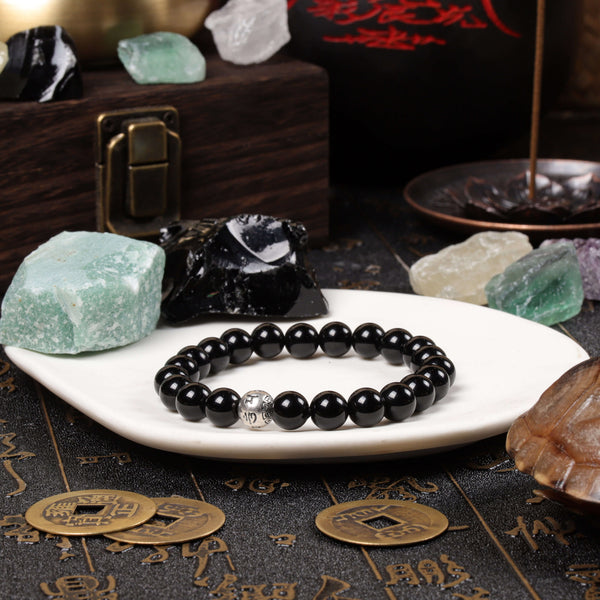
| Rabbit (Mao) | Scorpio | Yin Wood / Water | Intuitive perception, emotional resilience, poise | Black Obsidian, Moonstone |
| Dragon (Chen) | Libra | Wet Earth & Water / Air | Harmony, graceful diplomacy, natural presence | Rose Quartz, Strawberry Quartz |
| Snake (Si) | Pisces | Fire & Hidden Metal / Water | Deep empathy, creative vision, fluid adaptation | Blue Chalcedony, Clear Quartz |
| Horse (Wu) | Aries | Pure Yang Fire / Cardinal Fire | Decisive drive, pioneering courage, vitality | Carnelian, Citrine |
| Goat (Wei) | Taurus | Dry Earth / Venusian Earth | Artistic appreciation, patience, stability | Green Phantom Quartz, Citrine |
| Monkey (Shen) | Gemini | Yang Metal / Mercurial Air | Mental agility, versatile expression, curiosity | Blue Lace Agate, Yellow Fluorite |
| Rooster (You) | Cancer | Yin Metal / Cardinal Water | Meticulous care, protective devotion, loyalty | Moonstone, Rose Quartz |
| Dog (Xu) | Leo | Fire Storage Earth / Solar Fire | Principled integrity, loyalty, magnetic presence | Golden Sheen Obsidian, Rutilated Quartz |
| Pig (Hai) | Virgo | Yang Water & Wood / Earth | Service mindset, methodical focus, quiet authenticity | White Phantom Quartz, Amethyst |
In-Depth Archetype Profiles, Daily Rituals, and Shadow Work
1. Rat (Zi) & Aquarius
Energetic Resonance: Zi represents pure Yin Water (Gui Water), ruling fluid strategy, foresight, and adaptability. This matches the progressive vision and independent thinking of Aquarius.
Element Sub-Type Note: A Wood Rat (1984) approaches innovation with collaborative warmth, whereas a Metal Rat (1960, 2020) acts with sharper analytical detachment.
Crystal Ritual: Wear an Amethyst bracelet on your receptive (non-dominant) wrist during meditation to quiet mental noise; keep Fluorite at your workspace to organize creative insights.
Mindful Reflection Prompt: "Where am I relying on detached logic when an open conversation is what is actually needed?"

2. Ox (Chou) & Capricorn
Energetic Resonance: Chou is a damp Earth branch containing hidden Earth, Metal, and Water, representing quiet endurance and resource management. This aligns with Capricorn’s focus on structured accomplishment.
Element Sub-Type Note: A Fire Ox (1937, 1997) carries strong leadership drive, while a Water Ox (1973) leads with quiet emotional intelligence.
Crystal Ritual: Carry Golden Tiger's Eye during negotiations to prompt decisive action; place Garnet near your desk to support steady stamina.
Mindful Reflection Prompt: "What ambitious goals can I step toward today instead of waiting for perfect certainty?"

3. Tiger (Yin) & Sagittarius
Energetic Resonance: Yin is Yang Wood, visualizing a tall tree reaching outward. This energetic impulse parallels Sagittarius’s search for philosophical horizons and personal freedom.
Element Sub-Type Note: An Earth Tiger (1938, 1998) brings practical grounding to big visions, while a Water Tiger (1962, 2022) navigates adventures through intuition.
Crystal Ritual: Hold Garden Quartz (Lodolite) while journaling long-term goals; wear Green Aventurine to stay grounded during major transitions.
Mindful Reflection Prompt: "How can I balance my desire for independence with the commitments I've made to my community?"
4. Rabbit (Mao) & Scorpio
Energetic Resonance: Mao represents pure Yin Wood (Yi Wood), showing gentle tact that protects acute internal awareness. This mirrors Scorpio's perceptive intuition and emotional reserve.
Element Sub-Type Note: A Metal Rabbit (1951, 2011) maintains firm personal boundaries, while a Fire Rabbit (1987) expresses inner feelings with creative passion.
Crystal Ritual: Wear Black Obsidian on your dominant wrist to create energetic boundaries in crowded settings; keep Moonstone bedside for emotional equilibrium.
Mindful Reflection Prompt: "Am I holding up a boundary out of genuine self-care, or am I guarding against vulnerability?"

5. Dragon (Chen) & Libra
Energetic Resonance: Chen is an Earth branch acting as a reservoir for Water, Wood, and Earth, skilled at harmonizing differing dynamics. This mirrors Libra’s drive for aesthetic balance, diplomacy, and justice.
Element Sub-Type Note: A Wood Dragon (1964, 2024) leads with generosity and vision, while a Metal Dragon (1940, 2000) focuses on uncompromising precision and standards.
Crystal Ritual: Place Rose Quartz in shared living areas to invite open warmth; wear Strawberry Quartz to support ease in social settings.
Mindful Reflection Prompt: "Where might I be keeping the surface peace at the expense of speaking my honest truth?"

6. Snake (Si) & Pisces
Energetic Resonance: Si is Yang Fire containing hidden Metal and Earth, moving with quiet strategy and keen perception. This matches Pisces’s deep emotional empathy and imaginative intuition.
Element Sub-Type Note: A Water Snake (1953, 2013) possesses rich artistic intuition, while a Wood Snake (1965, 2025) excels at turning creative ideas into organized realities.
Crystal Ritual: Keep Clear Quartz nearby during deep work to clear emotional fatigue; wear Blue Chalcedony to encourage open, clear communication.
Mindful Reflection Prompt: "What feelings am I carrying right now that belong to others rather than myself?"

7. Horse (Wu) & Aries
Energetic Resonance: Wu marks peak Yang Fire (Ding Fire), radiating pure vitality, initiative, and drive. This pairs with Aries’s pioneering spirit and direct, courageous action.
Element Sub-Type Note: An Earth Horse (1978) moves with steady, grounded focus, while a Fire Horse (1966) brings intense passion and rapid execution.
Crystal Ritual: Wear Carnelian to sustain physical motivation throughout the day; place Citrine near your work plans to channel bold ideas into practical outcomes.
Mindful Reflection Prompt: "Am I chasing a new project for the thrill of the start, or am I willing to build it through to completion?"

8. Goat (Wei) & Taurus
Energetic Resonance: Wei represents fertile, warm Earth holding resources ready for harvest. This grounds Taurus’s desire for comfort, material stability, and refined living.
Element Sub-Type Note: A Metal Goat (1931, 1991) holds high artistic standards, while a Water Goat (1943, 2003) leads with gentle empathy and community connection.
Crystal Ritual: Wear Green Phantom Quartz to support steady professional growth; place Citrine on your desk to anchor financial intentions.
Mindful Reflection Prompt: "How can I distinguish between genuine self-nurturing and habits born out of comfort and routine?"

9. Monkey (Shen) & Gemini
Energetic Resonance: Shen represents Yang Metal—sharp tools, rapid processing, and decisive problem-solving. This enhances Gemini’s dexterity, communication speed, and cognitive versatility.
Element Sub-Type Note: A Fire Monkey (1956, 2016) communicates with bold creative spark, while a Water Monkey (1932, 1992) excels at diplomatic listening and strategy.
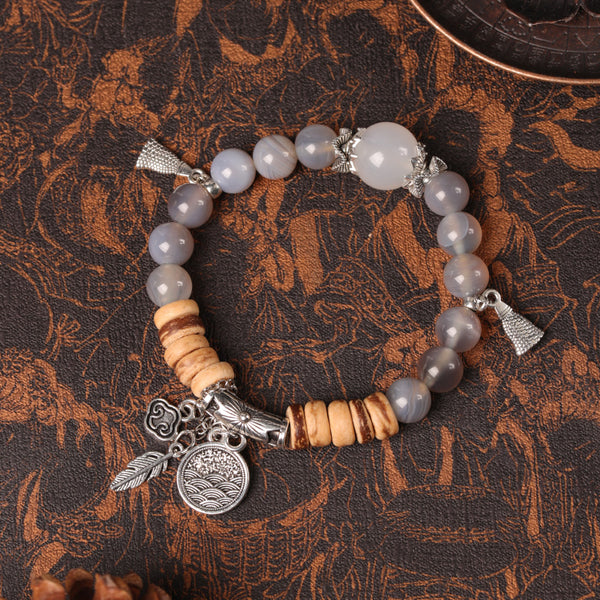
Crystal Ritual: Wear Blue Lace Agate to support calm, measured conversations; keep Yellow Fluorite at your desk to sustain focus on single tasks.
Mindful Reflection Prompt: "Am I scattering my energy across five different interests when one dedicated focus would build real momentum?"

10. Rooster (You) & Cancer
Energetic Resonance: You represents refined Yin Metal (Xin Metal), embodying careful order, clarity, and deep loyalty. This matches Cancer’s protective nature and devotion to home foundations.
Element Sub-Type Note: A Wood Rooster (1945, 2005) brings collaborative warmth to group settings, while a Water Rooster (1933, 1993) combines attention to detail with intuitive empathy.
Crystal Ritual: Wear Moonstone on your receptive wrist to support emotional ease; keep Rose Quartz nearby to invite patience and self-acceptance.
Mindful Reflection Prompt: "Can I let go of needing everything to be managed perfectly and simply rest in the present moment?"

11. Dog (Xu) & Leo
Energetic Resonance: Xu is the Fire Storage branch, holding protective warmth, community dedication, and moral integrity. This aligns with Leo's loyalty, confidence, and natural leadership presence.
Element Sub-Type Note: An Earth Dog (1958, 2018) builds steady community support, while a Metal Dog (1970) defends core principles with focused resolve.
Crystal Ritual: Wear Golden Sheen Obsidian on your dominant wrist to ground your personal authority; place Rutilated Quartz near your creative projects for clarity of purpose.
Mindful Reflection Prompt: "Am I leading from a place of service and shared purpose, or am I seeking validation for my efforts?"

12. Pig (Hai) & Virgo
Energetic Resonance: Hai represents Yang Water holding hidden Wood—a phase of quiet consolidation, deep reflection, and thoughtful preparation. This mirrors Virgo’s analytical care, dedication to service, and focus on steady improvement.
Element Sub-Type Note: A Fire Pig (1947, 2007) pursues goals with hearty enthusiasm, while a Metal Pig (1971) brings dedicated structure and focus to personal routines.
Crystal Ritual: Wear White Phantom Quartz to release self-critical tension; hold Amethyst during evening meditation to quiet analytical overthinking.
Mindful Reflection Prompt: "Where can I offer myself grace instead of measuring my worth against an impossible standard of perfection?"

Reading Chinese and Western Astrology Together
Synthesizing both charts provides a comprehensive overview of your natural gifts and potential growth areas.
Year Pillar + Sun Sign
Your Chinese birth year indicates your broad generational climate, family expectations, and baseline instinctual reactions. Your Sun sign illustrates your conscious willpower, creative intentions, and personal identity. Reading them together shows how your intentional goals take shape within your broader life circumstances.
Ascendant + BaZi Day Master
Your Western Rising sign describes your interface with the everyday world—your communication style, first impressions, and outer packaging. Your BaZi Day Master (the heavenly stem of your birth day) represents your core elemental essence. Evaluating both highlights whether your inner self feels supported by your external presentation.
Moon Sign + Emotional Needs
While your Chinese Year Pillar reflects societal context, your Western Moon sign details your instinctive emotional patterns and internal need for security. Reading them side by side prevents surface-level assumptions: an individual born in a dynamic Tiger year may appear bold in business, yet a Moon in Cancer will still require deep emotional safety at home.

How to Find Your Four Pillars and Western Astrological Placements
Chinese Zodiac Birth Year Reference Table
| Chinese Zodiac | Recent Solar Years | Upcoming Solar Years |
| Rat | 2008, 2020 | 2032 |
| Ox | 2009, 2021 | 2033 |
| Tiger | 2010, 2022 | 2034 |
| Rabbit | 2011, 2023 | 2035 |
| Dragon | 2012, 2024 | 2036 |
| Snake | 2013, 2025 | 2037 |
| Horse | 2014, 2026 | 2038 |
| Goat | 2015, 2027 | 2039 |
| Monkey | 2016, 2028 | 2040 |
| Rooster | 2017, 2029 | 2041 |
| Dog | 2018, 2030 | 2042 |
| Pig | 2019, 2031 | 2043 |
Note: If you were born between January 20 and February 10, verify whether your birth occurred before or after the exact solar transition of Li Chun (typically February 4) to confirm your true birth animal.
Western Tropical Zodiac Calendar Dates
| Zodiac Sign | Approximate Calendar Window | Element & Modality |
| Aries | March 21 – April 19 | Cardinal Fire |
| Taurus | April 20 – May 20 | Fixed Earth |
| Gemini | May 21 – June 20 | Mutable Air |
| Cancer | June 21 – July 22 | Cardinal Water |
| Leo | July 23 – August 22 | Fixed Fire |
| Virgo | August 23 – September 22 | Mutable Earth |
| Libra | September 23 – October 22 | Cardinal Air |
| Scorpio | October 23 – November 21 | Fixed Water |
| Sagittarius | November 22 – December 21 | Mutable Fire |
| Capricorn | December 22 – January 19 | Cardinal Earth |
| Aquarius | January 20 – February 18 | Fixed Air |
| Pisces | February 19 – March 20 | Mutable Water |
Calculating Deeper Placements Without an Exact Birth Time
Rising Sign & BaZi Hour Pillar: Require an accurate birth minute and geographic location. If exact records are unavailable, begin your analysis using your Sun sign, approximate Moon sign, and Chinese birth year.
True Solar Time: Recommended when casting an accurate BaZi chart or calculating an Ascendant within five degrees of a sign boundary.

Origins and Cultural Lineage: Western Astrology and Chinese Metaphysics
The Lineage of Western Horoscopic Astrology
Western astrology grew out of Babylonian celestial recordkeeping, was refined by Hellenistic practitioners like Claudius Ptolemy, and evolved into contemporary psychological astrology. It maps individual consciousness through planetary movements, aspects, and house divisions.
Classical Chinese Metaphysics and Wang Chong’s Lun Heng
Chinese zodiac metaphysics originated as an observational science linking planetary transits, seasonal rhythms, and agricultural cycles. The complete twelve-animal sequence was established during the pre-Qin era (770–221 BC) and documented systematically in Eastern Han scholar Wang Chong’s Lun Heng (Balanced Discourses, 25–220 AD).
Traditional Eastern metaphysics operates as an environmental science. It analyzes how natural life force (Qi) flows through time and space, offering practical frameworks to help individuals balance their personal environment.

Zodiac and Chinese Zodiac Compatibility: How Dual Signs Interact
A thorough compatibility assessment considers both daily interpersonal chemistry and shared long-term values.
Chinese Zodiac Dynamic Classifications
| Dynamic Type | Specific Animal Combinations | Relationship Growth Dynamics |
| Six Harmonies (Liu He) | Rat-Ox, Tiger-Pig, Rabbit-Dog, Dragon-Rooster, Snake-Monkey, Horse-Goat | Natural mutual respect and effortless everyday collaboration. |
| Three Harmonies (San He) | Monkey-Rat-Dragon, Tiger-Horse-Dog, Snake-Rooster-Ox, Pig-Rabbit-Goat | Shared worldview, complementary talents, and sustained growth. |
| Catalyst Clashes (Chong) | Rat-Horse, Ox-Goat, Tiger-Monkey, Rabbit-Rooster, Dragon-Dog, Snake-Pig | Contrasting approaches that invite healthy boundaries and mutual learning. |
| Underlying Friction (Hai) | Rat-Goat, Ox-Horse, Tiger-Snake, Rabbit-Dragon, Monkey-Pig, Rooster-Dog | Unspoken expectations; clear, honest communication helps prevent distance. |
| Evolutionary Tension (Xing) | Rat-Rabbit; Ox-Goat-Dog; Tiger-Snake-Monkey; Dragon-Dragon; Horse-Horse; Rooster-Rooster; Pig-Pig | Opportunities for personal maturity, self-reflection, and inner growth. |
| Subtle Friction (Po) | Rat-Rooster, Ox-Dragon, Tiger-Pig, Rabbit-Horse, Snake-Monkey, Dog-Goat | Minor day-to-day habits that benefit from mindful compromise. |
Does an Astrological Clash Signal Incompatibility?
An Earthly Branch clash or a Western planetary square represents dynamic tension rather than guaranteed discord. Many lasting partnerships share astrological clashes that spark attraction, encourage self-development, and keep life engaging. Respectful communication and emotional self-awareness remain the true cornerstones of a healthy relationship.
Western Synastry: Elements, Polarities, and Modalities
Fire: Aries, Leo, Sagittarius
Earth: Taurus, Virgo, Capricorn
Air: Gemini, Libra, Aquarius
Water: Cancer, Scorpio, Pisces
Harmonious connections frequently flourish between Fire and Air (action and ideas) as well as Earth and Water (structure and emotional depth). Opposite signs across the zodiac wheel (such as Taurus and Scorpio, or Gemini and Sagittarius) often offer natural balance through differing perspectives.

Selecting Crystals for Energy Alignment and Mindfulness
Natural mineral crystals serve as tactile anchors for mindful intention, grounding your personal energy across daily routines.
Cleansing, Programming, and Wearing Guidelines
Energetic Receptivity vs. Projection: Traditional mineral practices suggest wearing stabilizing and protective stones on the non-dominant hand (receptive), while wearing action- and boundary-oriented stones on the dominant hand (expressive).
Cleansing Protocols: Cleanse minerals periodically using indirect natural moonlight, clear quartz clusters, aromatic plant smoke (such as dried white sage), or brief rinses under cool water (avoid soaking soft or porous stones like Selenite, Malachite, or Pyrite).
The Role of Minerals: Crystals serve as mindful visual and tactile reminders of your daily intentions. They support personal reflection and do not replace professional medical or psychological guidance.

Understanding Cycles: Ben Ming Nian, Tai Sui, and Mercury Retrograde
Cosmic transitions highlight natural intervals for self-reflection and recalibration.
Ben Ming Nian (Zodiac Year): The recurrence of your birth animal every twelve years marks an invitation to pause, assess personal foundations, and move forward with balanced focus.
Tai Sui Interactions: In classical cycles, specific signs encounter shifts (values, clashes, or adjustments) relative to the annual ruler. These periods emphasize mindful planning, steady temperaments, and measured investments.
Mercury Retrograde: Approximately three times a year, the apparent retrograde motion of Mercury invites review, organizational audits, and measured communication rather than hasty commitments.
New and Full Moons: Lunar rhythms mark helpful cadences: New Moons support setting clear goals, while Full Moons are ideal for reflection and emotional release.

Astrology, Cognitive Psychology, and Self-Reflection
To approach astrology constructively, it helps to balance ancient traditions with modern psychological insights:
The Barnum Effect: The psychological tendency for individuals to perceive generalized personality statements as uniquely personal.
Confirmation Bias: The habit of noting information that aligns with our personal theories while overlooking details that contradict them.
Astrology as a Reflective Mirror: Astrology serves as an intuitive symbolic vocabulary. Rather than predicting deterministic outcomes, it offers archetypal symbols that help you explore personal values, navigate blind spots, and foster self-awareness.

Integrated Chart Case Studies
Case 1: Rat + Aquarius + Cancer Rising + Day Master Yang Wood (Jia)
Archetype Dynamics: Visionary ideas and abstract strategy (Rat/Aquarius) wrapped in a warm, protective exterior (Cancer Rising), driven by a deep need for steady personal growth (Yang Wood).
Workplace Focus: Excels when leading innovative projects within a supportive, psychologically safe team environment.
Crystal Resonance: Amethyst, Fluorite, and Moonstone.
Case 2: Dragon + Libra + Scorpio Moon
Archetype Dynamics: Social diplomacy, charm, and balance (Dragon/Libra) built over an intense emotional core that seeks deep, unwavering trust (Scorpio Moon).
Relationship Strategy: Practicing direct conversations during disagreements rather than maintaining surface harmony at the cost of inner peace.
Crystal Resonance: Rose Quartz, Strawberry Quartz, and Black Obsidian.
Case 3: Eastern Clash with Western Element Harmony (Rat and Horse / Aquarius and Aries)
Archetype Dynamics: Generational or lifestyle habits may pull in different directions (Rat-Horse catalyst tension), yet daily creative communication sparks with natural ease (Aquarius-Aries Air/Fire harmony).
Growth Strategy: Celebrate personal independence and creative ideas while establishing clear agreements around practical routines and household tasks.

Mindful Next Steps
Verify Your Solar Birth Chart: Confirm whether your birth date falls before or after Li Chun to ensure your exact Earthly Branch.
Select Your Daily Minerals: Choose a crystal pairing that anchors your yearly goals while supporting daily emotional balance.
Explore Dual Compatibility: Use the archetype frameworks above as reflective prompts to appreciate your partner's distinct perspective on life.
Frequently Asked Questions
Q1: Is the Chinese zodiac fundamentally connected to Western astrology?
Yes, through shared astronomical rhythms and cultural symbolism. Both traditions utilize the number twelve to segment cosmic and seasonal time. While their celestial metrics vary (Jupiter's orbital cycle versus the Sun's transit), they share corresponding energetic archetypes.
Q2: Should I focus on my Chinese zodiac year or my Western Sun sign?
Both offer complementary perspectives. Your Chinese zodiac sign describes your broader environmental foundation and generational patterns, while your Western Sun sign highlights your conscious willpower and self-expression.
Q3: Why does my Chinese zodiac animal correspond to a different Western sign than my birthday?
The correspondence table aligns fundamental energetic traits rather than calendar months. For instance, the strategic Yang Water of the Rat mirrors the innovative perspective of Aquarius, regardless of the month you were born.
Q4: Should I choose crystals based on my Chinese zodiac or my Western sign?
Select crystals that match your immediate focus: choose Chinese zodiac stones to support grounded balance throughout the year, and turn to Western zodiac crystals to nourish emotional and mental clarity.
Q5: Can dual astrology predict romantic compatibility?
Astrology highlights natural compatibilities and areas that invite patience, but it does not dictate destiny. Communication habits, mutual respect, shared goals, and personal maturity remain the true foundations of a lasting partnership.
Q6: Does a Chinese zodiac clash mean a couple cannot be together?
No. An astrological clash simply highlights differing instincts. Many couples navigate these contrasts successfully by cultivating clear boundaries and mutual understanding.
Q7: Does my birth chart determine my fate?
No. Astrological blueprints map natural tendencies, personal gifts, and potential blind spots. Your conscious choices, daily disciplines, and responses to life's circumstances shape your actual path.
Q8: Does the Chinese zodiac year start on the Lunar New Year or Li Chun?
In authentic Chinese Four Pillars metaphysics (BaZi), the astrological year begins precisely at the solar term of Li Chun (Beginning of Spring, around February 4), not on the first day of the Lunar New Year calendar.
Q9: What should I focus on during my Ben Ming Nian (Zodiac Year)?
Use your zodiac year as a time for personal reflection, emotional balance, and purposeful planning. Wearing protective colors or grounding stones like Obsidian and Garnet can serve as a mindful anchor for centered focus.
Q10: How can I explore a comprehensive dual astrological reading?
A complete evaluation synthesizes your Chinese Year, Month, Day, and Hour Pillars with your Western Sun, Moon, and Ascendant placements. Consulting an authentic lineage expert, such as Feng Shui Master Gu Haiyun, offers an integrative perspective that aligns spatial harmony with your personal chart blueprint.



Leave a comment