
How to Become a Taoist Priest: Complete Guide to Lineage, Ordination, and Genuine Spiritual Training
TABLE OF CONTENTS
- Quanzhen vs. Zhengyi: The Two Authentic Paths of Taoist Priesthood
- State Accreditation: Official Taoist Clergy Certification Standards
- Vestments, Robes, and Crowns: Decoding Taoist Sacred Dress
- Daily Life and Disciplines: Inside an Authentic Practitioner's Routine
- Unlocking Esoteric Taoism: The Truth Behind Shenxiao Thunder Magic
- The Reality for Western Seekers: 3 Practical Pathways to Authentic Practice
- A 5-Minute Daily Taoist Alignment Practice for Modern Life
- Experiencing Authentic Lineage Protection in Everyday Life
- Frequently Asked Questions (FAQ)
If you have ever felt drawn to Eastern metaphysics, sacred rituals, or the profound philosophy of Yin and Yang, you have likely looked at ancient temple doors and wondered: How does one actually become an ordained Taoist priest?
In the West, popular culture often blurs reality with fantasy. Hollywood films and martial arts novels reduce Taoist masters to bearded recluses waving peach-wood swords or solitary monks practicing superhuman feats on misty mountaintops. Online, self-styled "gurus" sell weekend initiation certificates and mass-produced robes, claiming anyone can become a high priest in thirty days.
Authentic Taoism (Daoism) is an unbroken initiatory science governed by strict lineage transmission, legal accreditation, and rigorous daily discipline. Under the official standards of the Taoist Association of China, legitimate clergy are formally verified practitioners of either the Quanzhen or Zhengyi lineages who have completed rigorous initiation rites and state-backed clerical registration.
Whether your aspiration is to walk the sacred path toward ordination, understand the real difference between a celibate monk and a household priest, or uncover the truth behind legendary arts like Shenxiao Thunder Magic, this definitive guide provides the authentic roadmap.

Quanzhen vs. Zhengyi: The Two Authentic Paths of Taoist Priesthood
Taoism is not a single, uniform tradition. For centuries, orthodox practice has flowed through two primary branches: the Northern Quanzhen (Complete Perfection) tradition and the Southern Zhengyi (Orthodox Unity) tradition. Discerning between these two paths is the very first step toward understanding Taoist ordination.
The Zhengyi Tradition: The Household Liturgical Priest
Founded in the Eastern Han Dynasty by Celestial Master Zhang Daoling, the Zhengyi school focuses on liturgical ceremonies (Jiao), celestial talismans (Fulu), and active service to the everyday world.
The Zhengyi Lifestyle: Zhengyi clergy are often referred to as "household Taoists" (Huoju Daoshi). They reside within secular society, may marry, raise families, and maintain professional careers. While they observe strict vegetarian fasts during ceremonial altar duties, they are not bound by lifelong monastic vegetarianism. Their primary historical mission is Jishi Duren—alleviating suffering and harmonizing human energetic fields with the cosmos.
Step 1: Taking Refuge (Guiyi): The gateway into lay cultivation. A seeker visits an authentic temple to pledge devotion to the Three Treasures (San Bao): the Tao, the Sacred Scriptures, and the Master. Upon receiving the Three Refuges and Five Precepts, the seeker is awarded a Refuge Certificate (Guiyi Zheng). At this stage, one is a lay devotee (Jushi), not an ordained priest.
Step 2: Transmission Rite (Chuandu): The formal threshold into Zhengyi priesthood. Supervised by provincial Taoist associations and held at major historical ancestral temples, applicants must be at least 21 years old, prove authentic three-generation lineage under a verified master, and demonstrate mastery of basic liturgies and decorum. Successfully completing this 2-to-3-day initiation grants your official Taoist title (Daohao), your ordination credentials, and your Transmission Certificate (Chuandu Zheng). You are now an apprentice priest.
Step 3: Receiving the Registers (Shoulü): Advancing to a high liturgical master (Gaogong) authorized to command celestial energies requires formal Shoulü. Historically governed by the liturgical manual Tiantan Yuge, celestial ranks advance through five strict tiers:
Initial Register: Taishang Sanwu Dugong Jinglü (6th and 7th Celestial Rank)
Secondary Elevation: Taishang Zhengyi Mengwei Jinglü (Promoted after 3 years of service)
High-Tier Elevation: Shangqing Wulei Jinglü (Five Thunder Register, after 8 additional years)
Advanced Mystic Elevation: Shangqing Sandong Wulei Jinglü (After 12 additional years)
Supreme Patriarch Elevation: Shangqing Dadong Jinglü
Receiving the Registers formally inscribes the priest’s name in the celestial registries (Ming Deng Tian Cao), conferring the spiritual mandate required for their consecrated talismans and prayers to reach high heavenly realms.
The Quanzhen Tradition: The Ascetic Path of the Temple Taoist Monk
Founded during the Jin Dynasty by Patriarch Wang Chongyang, Quanzhen harmonizes Taoist cultivation with Buddhist meditation and Confucian ethics, prioritizing personal transcendence and internal alchemical refinement (Neidan).
The Quanzhen Lifestyle: Quanzhen monastics leave secular domestic life behind entirely. They reside permanently inside registered monasteries, observe strict lifelong celibacy, adhere to a dedicated vegetarian diet, and wear their uncut hair bound in a traditional topknot (Ziwu Zuan).
Step 1: Temple Novitiate (Probationary Service): An aspirant enters a registered Quanzhen monastery as a resident novice, performing physical labor, serving the community, and studying core rules for a minimum of two years. Candidates must be at least 21 years old, single, healthy, and dedicated to monastic discipline.
Step 2: Crowning Ceremony (Guanjin): The traditional milestone marking official monastic renunciation. Candidates must demonstrate deep familiarity with the Morning and Evening Liturgies and secure explicit written sponsorship from their master (Dushi) and monastic directors. During the ceremony, their hair is bound into a topknot beneath a circular Hunyuan Hat (Hunyuan Jin), and they receive their Guanjin Certificate.
Step 3: The Three Altars Grand Precepts (San Tan Da Jie): To become an elder monastic master, crowned disciples must undergo the legendary Three Altars Precepts established by Patriarch Qiu Chuji:
The Initial True Precepts (Chuzhen Jie): Restraining external senses to master outer conduct (Master of Wondrous Action).
The Intermediate Precepts (Zhongji Jie): Purifying internal emotions and attachments (Master of Wondrous Virtue).
The Celestial Immortal Precepts (Tianxian Miaojie): Dissolving dualistic ego to achieve unity with the Tao (Master of Wondrous Dao).
Codified into the triad of Precepts, Concentration, and Wisdom, candidates complete an intensive 100-day secluded ordination retreat. Those who graduate receive the Purity Precept Certificate (Jingjie Die) and their names are recorded in the immortal registers.

State Accreditation: Official Taoist Clergy Certification Standards
Completing traditional initiations (Chuandu or Guanjin) represents a sacred internal milestone. However, to legally conduct liturgical services or manage public religious venues, a practitioner must obtain state clerical accreditation.
Receiving an ordination scroll confirms spiritual graduation from a recognized lineage, while state accreditation functions as a legal administrative license.
Statutory Requirements for Official Certification
Under the Measures for the Certification of Taoist Clergy (updated late 2025), applicants must meet strict criteria:
Ethical Integrity: Clean criminal background, upright moral character, and strict adherence to traditional religious precepts.
Age and Health: Minimum 21 years of age, with sound physical, emotional, and psychological health.
Lineage Verification: Proven completion of Guanjin (Quanzhen) or Chuandu (Zhengyi) within a recognized ancestral lineage.
Scriptural Fluency: Flawless memorization of the Morning and Evening Liturgies, the Scripture of the Three Officials, and the Northern Dipper Scripture, alongside deep philosophical command of the Dao De Jing, Zhuangzi, and Taishang Ganying Pian.
The 4-Step Accreditation Hierarchy
Step 1: Local Filing: Submit your formal application directly to the local municipal Taoist Association.
Step 2: Tier Review: The application is vetted by municipal bodies and elevated to the Provincial Taoist Association.
Step 3: National Audit: The credential file is audited by the central Taoist Association of China and registered with the Religious Affairs Bureau.
Step 4: License Issued: The standardized Taoist Clergy Certificate (Daoshi Zheng) is issued free of charge.
Official credentials carry a unified 12-digit national registration code and an embossed seal. They are re-evaluated every five years. Legitimate clergy certificates are never sold; charging fees for this legal document is strictly illegal.

Vestments, Robes, and Crowns: Decoding Taoist Sacred Dress
In traditional Taoism, sacred vestments are not decorative costumes—they are visual manifestations of an initiate's lineage, rank, and spiritual purity.
Traditional Robe (Daopao / Shan): A long, flowing blue or grey robe with wide sleeves representing simplicity, detachment, and harmony with nature. Worn by all resident monastics, ordained priests, and formal initiates during daily duties.
Purple or Crimson Vestment (Jiangyi): An ornate red, purple, or golden robe embroidered with the Sun, Moon, 28 Constellations, and the Bagua. Represents cosmic liturgical authority. Reserved exclusively for High Liturgical Masters (Gaogong) presiding over formal altar ceremonies.
Circular Open Hat (Hunyuan Jin): A structured, round crown with an opening in the center through which the practitioner’s hair topknot is visibly exposed. Worn by Quanzhen monastics who have formally completed the Crowning ceremony.
Nine-Beam Crown (Jiuliang Jin): A curved, structured cap featuring nine vertical ridges, symbolizing the Nine Heavens. Worn by Zhengyi liturgical priests during formal altar invocations and blessings.
If an online "master" wears ornate dragon-embroidered crimson robes while streaming commercial readings or drinking alcohol, they are violating sacred protocols. In orthodox Taoism, high vestments are reserved exclusively for active consecrated altars.

Daily Life and Disciplines: Inside an Authentic Practitioner's Routine
Morning and Evening Liturgical Chanting (Zao Wan Gong Ke)
Every resident practitioner observes twice-daily liturgies inside the temple hall (excluding astrological Wu days). These services maintain personal energetic purity and harmonize the surrounding environment:
Morning Liturgy (Zao Ke): Begins before sunrise. Opens with sacred purification incantations for the Mind, Speech, Body, and the Earth. Practitioners recite foundational meditation scriptures—including the Treatise of Constant Purity and Tranquility (Qingjing Jing) and the Jade Emperor Mind Seal Classic (Yuhuang Xinyin Jing)—to align personal vitality (Qi) with the rising Yang energy of dawn.
Evening Liturgy (Wan Ke): Performed at dusk. Emphasizes universal salvation, compassion, and ancestor veneration. Includes solemn prayers to Taiyi Jiuku Tianzun (the Divine Rescuer from Suffering) and praises to cosmic governors such as the Three Officials (San Guan) and the Northern Dipper (Bei Dou).
The Five Inviolable Precepts (Wu Jie)
At every stage of cultivation, practitioners uphold five core ethical boundaries:
No Intentional Killing (Bu Sha Sheng): Respect for all living consciousness.
No Taking What Is Not Freely Given (Bu Tou Dao): Complete honesty and ethical conduct.
No Sexual Misconduct (Bu Xie Yin): Lifelong celibacy for monastics; strict marital fidelity and emotional respect for household priests.
No Deceptive Speech (Bu Wang Yu): Rejection of false spiritual promises, manipulation, and egoic exaggeration.
No Intoxication or Chemical Abuse (Bu Xun Jiu): Keeping the physical vessel clear to maintain energetic sensitivity and mental clarity.

Unlocking Esoteric Taoism: The Truth Behind Shenxiao Thunder Magic
Beyond daily liturgies, many Western seekers are captivated by legendary esoteric arts, particularly Shenxiao Thunder Magic (Shenxiao Lei Fa).
Historical Origins of the Thunder Arts
Shenxiao Thunder Magic was formulated during the late Northern Song Dynasty by Master Wang Wenqing of Jiangxi. Synthesizing ancient talismanic arts with advanced internal meditation, Master Wang was awarded high imperial honors by Emperor Huizong. The school placed the Five Thunder Methods (Wu Lei Da Fa) at the center of its tradition, subsequently integrating into the Zhengyi lineage.
As Above, So Below: Bio-Resonance Over Theatrical Magic
In authentic metaphysics, Thunder Magic does not involve Hollywood special effects or dramatic gestures. It is rooted in the sacred axiom: Internal Cultivation Forms the Elixir; External Application Forms the Rite (Nei Lian Cheng Dan, Wai Yong Cheng Fa).
The Microcosm-Macrocosm Connection: The human body is an exact energetic reflection of the cosmos. In traditional physiology, the human heart corresponds to the Fire of the South; the kidneys correspond to the Water of the North; the lungs to Metal; the liver to Wood; and the spleen to Earth.
Bio-Electromagnetic Coherence: True "Thunder" is understood as the sudden resonance that occurs when internal Yin and Yang energies reach perfect biological alignment. A practitioner’s internal essence, vitality, and consciousness (Jing, Qi, Shen) must harmonize with the raw vibrational frequency of celestial storms.
The Neidan Foundation: Without years of silent meditation, breath control, and foundational meridian openings (Microcosmic Orbit), external talismanic calligraphy remains inert paper. The secret "keys" to Thunder Magic are internal physiological and mental frequencies—passed down exclusively through direct, personal master-to-student transmission.

The Reality for Western Seekers: 3 Practical Pathways to Authentic Practice
One of the greatest challenges for Westerners is understanding how to connect with authentic Taoism when living outside China. Becoming a full monastic requires fluency in classical Chinese, extensive temple service, and complex residency visas. Fortunately, orthodox tradition provides three accessible pathways for international seekers.
Pathway 1: Philosophical and Lifestyle Practice (Self-Cultivation)
You do not need formal ordination to live in deep harmony with the Tao. Millions of practitioners around the world experience profound vitality by studying the Dao De Jing and Zhuangzi, integrating meditation into daily life, and aligning their sleep, nutrition, and work with natural seasonal cycles (Yangsheng).
Pathway 2: Taking Refuge as a Lay Devotee (Jushi)
If you desire a direct spiritual anchor, taking the Three Refuges is the ideal milestone for 99% of international seekers. You can take formal refuge at registered ancestral temples during spiritual retreats, or through authorized overseas centers affiliated with recognized lineages (such as established organizations in San Francisco, New York, London, or Singapore). You receive a recognized Refuge Certificate and an authentic generation name (Zibei), studying classic scriptures and meditation without monastic renunciation.
Pathway 3: Zhengyi Household Apprenticeship
For dedicated seekers called to study sacred liturgies and consecrated talisman craft, the Zhengyi household tradition (Huoju) is the most practical path. Verified Zhengyi lineage holders often work with sincere international disciples, offering structured study in classical philosophy, energetic breathwork, and sacred talisman scribing.
A 5-Minute Daily Taoist Alignment Practice for Modern Life
You do not need to chant full liturgical scriptures twice a day to build a grounded connection with Taoist energy. Practice this simple 5-minute alignment each morning:
Minutes 1 to 2 (Harmonizing Breath): Sit upright with a neutral spine. Inhale slowly through your nose into the lower abdomen (Lower Dantian), pausing gently at the top. Exhale smoothly, releasing physical tension and mental chatter.
Minutes 3 to 4 (Cultivating Tranquility): Silently observe thoughts without judgment or attachment. Embody the opening line of the Qingjing Jing: "The Great Tao has no form; it generates and nourishes heaven and earth." Allow your mind to become as still and clear as mountain water.
Minute 5 (Centering Vitality): Rub your palms together until warm. Gently cup your face and run your hands over your head down to your chest, resting both hands over your lower navel. Visualize golden, grounded vitality sealing into your core to navigate your day with grace and calm.

Experiencing Authentic Lineage Protection in Everyday Life
Not every spiritual seeker is called to leave their family, undergo decades of intensive training, or take formal clerical vows. Authentic Taoist wisdom was designed to serve and protect everyday people navigating real-world stress, personal relationships, and professional challenges.
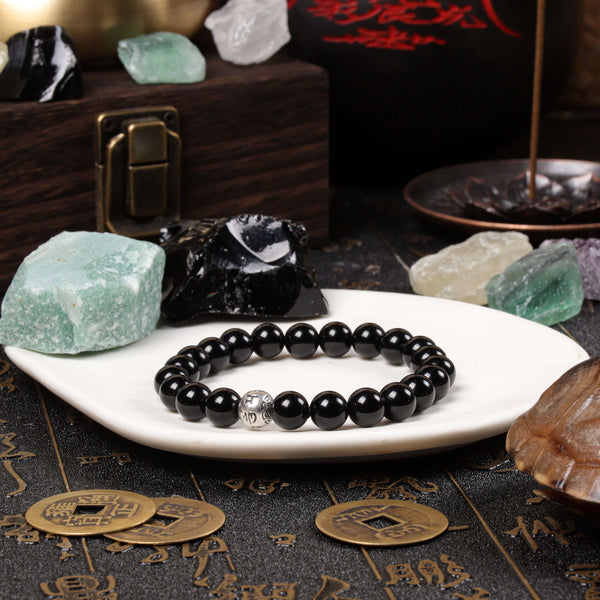
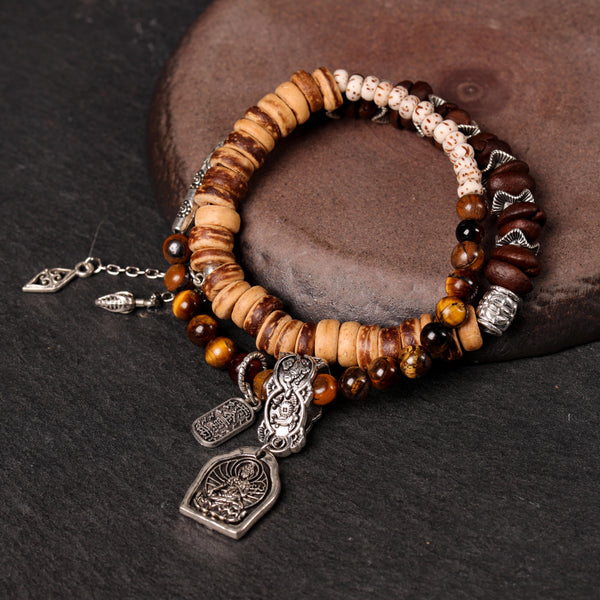
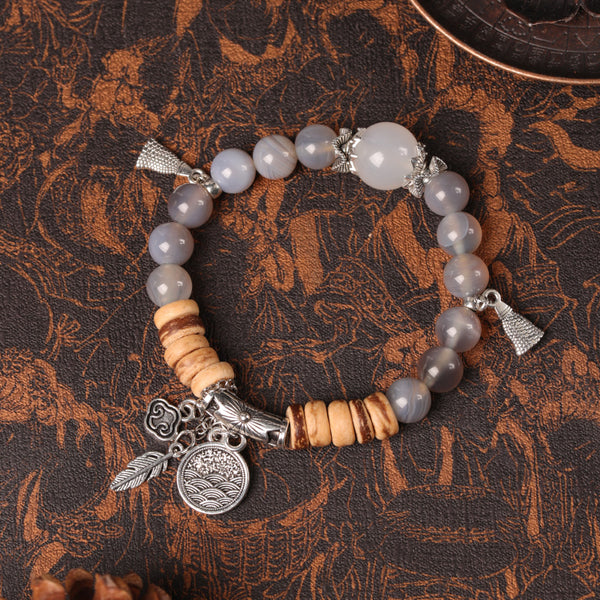
Carrying authentic, hand-drawn talismans (Fu) or wearing consecrated natural stones blessed by verified lineage masters provides an accessible way to experience this tradition. When created through disciplined fasting, celestial timing, and ancestral lineage seals, these sacred tools serve as tangible energetic anchors. They stabilize your personal aura, clear discordant ambient frequencies, and keep you grounded in the timeless flow of the Tao.
Frequently Asked Questions (FAQ)
Can Taoist priests marry and have families?
Yes, it depends entirely on the sect:
-
Zhengyi Sect: Known as household priests (Huoju Daoshi), they are permitted to marry, raise families, and maintain normal careers while performing rituals.
-
Quanzhen Sect: These are ascetic monastics who take strict vows of lifelong celibacy, follow a vegetarian diet, and live permanently within monasteries.
What is the difference between a Taoist monk and a Taoist priest?
A Taoist monk is a monastic Quanzhen practitioner who lives full-time in a temple under strict celibacy. A Taoist priest (Daoshi) is an umbrella term that includes both Quanzhen monastics and married, community-dwelling Zhengyi liturgical practitioners.
Can foreigners and Westerners become ordained Taoist priests?
Yes. Authentic Taoism values personal sincerity, character, and destiny (Yuanfen) over nationality. While international seekers can complete formal initiation rites like Chuandu, achieving higher clerical certification requires learning liturgical Chinese, memorizing classical texts, and training under an authorized master. For most Westerners, becoming a lay devotee (Jushi) is the most practical entry point.
Do Taoist priests practice Kung Fu or martial arts?
Not necessarily. While historic mountains like Wudang are famous for internal martial arts like Tai Chi, martial training is a specialized discipline rather than a requirement for priesthood. In Taoism, movement arts serve primarily as physical meditation to keep the body's energy channels clear.
How can I spot a fake online Taoist "master" or scam?
Avoid any online course, weekend workshop, or digital platform claiming you can become an "ordained master" for a flat fee. Authentic ordination requires an unbroken three-generation lineage, formal initiation at a registered temple, and verifiable credentials. Legitimate masters never use fear-based marketing or guarantee magical shortcuts.
How can I practice Taoism and protect my energy without becoming a priest?
You do not need clerical vows to benefit from Taoist wisdom. You can study foundational texts like the Dao De Jing, practice Wu Wei (effortless action) in daily life, incorporate seated meditation, or carry authentic, lineage-blessed talismans (Fu) to ground your personal aura.




Leave a comment